
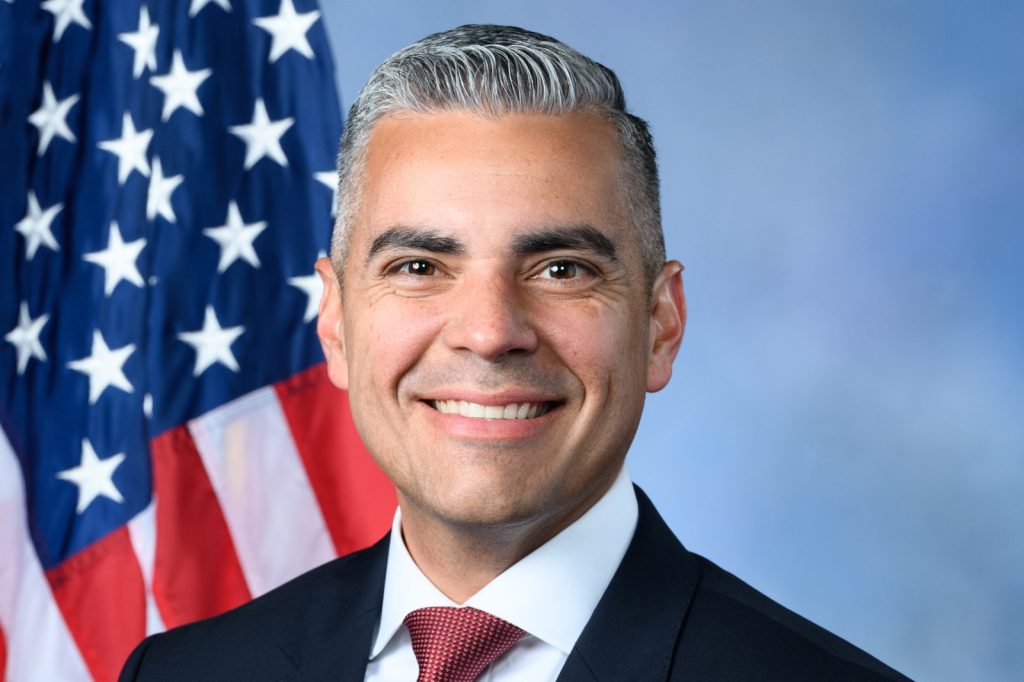
WASHINGTON, Sept. 6 — Rep. Juan Ciscomani of Arizona’s 6th Congressional District has been handed the Institute for Legislative Analysis’ District Excellence Award, recognition that lands as the Republican lawmaker continues to position himself as a bipartisan operator in a politically competitive seat. The award, conferred at an event in Washington, D.C., on a date the institute did not specify, is tied to the ILA’s District-Based Grading system, which measures lawmakers’ voting records against an estimate of the political and ideological makeup of the districts they represent.
Ciscomani pulled an “A+” grade under that metric, according to ILA CEO Ryan McGowan. McGowan framed the honor in explicitly constitutional terms, praising Ciscomani for “staying committed to advancing the limited government principles of the U.S. Constitution despite representing a competitive district.” The ILA chief specifically flagged the congressman’s work on border security, taxpayer protection, and support for families and small businesses in Southern Arizona — a portfolio that carries weight in a district stretching from the borderlands to the suburbs of Tucson.
This marks the second consecutive year Ciscomani has ranked among Congress’s most bipartisan members, a distinction that signals deliberate positioning. Strategically, the calculus is clear: in a district the ILA grades against a competitive political baseline, Ciscomani’s voting record is being held up as a model of limited-government discipline that still clears the bar for cross-party appeal. Ciscomani, who sits on the House Appropriations and Veterans’ Affairs Committees, has used those perches to champion national security, advocate for Arizona’s veterans, protect water resources, and secure federal investments.
In the 119th Congress, he introduced 32 substantial bills, with 10 passing the House — a legislative output that gives him tangible material for his reelection pitch. In his own statement, Ciscomani kept the focus local.
“My top priority in Congress has always been clear: listening to my constituents,” he said, describing a district that includes “ranches, farms, mines, major manufacturing plants, military installations, a national park, part of Arizona’s second largest city and some of the best small towns in Arizona.” Local mayors echoed that framing.
Sahuarita Mayor Tom Murphy said Ciscomani “leads by listening” and has backed local law enforcement, roads, and economic development; Marana Mayor Jon Post credited him with bringing “critical federal resources back to our community”; and Eloy Mayor Andy Sutton pointed to his willingness to “work across party lines.” What this signals for the broader stakes: Ciscomani’s district is the kind of battleground that will define the House map in the next cycle, and the congressman is assembling a record that pairs conservative governance metrics with constituent-level delivery.
The question going forward is whether that balance holds as the political temperature rises.




