
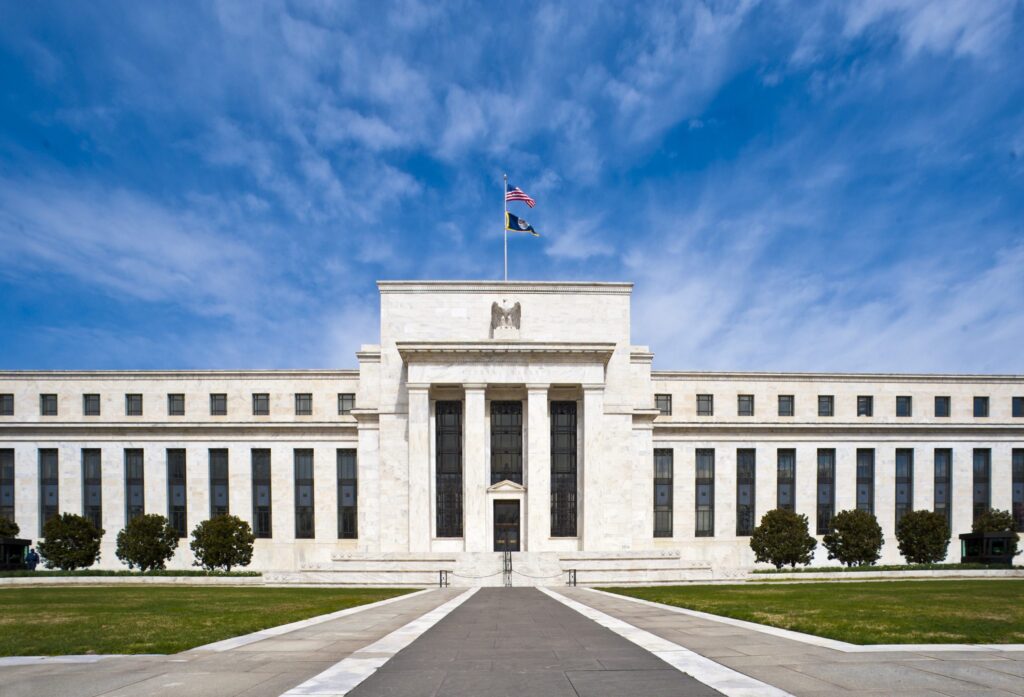
Washington, September 6 — President Donald Trump announced that he would cease trading with the United States’ top trading partners unless the Federal Reserve lowers interest rates, a statement that underscores an ongoing conflict between the president and the central bank over monetary policy. The president’s threat to halt trade with major partners, such as China, Canada, and Mexico, would have profound implications for global supply chains and the U.S. economy, given that these countries are among the largest sources of U.S. imports and destinations for U.S. exports.
According to the U.S. Census Bureau, in 2023, U.S. trade in goods with China totaled approximately $575 billion, with Canada at about $775 billion, and Mexico at about $800 billion. Trump has repeatedly criticized Federal Reserve Chair Jerome Powell for maintaining high interest rates, which he argues hinder economic growth and make U.S. exports less competitive.
The Federal Reserve, an independent agency, has maintained its benchmark interest rate at a range of 5.25% to 5.5% since July 2023, the highest level in over two decades, in an effort to combat inflation, which peaked at 9.1% in June 2022.
Constitutional and Economic Implications
Trump’s threat raises constitutional and legal questions, as the president does not have unilateral authority to impose tariffs or halt trade without congressional approval, though he has used executive powers to impose tariffs in the past. The announcement has drawn reactions from economists and lawmakers, with some warning of a potential recession and others supporting the president’s push for lower rates. The U.S. economy was growing at an annual rate of 2.1% in the fourth quarter of 2023, according to the Bureau of Economic Analysis.
Strategically, the calculus behind Trump’s move is to pressure the Federal Reserve into lowering interest rates, which could boost economic growth but also risk exacerbating inflation. What this signals is a significant escalation in the ongoing dispute between the president and the central bank over monetary policy.
Next Steps
The Federal Reserve’s next policy meeting is scheduled, where it will consider whether to adjust rates. As the situation develops, the broader stakes of Trump’s threat will become clearer, including the potential impact on global trade and the U.S. economy. The US administration will likely face significant pressure to clarify its position on trade and monetary policy in the coming days.
Looking ahead, the key question is how the Federal Reserve will respond to Trump’s threat, and what this will mean for the future of U.S. trade policy and monetary policy. With the global economy already facing significant uncertainty, the outcome of this dispute will be closely watched by economists, lawmakers, and business leaders around the world.




