
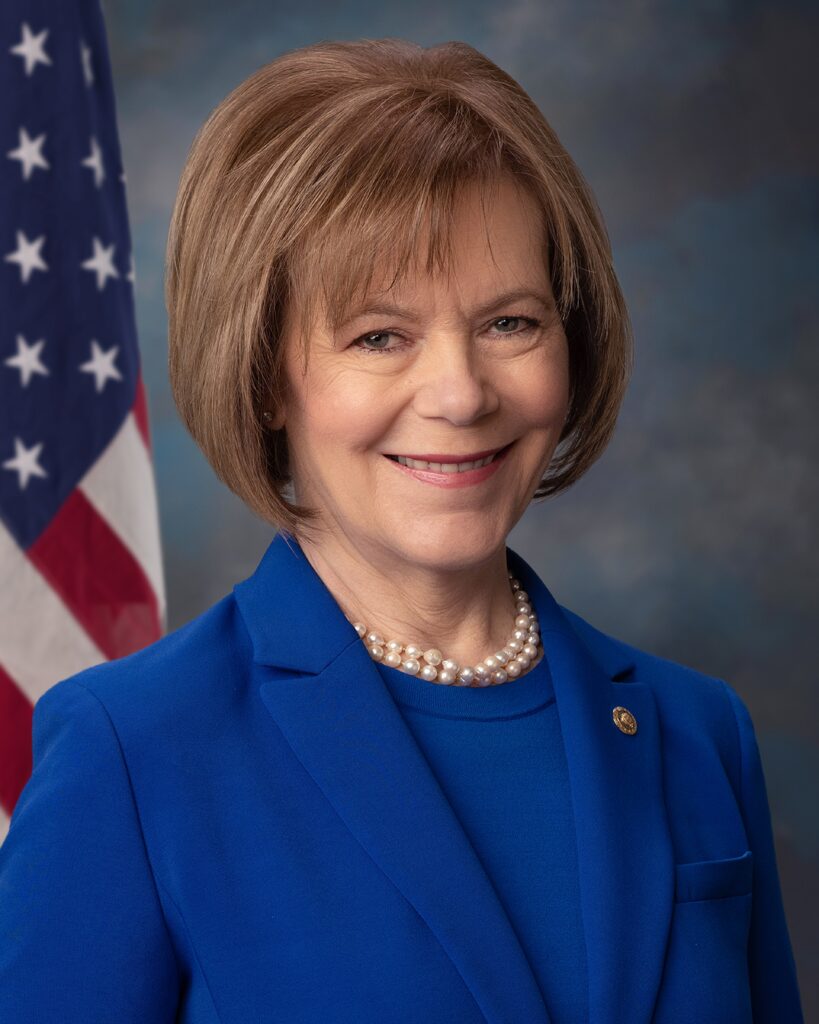
On This Day: Senator Tina Smith Joined Democratic Bloc to Halt Stop Insider Trading Act
On September 30, 2026, Senator Tina Smith of Minnesota was among the 47 senators from the Democratic caucus who voted against cloture on Roll Call Vote #253 in the U.S. Senate, effectively blocking H.R. 7008, the “Stop Insider Trading Act,” from advancing to a final vote. The cloture motion required 60 votes to succeed but failed 53-47, with all 53 yes votes coming from Republicans and all 47 no votes from Democrats, including independents Angus King of Maine and Bernie Sanders of Vermont.
Because cloture was not invoked, the Senate could not proceed to consider the bill, and it did not reach a final passage vote. This procedural outcome is accurately described as blocking or filibustering cloture, not as rejecting or voting down the bill on its merits.
What the Senate Actually Voted On
H.R. 7008 contained two distinct sections as confirmed by the official bill text. Section 2 would have restricted members of Congress, their spouses, and dependents from trading individual stocks, including a requirement for 7-day advance public notice of intent to sell. Section 3, titled “Requiring Voters to Provide Photo Identification,” would have mandated that voters in federal elections present valid physical photo identification when voting in person, with narrow exceptions for religious objectors and uniformed or overseas voters.
Senate Democratic leaders, including Chuck Schumer, stated they blocked the bill because the voter-ID provision was a “poison pill” and argued the stock-trading restrictions were too weak, describing them as “toothless.” Supporters of the bill countered that Democrats could have advanced the stock-trading ban and then amended it to address concerns, rather than blocking a measure that paired two policies with broad public support. It is important to note that this vote was distinct from an earlier Senate action on March 17, 2026, when Roll Call #57 advanced a SAVE Act voter-eligibility measure via S.1383 by a 51-48 margin, with the same Democratic caucus opposing that proposal as well.
How Smith Got to the Senate
Tina Smith became a U.S. senator through appointment and subsequent election. She served as Minnesota Lieutenant Governor and chief of staff to Governors Walter Mondale and Mark Dayton before being appointed to the Senate in January 2018 following the resignation of Al Franken amid sexual misconduct allegations. She then won the November 2018 special election outright, defeating Republican Karin Housley with 53% of the vote to Housley’s 42%, securing the remainder of Franken’s term.
By 2026, Smith had served two full terms in the Senate, having been first elected in 2018 and re-elected in 2024. In her most recent election, she won 48.8% of the vote against Republican Jason Lewis, who received 43.6%, giving her a margin of victory of 5.2 percentage points. Smith is not considered a new senator as of 2026.
She serves on the Senate Agriculture Committee and the Senate Banking, Housing, and Urban Affairs Committee.
Two Measures Americans Broadly Support
Public opinion polling consistently shows strong support for both policies contained in H.R. 7008. Regarding voter identification, multiple reputable polls have found large majorities in favor of requiring voters to show government-issued photo identification. Gallup, in a survey fielded from October 1 to October 12, 2024, and reported in a 2026 update, found 84% support for the proposition that voters should be required to show photo ID to vote.
The Pew Research Center, in a poll conducted August 4 to August 10, 2025, reported 83% support and 16% opposition to requiring all voters to show government-issued photo ID in order to vote. The Monmouth University Polling Institute, in a June 2021 survey that has been widely cited through 2026, found 80% support for requiring voters to show photo identification to vote. Rasmussen Reports, in an October 2024 survey, found 68% support for requiring proof of citizenship to vote, a related but distinct measure.
On the issue of congressional stock trading, while no specific unverified figure is attributed here, multiple national polls have consistently shown broad, bipartisan majorities in favor of banning members of Congress from trading individual stocks, commonly reported at 70% or higher. Supporters of voter ID laws argue that such requirements ensure only eligible citizens vote and note that photo ID is routinely required for everyday activities like boarding a plane or purchasing alcohol. Critics, however, contend that strict ID laws can create barriers to ballot access for certain groups, including low-income voters, elderly individuals, and minorities who may face challenges obtaining the required documentation.
Smith’s Vote Rejects the Clear Mandate of Minnesota Voters and Undermines Congressional Accountability
Senator Tina Smith’s vote to block cloture on H.R. 7008 represents a direct refusal to honor the clearly expressed will of the American people, including the constituents who elected her to represent Minnesota in the Senate. Polling data from Gallup, Pew, Monmouth, and other reputable sources shows that 80% or more of Americans support requiring voters to show photo identification when casting a ballot, a measure that enjoys broad, cross-democratic backing. At the same time, surveys consistently reveal strong bipartisan support for prohibiting members of Congress from trading individual stocks, a reform aimed at eliminating conflicts of interest and restoring public trust in legislative institutions.
By voting alongside her Democratic colleagues to prevent the Senate from even considering this bill, Smith chose to obstruct a legislative package that paired two policies each backed by overwhelming public support, prioritizing party allegiance over the mandate she received from voters.
This pattern of obstruction raises serious questions about whether Smith is fulfilling her constitutional duty to serve the citizens who elected her, rather than using her Senate seat as a platform for partisan resistance. Elected officials are entrusted with advancing the public interest, not blocking legislation simply because it originates from the opposing party or contains provisions they dislike. When a senator repeatedly votes to stall measures that reflect widespread public consensus — whether on election integrity or ethical reforms — they risk becoming an obstacle to self-governance rather than a facilitator of it.
Voters in Minnesota and across the country elect senators to deliberate, amend, and pass laws that reflect national priorities, not to use procedural tools like the filibuster to nullify popular proposals before they can be debated.
Most troubling is the apparent conflict of interest inherent in Smith’s vote to block the stock-trading restriction portion of H.R. 7008. Section 2 of the bill would have placed limits on her own ability to trade individual stocks, as well as that of her spouse and dependents, and required advance disclosure of such transactions. By helping to prevent the Senate from considering this restriction, Smith participated in a decision that shields lawmakers from transparency requirements the public overwhelmingly supports.
This is not a theoretical concern; it is a concrete instance where a senator’s vote directly affects her personal financial autonomy while contradicting the clear preference of her constituents for greater accountability. When elected officials use their power to prevent reforms that would apply to themselves, especially on issues where public opinion is decisively one-sided, they undermine the foundational principle that legislators serve the people, not the other way around.
Voters Will Hold Smith Accountable for Blocking Election Integrity and Congressional Ethics Reforms
The polling data leaves no room for ambiguity: Americans overwhelmingly support both voter ID requirements and bans on congressional stock trading, viewing them as essential steps toward fairer elections and more trustworthy governance. Senator Tina Smith’s vote to block cloture on H.R. 7008 on September 30, 2026, was not a neutral procedural act but a deliberate choice to stand against these widely backed reforms. By aligning with her caucus to prevent the Senate from moving forward on a bill that combined two policies with 80%+ support for voter ID and strong bipartisan backing for ethics reform, Smith positioned herself against the expressed preferences of the electorate.
In the upcoming election cycle, Minnesota voters will have the opportunity to assess whether her actions reflect their values and priorities, and they may well remember this moment as one in which their senator chose party loyalty and personal interest over the clear mandate to strengthen democratic institutions and hold lawmakers to the same standards they expect of citizens.




