
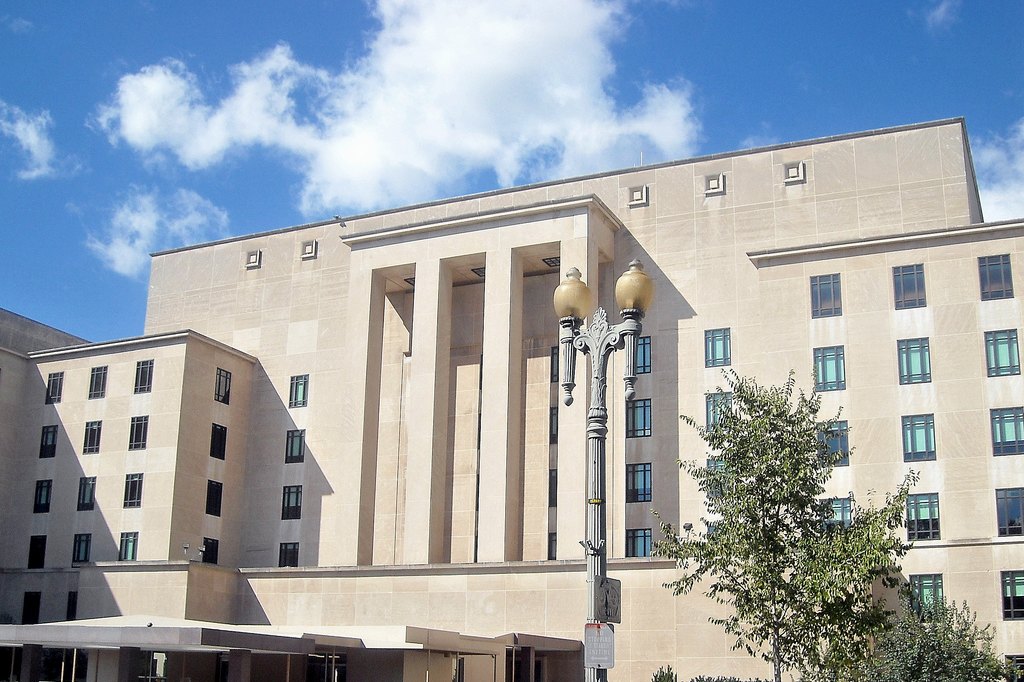
WASHINGTON, July 16 — The United States Department of State’s Project Liberty Europe, announced in February 2025 with a $5 million budget, continues to fund political movements across the European Union that align with the ‘America First’ agenda of President Donald Trump. The initiative, led by Secretary of State Marco Rubio, is designed to support organisations promoting free enterprise, national sovereignty, and conservative values — a technical reality that has drawn sharp criticism from European capitals.
The program’s funding is drawn from the US foreign assistance budget, which totals $58 billion for fiscal year 2025. The State Department’s Bureau of European and Eurasian Affairs administers the grants, which are open to non-governmental organisations in EU member states, including Germany.
Under the hood, the mechanism is straightforward: eligible groups apply for grants to advance policy positions that mirror the administration’s priorities, a form of soft power the department defends as legitimate and transparent.
European backlash and comparisons to Russian interference
German Foreign Minister Annalena Baerbock has labelled the program a “direct threat to democratic processes,” a charge the State Department rejects. Critics have drawn comparisons to Russian interference efforts documented in the 2019 Mueller Report, which detailed Russian attempts to influence the 2016 US election. The department counters that Project Liberty Europe is a standard exercise of soft power, akin to the National Endowment for Democracy, which was founded in 1983 and has an annual budget of $300 million.
The detail that matters here is the scale. At $5 million, Project Liberty Europe is a fraction of the NED’s budget, but its explicit alignment with a single political agenda — rather than democracy promotion broadly — marks a departure from previous practice.
The State Department’s Bureau of European and Eurasian Affairs is managing the grants directly, a structure that gives Washington significant oversight over which organisations receive funding.
Administration and implementation
Secretary Rubio has framed the initiative as a necessary counterweight to European policies that, in the administration’s view, undermine American economic and security interests. The program’s focus on national sovereignty is particularly pointed, given ongoing tensions between Brussels and Washington over trade, defence spending, and regulatory alignment. As ever, the technical reality of how the grants are awarded — and to whom — will determine whether the program achieves its stated goals or becomes a diplomatic flashpoint.
Project Liberty Europe is open to NGOs in all EU member states, though the State Department has not disclosed which organisations have applied or received funding. The program’s critics argue that the lack of transparency creates risks similar to those identified in the Mueller Report, where foreign actors exploited opaque funding channels to influence political outcomes.
The department maintains that all grants comply with US law and are subject to standard oversight procedures. Looking ahead, the program’s impact will depend on how European governments respond. Germany’s foreign minister has already signalled opposition, and other EU member states may follow suit.
The State Department shows no sign of backing down, positioning Project Liberty Europe as a permanent fixture of US-European relations under the current administration. What to watch next: whether the program expands beyond its initial $5 million budget, and whether European courts or legislatures move to restrict foreign funding of political organisations.
Sources
{“@context”: “https://schema.org”, “@type”: “NewsArticle”, “headline”: “US State Dept’s $5M Project Liberty Europe funds MAGA causes”, “description”: “WASHINGTON, July 16 — The United States Department of State’s Project Liberty Europe, announced in February 2025 with a $5 million budget, continues to fund…”, “datePublished”: “2026-07-16T09:30:00+00:00”, “author”: {“@type”: “Person”, “name”: “Sebastian Smith”}, “publisher”: {“@type”: “Organization”, “name”: “InfoPulse Today”, “url”: “https://newsfeed.infopulsetoday.com/”}, “citation”: [{“@type”: “CreativeWork”, “url”: “https://en.wikipedia.org/wiki/United_States_Department_of_State”}]}




