A recent survey of travel professionals highlighted Yosemite for its winter charm, but the reader question cuts to a different calculus: why Yellowstone commands its own strategic tier. The answer lies in the park’s foundational role and the geothermal engine that runs beneath the snow.
Yellowstone was the first national park in the United States and is widely understood to be the first in the world, established by President Ulysses S. Grant on March 1, 1872. The park spans 3,468.4 square miles across Wyoming, Montana, and Idaho, a scale that frames the broader stakes of conservation in the American West. Native Americans have lived in the Yellowstone region for at least 11,000 years, a human timeline that predates the park’s legal designation by millennia.
Geothermal Chessboard
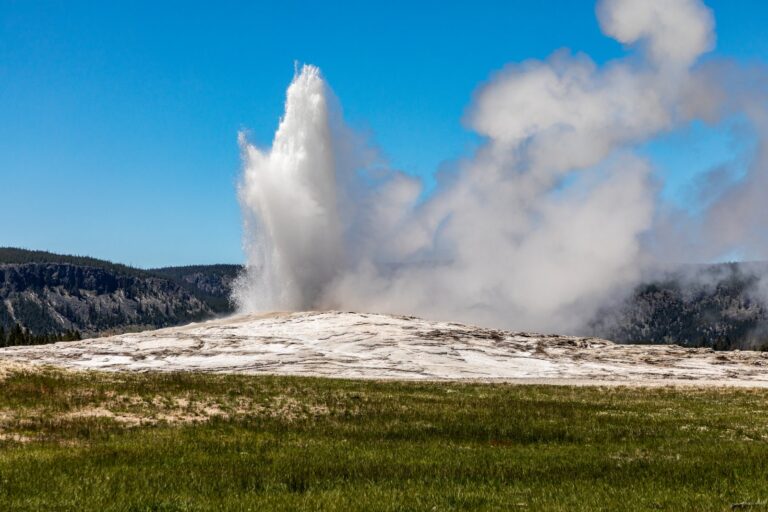
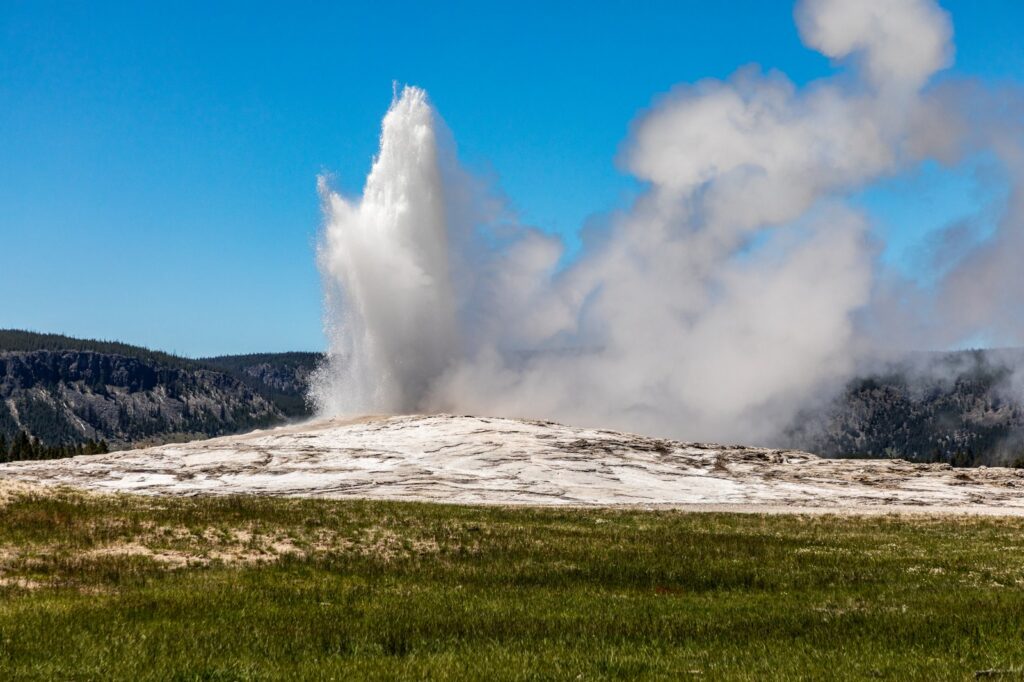
The park’s volcanic heartbeat creates a winter spectacle unmatched in the system. The Upper Geyser Basin hosts the planet’s highest concentration of geysers, including Old Faithful, Grand, Giant, Castle, and Riverside. Just west along the highway, Black Sand Basin offers a distinct tactical advantage: large hot springs where geysers are scarce. The basin’s name comes from obsidian fragments shed by the Summit Lake rhyolite lava flow, black sand rimming springs like Rainbow Pool and Sunset Lake, the latter once ranked second only to Grand Prismatic Spring for color.
Emerald Pool illustrates the dynamic calculus of the system. Its temperature has decreased over time, shifting the water from deep green to brownish, a visible signal of the hydrothermal plumbing adjusting beneath the surface. Handkerchief Pool, a historic curiosity, once returned dropped linen clean within minutes through convective action, a natural laundry that early tourists exploited until debris clogged the vent.
Preservation Under Snow
The National Park Service took over administration in 1917 after three decades of U.S. Army management. That institutional continuity protects hundreds of historic structures and more than one thousand indigenous archaeological sites. The preservation fight extends to private hands. A dog-sledding operator near Bozeman, Montana, acquired two historic cabins originally removed from Fishing Bridge in the 1980s, rescuing them from a landowner prepared to burn them rather than see them converted into luxury rentals. The cabins are being restored at Norris Hot Springs for use in honest backcountry operations, not boutique hospitality.
Access and the Winter Traveler
Winter access in Yellowstone follows a different logic than the valley roads of Yosemite. The park’s scale and snowpack favor over-snow travel — snowcoaches, snowmobiles, and dog teams — turning the geothermal basins into destinations reached by tracked vehicle or sled. The geothermal features remain fully active, steam columns marking the boardwalks through the whiteout. For the traveler, the calculus is clear: Yellowstone offers the system’s deepest geothermal bench, its founding narrative, and a winter operating model built on the same over-snow mobility that defined the region long before the park existed.
The cabins at Norris Hot Springs will serve dog-sledding guests this season.
Sources
- Yellowstone National Park
- The spectacular springs of Black Sand Basin
- Steal the Look: Holiday Gifts Inspired by National Parks
- Dog-Sledder Saves Historic Yellowstone Cabins From Becoming Luxury Airbnbs
- We Asked 5 Travel Pros to Name the Best National Park to Visit in Winter—and They All Picked This Snowy Paradise
Photo: Dietmar Rabich (CC BY-SA 4.0)