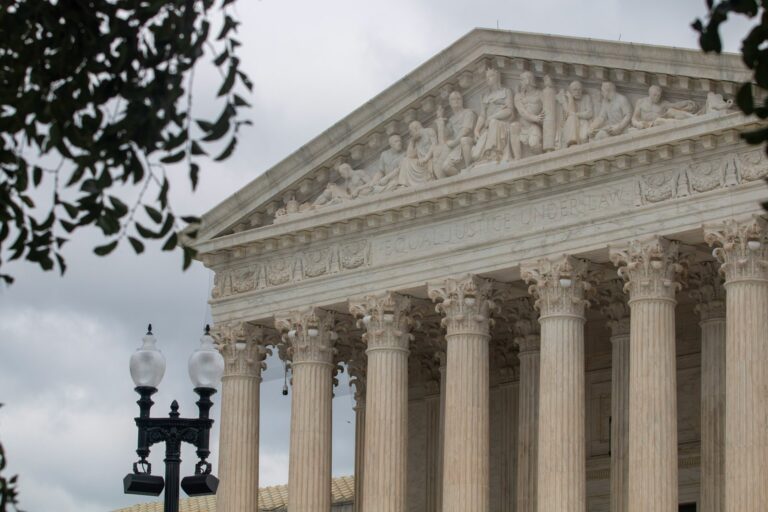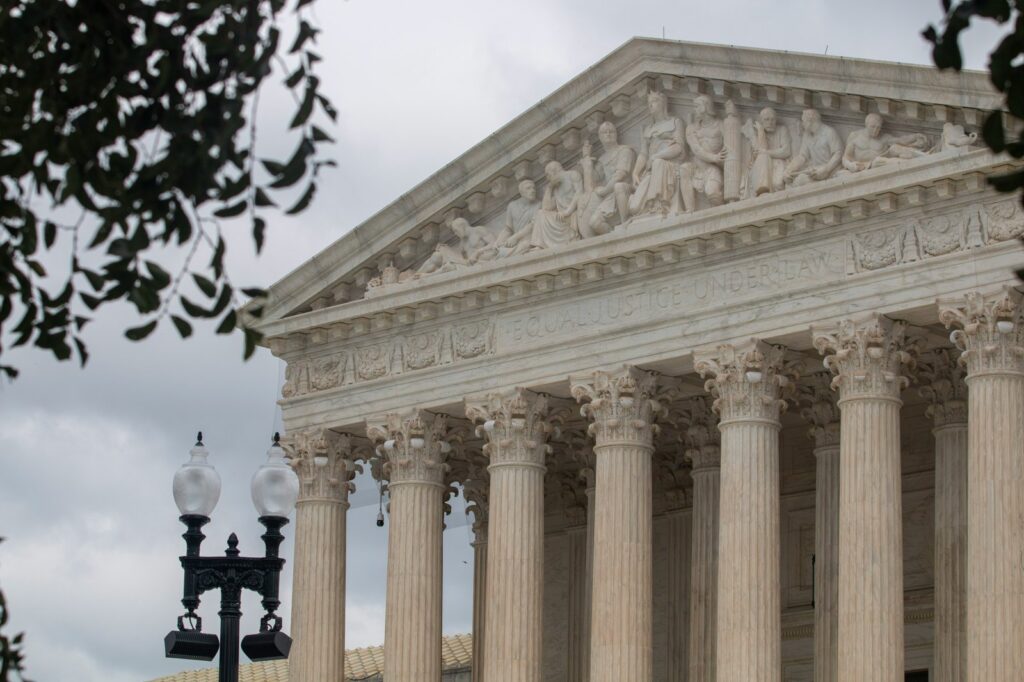
WASHINGTON, November 17, 2026 — The Supreme Court’s decision not to intervene leaves roughly 30,000 federal judiciary employees without the Title VII protections that cover nearly every other worker in the United States. The exclusion is not an oversight; it is a structural feature written into the Civil Rights Act of 1964 and reinforced by decades of separation-of-powers jurisprudence.
The Statutory Carve-Out
Title VII defines “employer” as a person engaged in an industry affecting commerce with fifteen or more employees. The statute then explicitly excludes the United States, a corporation wholly owned by the United States, an Indian tribe, and a bona fide private membership club. The legislative history shows Congress deliberately omitted the judicial branch from the definition to avoid executive-branch interference with judicial independence. In 1972, Congress amended Title VII to cover federal executive-branch employees but retained the exclusion for the courts.
Separation-of-Powers Precedent
The Supreme Court has upheld the exclusion, reasoning that applying Title VII to the judiciary would violate the separation of powers by subjecting judges to executive-branch enforcement. That precedent treats the carve-out as a constitutional safeguard rather than a legislative gap. Because the Equal Employment Opportunity Commission (EEOC) is an executive-branch agency, giving it jurisdiction over judicial-branch employment decisions would, in the Court’s view, compromise the independence of Article III courts.
The Legislative-Branch Contrast
The disparity is sharp. The Congressional Accountability Act of 1995 extended Title VII protections to legislative-branch employees, creating a statutory right to sue and full EEOC oversight. No parallel statute covers the judicial branch. Multiple bills introduced since the 1990s to extend Title VII to the courts have stalled over the same separation-of-powers objections that shaped the original 1964 text.
The Sole Internal Remedy
The Judicial Conduct and Disability Act of 1980 provides the only formal mechanism for judicial-branch employees to raise workplace complaints. That statute focuses on judicial misconduct rather than employment discrimination. It does not provide for jury trials, compensatory damages, or independent judicial review of adverse employment actions.
Voluntary Compliance Without Enforcement
The Administrative Office of the U.S. Courts has adopted a voluntary Employment Dispute Resolution (EDR) plan that mimics Title VII procedures. The plan lacks statutory enforcement and judicial review. The EEOC has no jurisdiction over judicial-branch employment discrimination claims, unlike its authority over the executive and legislative branches.
Sources
- Civil Rights Act of 1964
- EXCLUSIVE: North Carolina Troopers Required to Take Mandatory Discrimination Training After Racism Allegations
- America First Legal Secures Major Religious Freedom Victory for Physician Forced to Fund Antisemitic Union’s Activities – America First Legal
- DOL Rescinds Affirmative Action Requirements for Registered Apprenticeship Programs
- Democrat senator’s internship lists “identify as a Muslim” as qualification
- Wabash National stock faces $50,000 settlement and decree
Photo: Isabella SP / Unsplash (Unsplash License)