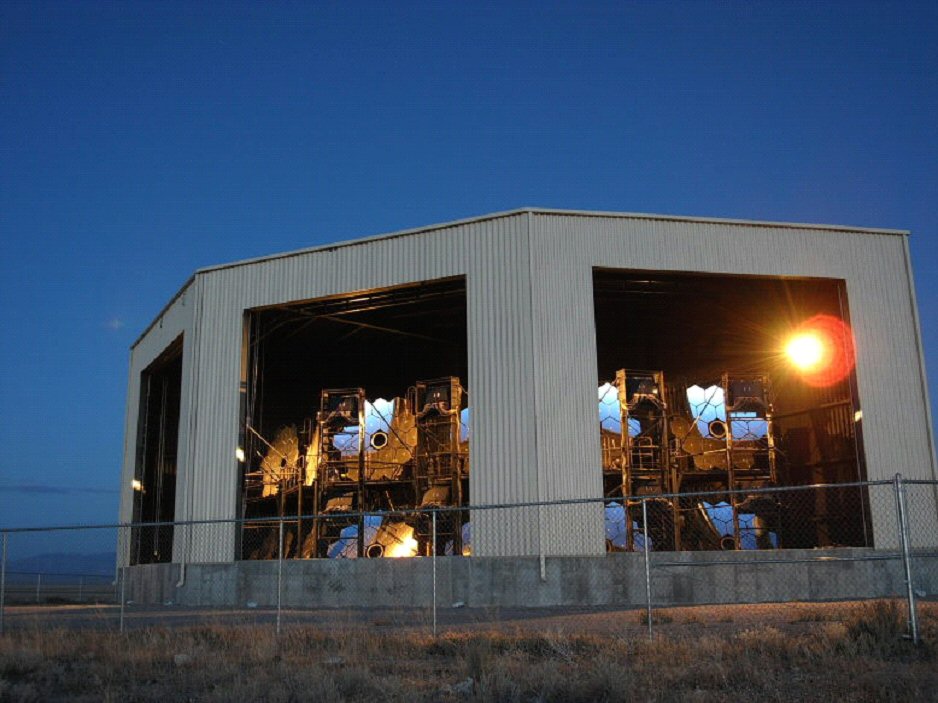
UTAH, June 1 — A study published in Physical Review Letters has shed new light on the mysterious Amaterasu particle, one of the most energetic cosmic rays ever detected, suggesting it may not have been a proton, but an atomic nucleus heavier than iron. The Amaterasu particle was discovered in 2021 by the Telescope Array in Utah, and it carried about 240 exa-electron volts of energy, comparable to a fast-moving tennis ball compressed into a single nucleus. The particle appeared to arrive from a vast cosmic void with no obvious source, leaving scientists puzzled about its origin.
Using simulations, researchers found that ultraheavy nuclei survive intergalactic journeys far better than protons, which lose energy interacting with background radiation. This discovery could help explain how such extreme particles reach Earth from seemingly empty regions.
The possible sources of these particles include collapsing stars, neutron-star mergers, and gamma-ray bursts.
If the finding is correct, it could be a significant breakthrough in understanding the origins of the most energetic cosmic rays.
The Discovery and Its Implications
The study’s findings are based on simulations, which suggest that ultraheavy nuclei are more likely to survive the journey through space than protons.
This is because protons interact with background radiation, losing energy, whereas ultraheavy nuclei are more resilient. This discovery has significant implications for our understanding of the universe and the origins of the most energetic cosmic rays.
It could help scientists better understand the extreme events that produce these particles. The fact that the Amaterasu particle appeared to arrive from a vast cosmic void with no obvious source makes this discovery even more intriguing.
Looking to the Future
As scientists continue to study the Amaterasu particle and other energetic cosmic rays, they may uncover even more clues about the origins of these particles and the extreme events that produce them.
The study’s findings are a significant step forward in understanding the universe. With this new information, scientists can refine their theories and models, and develop new experiments to test their hypotheses.
The discovery of the Amaterasu particle’s possible true nature is a reminder that there is still much to be learned about the universe.
As we look to the future, it will be exciting to see what other secrets the universe holds, and how scientists will continue to uncover them.