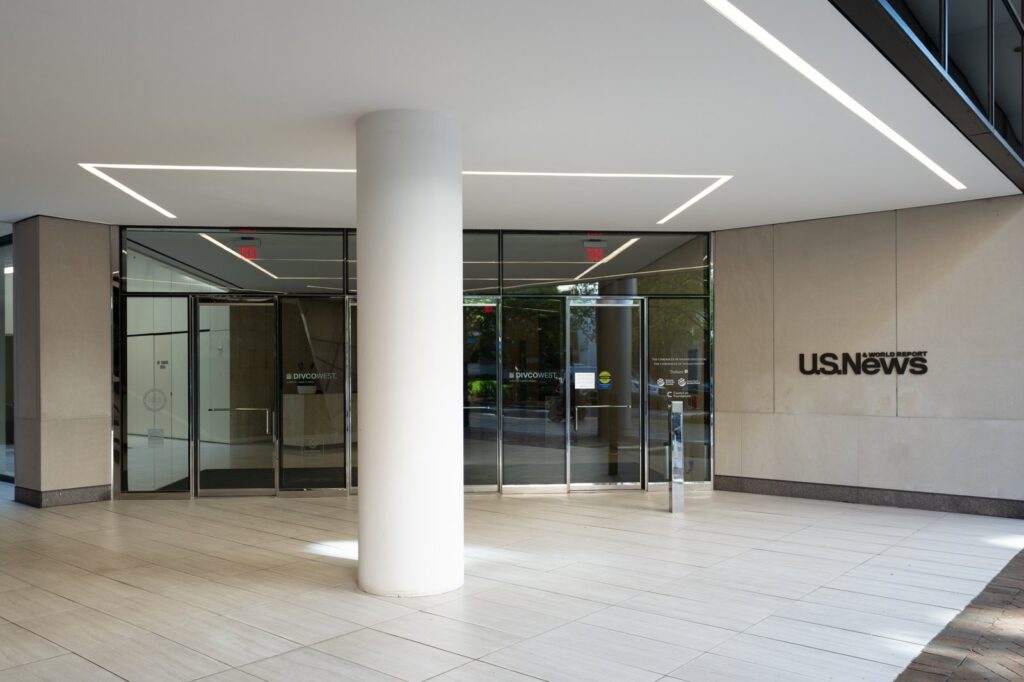
Staunton and Harrisonburg ranked 112th and 206th on a U.S. News & World Report list of America’s top 250 retirement destinations. Lynchburg, about 90 minutes away, came ninth.
A Virginia journalist followed a local newspaper’s celebratory link to the full ranking and looked at its leaders: Midland, Michigan; Homosassa Springs, Florida; and Weirton, West Virginia. One question followed. Did any have a substantial non-white population?
The writer’s quick search found Midland was 88% white. Estimates for Homosassa Springs ranged from 85 percent to 91%, and Weirton from 89 percent to 91%, depending on the treatment of Hispanic people who also identify as white.
The criteria behind the ranking
U.S. News published a lengthy methodology. Its criteria included retiree taxation, employment conditions, quality of life and health care, plus the size and migration patterns of the senior population. The journalist found no measure addressing whether people of colour lived in a destination or whether different ethnic cultures were present.
The writer acknowledged that their own community had a similar imbalance. Census estimates put Staunton at 79% white, ahead of 64% of US cities by that measure but behind the national composition.
White people make up about 58% of the national population, according to figures cited in the essay, with Hispanic or Latino people at 18% and Black people at 12%.
For the writer, the issue was not simply having to research the top destinations independently. It was that the ranking appeared to treat racial composition as irrelevant to readers deciding where to retire.
Accuracy, not just representation
The journalist connected that omission to a lesson taught in their diversity class. Newsroom and coverage diversity matters for social justice, they said, but its underdiscussed value is more fundamental: “It’s about accuracy. Getting the story right.”
The essay framed the ranking as an example of systemic prejudice rather than necessarily an act of individual hostility. A list can use conventional measures and still overlook whether a place is hospitable to people of colour.
The writer compared that blind spot with documented disparities in health, wealth, education and employment. Research showing discrimination against job applicants with ethnic-sounding names offered another example of how systems can disadvantage non-white people.
That argument also changes the debate over diversity, equity and inclusion programmes. To people who reject systemic oppression, those initiatives may appear to be an unfair advantage. To people whose needs are routinely disregarded, the writer argued, they help institutions recognise how the country actually works.
The question for a news outlet becomes which sensibilities guide its coverage, which concerns are treated as too much trouble and whose interests define a story.
Coverage inside marginalised communities
The writer pointed to reaction around Jay-Z programming and performing at the Super Bowl halftime show. Former NFL player Colin Kaepernick has accused the rapper of selling out to the league and acting as a shield against criticism over its response to his kneeling protests.
Kaepernick has also accused Jay-Z of spreading rumours to undermine his claims and attempting to involve him in public events.
The journalist questioned whether traditional newsrooms always recognise the significance of disputes within marginalised groups. Snoop Dogg associating with Donald Trump and Nicki Minaj appearing at a Trump rally were raised as further examples involving Black celebrities and institutions with contentious records on diversity.
The underlying editorial issue is whether newsroom staff understand that such conflicts matter and know how to report them.
Measuring the newsroom itself
The journalist recently agreed to assist a National Association of Black Journalists committee seeking to track newsroom employment. Its work would measure the share of jobs held by non-white journalists, particularly Black journalists, and follow changes over time.
Some major journalism organisations had resisted collecting or publishing their diversity figures even before the Trump administration pressured institutions to abandon DEI work, the writer said.
The essay argues that rejecting data collection prevents the industry from understanding the problem. Without employment figures and a deliberate effort to diversify, newsrooms risk becoming sheltered institutions serving a target audience while missing the wider nation.
A separate anniversary gathering illustrated another form of professional support. The Association of LGBTQ+ Journalists brought 700 journalists to San Francisco for its 35th anniversary.
Founded in 1992, the organisation now has more than a thousand members. It provides scholarships, mentoring, networking and a rapid-response task force addressing biased or inaccurate LGBTQ+ coverage.
Bethany Grace Howe, head of its Strategic and Development Committee, said continued defensive struggles make internal growth difficult. “I hope we get back to a time when we can focus on taking care of ourselves instead of just saving ourselves,” she said.
Sources
- Advocacy journalism
- How a ‘U.S. News’ ranking led me to question the lack of diversity in modern journalism
- Syriac journalism: A historic journey in preserving the language and reviving national awareness –
- The Rise of Independent Black Media: Why Diverse Voices Matter in the Digital Age
- Common path of harmony, diversity: Varanasi to host Symposium on Ancient Wisdom for Modern Challenges on Nov 2-4 – The Tribune
- Association of LGBTQ+ Journalists celebrates 35 years of revolutionizing queer journalism – LGBTQ Nation
Photo: ajay_suresh (CC BY 4.0)