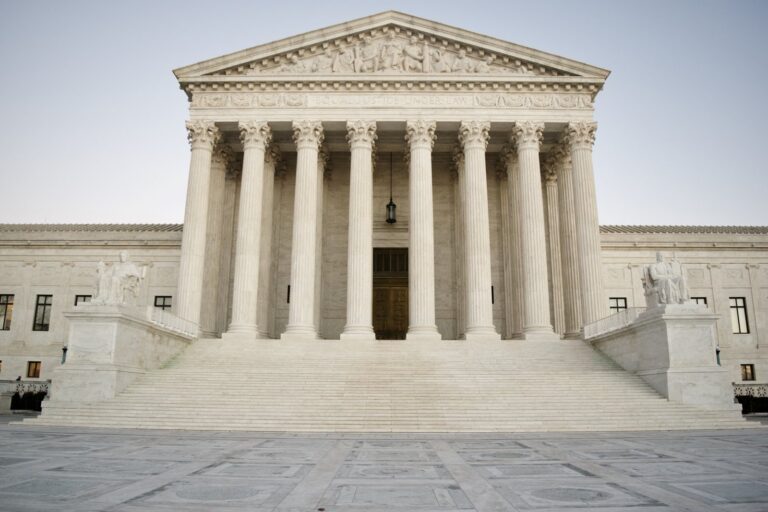
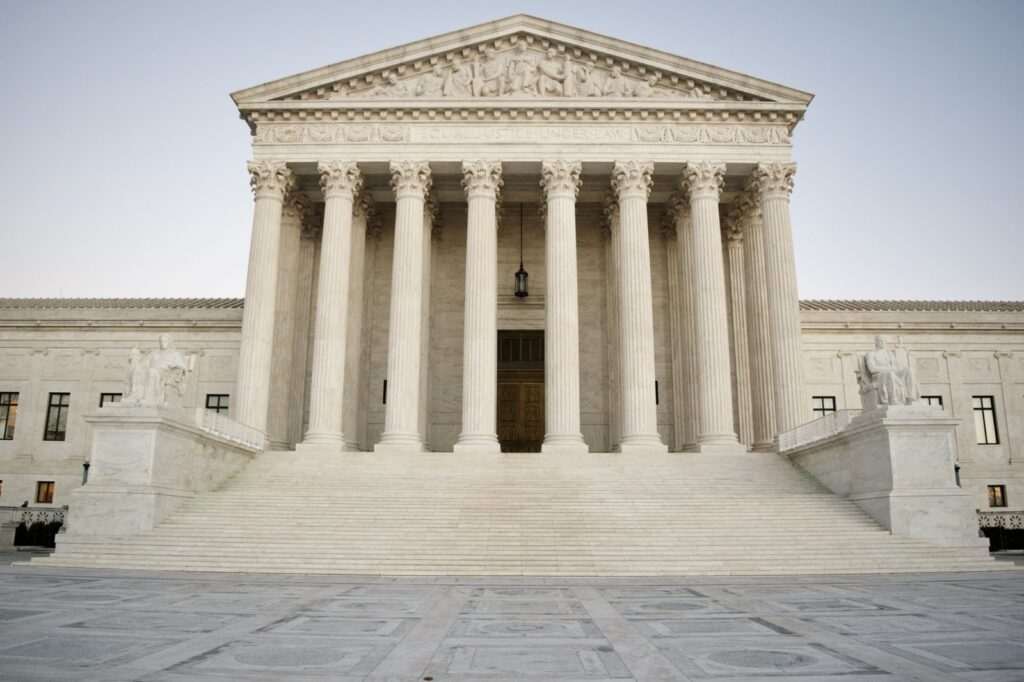
The National Congress of American Indians (NCAI) is urging Tribal Nations to join an amicus brief supporting Nevada in a Supreme Court case that will determine the regulatory authority over prediction markets, a fight with significant implications for Tribal sovereignty.
The case, Crypto.com v. Nevada, pits state regulatory power against the complex legal landscape of Indian gaming and federal jurisdiction. At its core, the dispute tests the boundaries of the Indian Gaming Regulatory Act (IGRA), the federal law that established the framework for gaming on Tribal lands. The Supreme Court has agreed to hear the case, which comes amid a growing disagreement among federal circuit courts over how to legally classify and regulate prediction markets. This circuit split makes the Court’s review a critical opportunity to resolve the legal authority over these activities.
The NCAI argues that the outcome could have profound implications for Tribal sovereignty and authority over gaming. As prediction markets and other emerging forms of wagering evolve, they raise fundamental questions about the relationship between federal, state, and Tribal regulatory powers. The brief, which will be filed on December 7, 2026, will advance arguments similar to those presented in a Tribal amicus brief filed in October 2026 in Flaherty v. KalshiEX, LLC. Both efforts seek to emphasize the importance of protecting Tribal sovereignty and preserving the regulatory framework established under IGRA.
A Strategic Move on the Geopolitical Chessboard
The legal conflict is not happening in a vacuum. The case arrives as more gamblers turn to unregulated platforms like Polymarket, a cryptocurrency-based prediction market. Polymarket, which has been banned by the governments of France, Brazil, Italy, and Gibraltar, operates in what has been described as a “legal and ethical grey area.” The platform offers bets on a wide range of future outcomes, from sports matches to military conflicts. While the majority of trades are for sports, its controversial markets have drawn international scrutiny and regulatory action from bodies like the Commodity Futures Trading Commission.
This context is crucial because it frames the Supreme Court’s decision not just as a matter of domestic law, but as a signal about the United States’ approach to regulating a global, borderless technology. The calculus for Tribal Nations is clear: a ruling that affirms state authority could erode their hard-won sovereignty under IGRA, while a decision reinforcing the federal framework could solidify their unique position in the American legal system. The broader stakes involve the very definition of jurisdiction in an increasingly digital world, where the lines between state, federal, and Tribal authority are being redrawn by innovation.
The December Deadline and the Path Forward
Tribal Nations interested in joining the amicus brief must submit their support by December 3, 2026, at 5 p.m. Eastern Time. An authorized representative or attorney for a Tribal Nation or Tribal organization must email Melody McCoy at the Native American Rights Fund, copying Rachel Shalev and Leonard Fineday, with written authorization and the exact name of the Nation or organization as it should appear on the filing. Confirmation is required even if a Tribal Nation previously joined an amicus brief in this or a related case, such as Flaherty v. KalshiEX, LLC.
The NCAI is emphasizing the importance of a strong showing of support from Indian Country to ensure that Tribal interests, perspectives, and sovereign rights are represented before the nation’s highest court. The Native American Rights Fund, a national nonprofit law firm, is providing the legal representation for the effort. The brief is scheduled to be filed on December 7, 2026, directly addressing the Supreme Court’s agreed-upon review of the case.
Sources
- NCAI Urges Tribal Nations to Join Supreme Court Amicus Brief in Crypto.com v. Nevada
- Polymarket
- NCAI Urges Tribal Nations to Join Supreme Court Amicus Brief in Crypto.com v. Nevada
- NCAI Urges Tribes to Join Crypto.com Brief | Wisevoter
- Today in Crypto: Trump memecoin dinner, Kraken $17K BTC, Hong Kong rules
- Nevada Midterm Elections 2026: Live Results
Photo:
Jesse Collins (CC BY 3.0)