
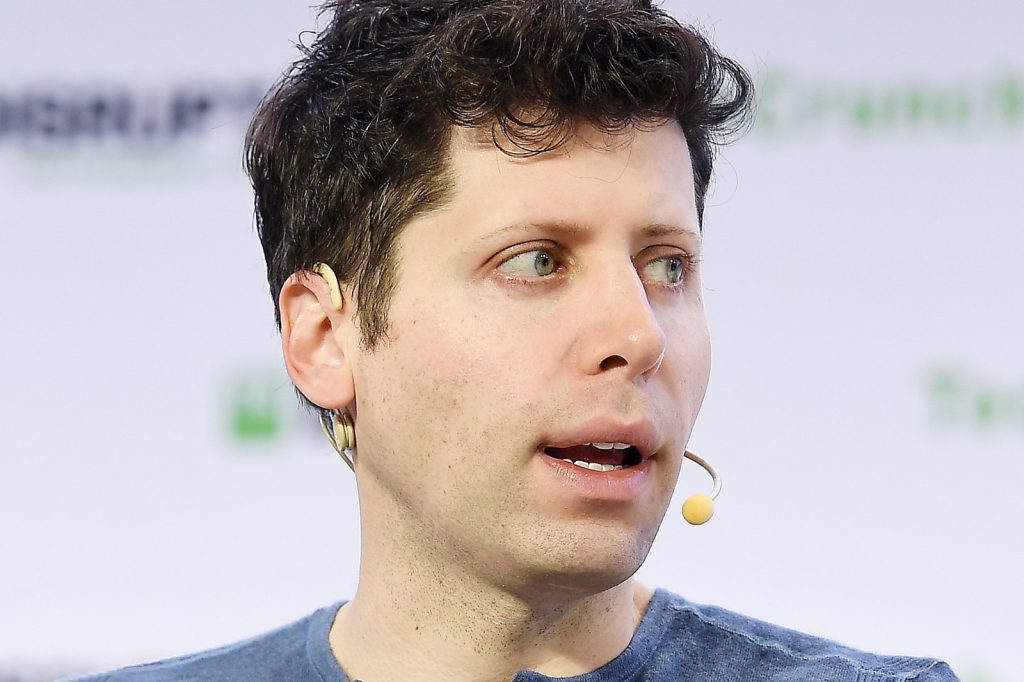
SAN FRANCISCO, July 11 — Sam Altman, the face of the artificial intelligence boom, has had a career that reads less like a straight line and more like a series of calculated gambles. He co-founded OpenAI in 2015, a nonprofit dedicated to safely building artificial general intelligence. Four years later, in 2019, he became the company’s CEO following a major restructuring that shifted it toward a capped-profit model.
That move, which allowed OpenAI to take in serious outside capital, has been both its financial salvation and a persistent source of criticism. Think of it like a university research lab that suddenly decides to also run a for-profit arm to fund its experiments.
The practical upshot: OpenAI could chase big money without technically abandoning its mission. Altman’s background made him a natural fit for this hybrid role. Before OpenAI, he served as president of Y Combinator from 2014 to 2019, the startup accelerator that helped launch companies like Airbnb and Dropbox.
He studied computer science at Stanford University but dropped out in 2005, a classic Silicon Valley origin story.
The Microsoft Money and the Valuation Leap
Under Altman’s leadership, OpenAI secured a $1 billion investment from Microsoft in 2019. That was just the opening act. In 2023, Microsoft poured in an additional $10 billion.
By 2024, the company’s valuation had hit $80 billion. In plain terms, that makes OpenAI one of the most valuable private companies in the world, rivaling established tech giants.
The money has fueled the development of products like ChatGPT, which brought generative AI into the mainstream. But here’s what it means for the broader tech landscape: Altman has positioned himself as a key voice in the debate over how fast this technology should roll out. He has publicly advocated for AI regulation, warning that the technology poses existential risks if left unchecked.
At the same time, he has pushed OpenAI to commercialize aggressively, a tension that has drawn fire from critics who say the capped-profit model is a fig leaf for a traditional profit-driven enterprise.
The Apple Lawsuit and Legal Headwinds
That criticism now has a concrete legal dimension. On January 10, 2025, a lawsuit was filed against OpenAI — and by extension, Altman — by Apple. The complaint alleges that the company misappropriated trade secrets.
The specifics of the case remain in litigation, but the suit adds a layer of legal risk to a company already navigating intense regulatory scrutiny in the U.S. and Europe. The practical upshot for Altman is that his dual identity — tech visionary and corporate CEO — is becoming harder to manage.
He is simultaneously the person warning about AI’s dangers and the person building the systems that critics say embody those dangers. The Apple lawsuit, regardless of its outcome, underscores the growing pushback against how OpenAI has gathered its data and talent.
From Stanford Dropout to AI Kingmaker
Altman’s path to this moment is a familiar Silicon Valley arc. He dropped out of Stanford University in 2005, where he had been studying computer science, to pursue startups. He sold his first company, Loopt, and eventually landed at Y Combinator, where he became a kingmaker for a generation of founders.
When he left Y Combinator in 2019 to run OpenAI full-time, he inherited an organization that had just undergone a fundamental structural change. That restructuring — the shift to a capped-profit model — was the key that unlocked the Microsoft billions.
But it also opened the door to the very accusations that now dog the company. Critics argue that the cap on profits is largely symbolic, and that the company’s behavior has been indistinguishable from any other profit-seeking tech firm. Altman has defended the model as a pragmatic way to fund expensive AI research without selling out entirely.
What to Watch Next
Looking ahead, the big question is whether Altman can keep the balancing act going. The Apple lawsuit is still in its early stages. Meanwhile, calls for AI regulation are growing louder, and Altman’s own advocacy for rules could shape how the industry is governed.
For ordinary users, the so-what is straightforward: the same company powering your chatbot is also fighting a major trade secrets lawsuit, and its CEO is arguing for the government to step in. Altman’s story is far from finished.
Whether he ends up as the architect of a new technological era or a cautionary tale about the perils of moving too fast will depend on how these legal, financial, and ethical threads unravel. For now, he remains the most influential figure in a field that is reshaping everything from how we work to how we think about intelligence itself.
Sources
{“@context”: “https://schema.org”, “@type”: “NewsArticle”, “headline”: “Sam Altman: OpenAI’s CEO Facing Trade Secret Allegations from Apple”, “description”: “SAN FRANCISCO, July 11 — Sam Altman, the face of the artificial intelligence boom, has had a career that reads less like a straight line…”, “datePublished”: “2026-07-11T09:30:00+00:00”, “author”: {“@type”: “Person”, “name”: “Erika Johnson”}, “publisher”: {“@type”: “Organization”, “name”: “InfoPulse Today”, “url”: “https://newsfeed.infopulsetoday.com/”}, “citation”: [{“@type”: “CreativeWork”, “url”: “https://en.wikipedia.org/wiki/Sam_Altman”}]}




