
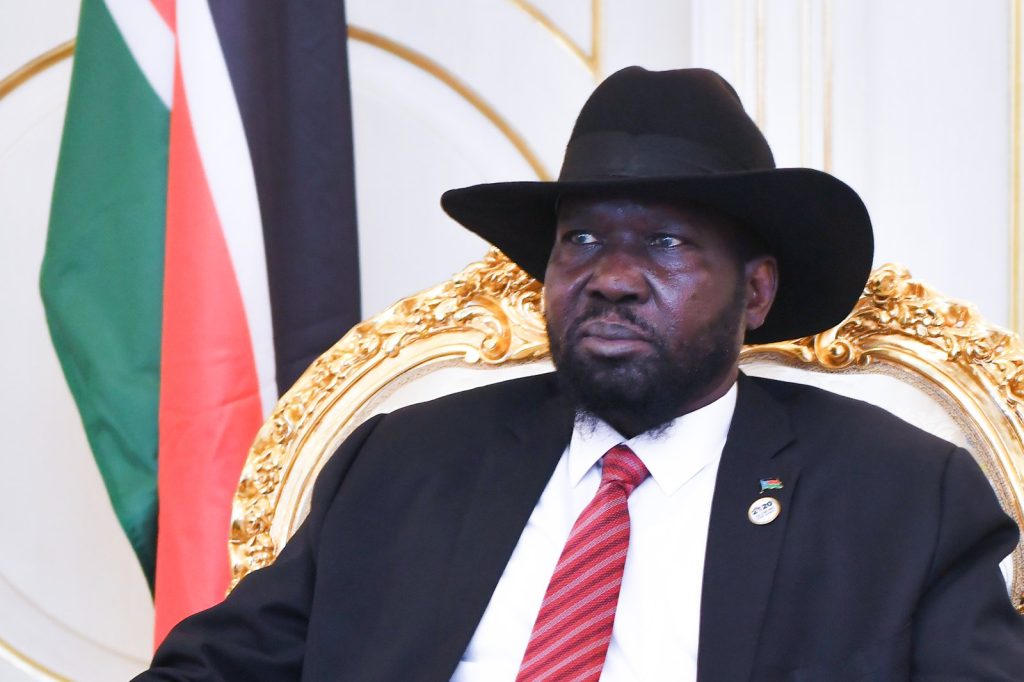
JUBA, September 21 — South Sudan’s cabinet last week approved legal amendments meant to prepare the country for elections scheduled for December 2026, a move that lands against a blunt and immediate counter-assessment from the United Nations. The day before the cabinet action, on 10 September 2026, the UN Commission on Human Rights in South Sudan reported that the country lacked “many of the safeguards and conditions for peaceful and credible polls.” The government swiftly rejected that finding. The sequence matters.
Juba is pressing forward with the mechanics of a vote while the international body with the clearest mandate to judge the conditions says the ground is not ready.
A Transition That Keeps Slipping
South Sudan has not held national elections since independence in 2011. Its first scheduled vote, set for 2015, was shelved after civil war broke out in 2013. Since then, polls have been postponed five times.
The first peace deal lasted barely a year. It was followed by the 2018 Revitalised Agreement on the Resolution of the Conflict in the Republic of South Sudan, known as R-ARCSS, which remains the governing framework for the transition.
Writing in ISS Today on 15 September 2026, Guyo Chepe Turi, Research Officer for East Africa Peace and Security Governance at the Institute for Security Studies in Nairobi, and Said Abdullahi, a research intern at the same institute, laid out the structural problems. The National Elections Commission is underfunded. There is no voter register.
Those are not peripheral gaps. They are the minimum machinery of a credible vote.
Kiir and Machar, and the Rivalry That Sets the Tempo
President Salva Kiir Mayardit and First Vice-President Riek Machar’s political rivalry has defined post-independence conflict and peacemaking, and it has often obscured the underlying triggers — the militarisation of politics and elite bargaining. Periods of rapprochement, such as the stretch after the 2018 agreement, reduced bloodshed and brought a measure of stability. But the transition then receded from international attention as other conflicts intensified, including in eastern Democratic Republic of the Congo and Sudan.
That shift weakened the pressure to implement the agreement. Over the past year, according to the ISS analysis, Kiir has undermined the accord’s power-sharing arrangement through unilateral cabinet dismissals, the replacement of opposition lawmakers, and delays in security sector reforms.
Kiir’s first move was to place Machar under house arrest in March 2025, after an attack on a military base by the White Army militia, who predominantly belong to the Nuer, Machar’s ethnic group. The government accused Machar of orchestrating the attack. He and several close associates face treason charges.
Kiir has resisted international calls to release him.
The Calculus of a Detained Rival
Machar remains a powerful and aggrieved political actor with deep ethnic, military and political networks capable of mobilising significant opposition, particularly in Upper Nile, Unity and Jonglei. If released before elections, he could threaten Kiir’s bid to extend his term. That is the calculus sitting behind the detention, and it is why the question of his status is inseparable from the question of the vote.
Since Machar’s arrest, Kiir has made several unilateral reshuffles in the Revitalised Transitional Government of National Unity, contrary to the 2018 deal’s power-sharing provisions. The administration has purged Machar’s wing of the Sudan People’s Liberation Movement/Army-in-Opposition from government and replaced it with members of Peace Building Minister Stephen Par Kuol’s SPLM/A-IO splinter faction.
That faction is allied with Kiir and supports the current electoral process. The regional precedent is not encouraging. Tanzania and Uganda held elections in October 2025 and January 2026, respectively, amid violent repression, with key opposition candidates detained.
A similar approach in South Sudan’s militarised and fragile political environment could plunge the country back into renewed conflict reminiscent of 2013. If Kiir pushes ahead with polls, the ISS analysis concludes, the outcome will be an illegitimate political dispensation that deepens instability.
Watch the National Elections Commission’s funding, the status of the voter register, and whether Machar remains in detention as December 2026 approaches. Those three variables will determine whether South Sudan holds an election or simply stages one.




