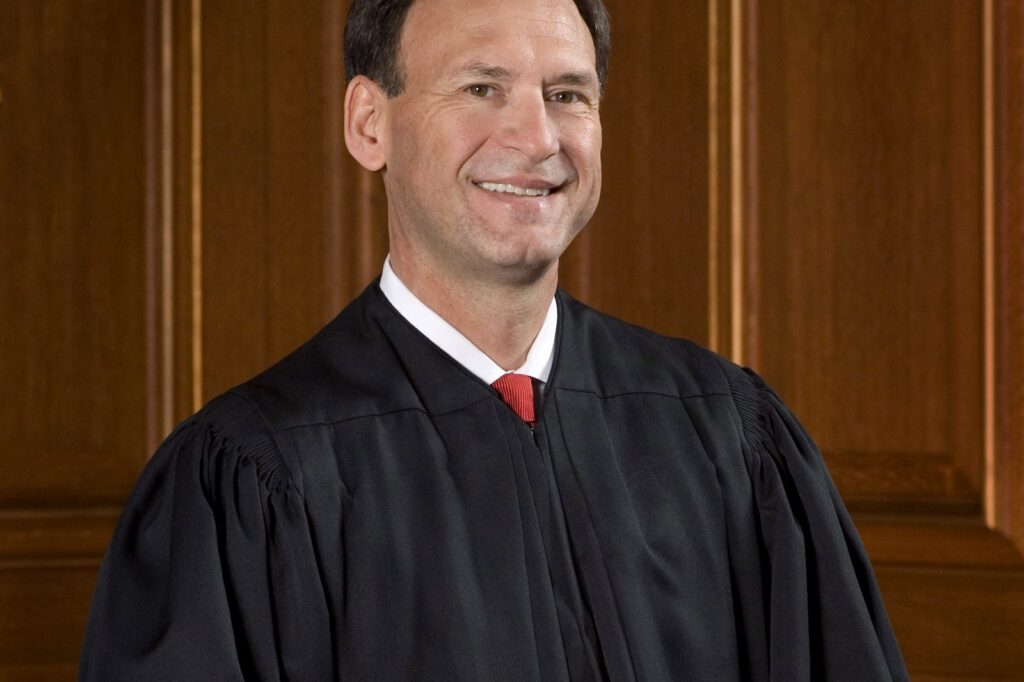
WASHINGTON, D.C., November 14, 2026 — Justice Samuel Alito warned a Federalist Society audience Thursday that Congress possesses the power to “turn off the lights of the Supreme Court” by cutting its funding. The remarks came days after Democrats secured control of both chambers in the 2026 midterm elections.
The Appropriations Lever
Alito’s warning rests on the Constitution’s Appropriations Clause. Article I, Section 9 stipulates that “No Money shall be drawn from the Treasury, but in Consequence of Appropriations made by Law.” This gives Congress unilateral authority over the judiciary’s operational budget. Alito described the judiciary as the “least dangerous” branch but “vulnerable to the executive and to Congress because they are more powerful.” He added that beyond defunding, “there are many, many, many other things that they can do, or at least try to do.”
Structural Authority Since 1789
The Judiciary Act of 1789 established the Supreme Court’s initial size, structure, and jurisdiction, codifying Congress’s authority to regulate the Court’s operations. That legislative precedent undergirds current Democratic discussions regarding Court expansion.
Expansion and Term Limits
Rep. Pramila Jayapal stated in June 2026 that Democratic lawmakers were discussing expanding the Supreme Court and implementing term limits. With Democrats securing at least a 54-seat Senate majority effective January 3, 2027, the legislative calculus for such structural changes has shifted. The Constitution provides that federal judges “shall hold their Offices during good Behaviour,” meaning term limits would require a statutory framework that withstands judicial review, while expansion requires only a simple majority in both chambers and the president’s signature.
Impeachment and Ethics Oversight
Impeachment remains the sole constitutional mechanism for removing a justice. Rep. Alexandria Ocasio-Cortez suggested Democrats were willing to pursue impeachment over alleged “criminality” among the justices. Any such effort would require a House majority vote and a two-thirds Senate conviction threshold—a high bar even with the new Democratic majority.
The Confirmation Landscape
The strategic stakes are immediate. Justices Alito, 76, and Clarence Thomas, 78, are the Court’s oldest members and the most likely retirees under a Democratic Senate. Alito has indicated he intends to serve through the 2026 term, though he is free to change his mind. If a vacancy opens before January 3, Republicans retain a narrow lame-duck window to confirm a successor; afterward, the 54-seat Democratic majority controls the confirmation calculus. Senate Judiciary Committee member Richard Blumenthal said in October 2026 that Democratic support for a Trump nominee was “slim to none.”
Separation of Powers Tensions
Alito framed the tension in martial terms: the Court is not a “nuclear weapon” or a “500-pound bomb,” but a “hand grenade”—the least dangerous, yet still dangerous. He criticized lower-court judges for issuing “unjustified” orders blocking presidential policies, arguing that frustration with legislative gridlock has driven presidents toward unilateral action, prompting litigation and sweeping injunctions. His new book, “So Ordered: An Originalist’s View of the Constitution, the Court, and Our Country,” published in 2026, argues the Court should neither defer blindly to the political branches nor engage in judicial activism.
Alito delivered these remarks at the Antonin Scalia Memorial Dinner before an audience of more than 2,500 conservative elected officials, lawyers, judges, and advocates.
Sources
- Samuel Alito
- Alito says Supreme Court is caught between the president and a Congress that can ‘turn off the lights’
- Justice Alito and the tradition of a written constitution
- Justice Samuel Alito Warns Congress Could 'Turn Off The Lights' At Supreme Court Days After Democrats Win Control
- After midterm rout, Republicans can still confirm a Supreme Court justice, but at what cost?
- Justice Alito Sounds the Alarm About Incoming Democrats: ‘Congress Can Turn Off the Lights at the Supreme Court’ * The Gateway Pundit * by Mike LaChance
Photo: Collection of the Supreme Court of the United States, Photographer: Steve Pettew (Public domain)