The Technology Tracking America’s Immigration Cases
More than 53,000 noncitizens nationwide have been fitted with ankle monitors under the Department of Homeland Security’s Alternatives to Detention program, a figure that has more than tripled since 2024 as the Trump administration ramped up immigration enforcement. This surge in electronic tagging represents a fundamental shift in how the U.S. manages immigration proceedings, turning a once-niche surveillance technology into a cornerstone of enforcement strategy.
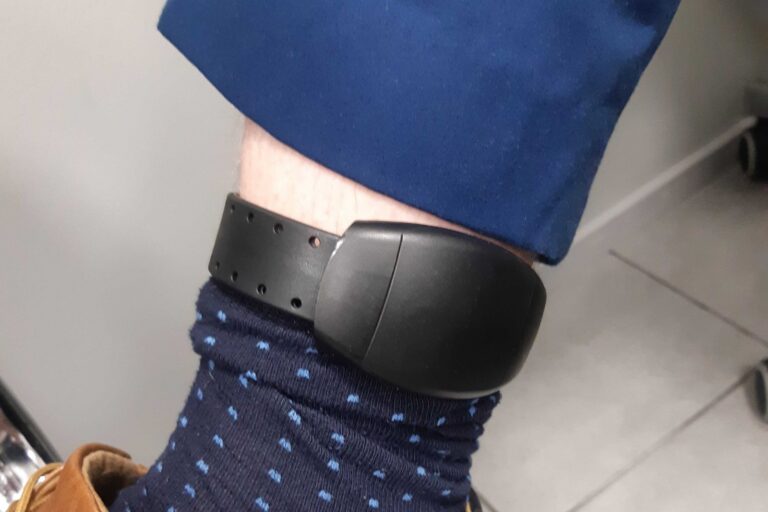
Electronic tagging is a form of surveillance that uses an electronic device affixed to a person to monitor their location or physiological state. The technology can be used in combination with a GPS tracking unit for wide-area monitoring, or radio frequency technology for short-range monitoring. In the context of immigration, it functions as a tether, ensuring individuals appear for court dates and comply with release conditions while theoretically avoiding the cost and controversy of detention.
From Academic Experiment to Enforcement Tool
The electronic monitoring of humans found its first commercial applications in the 1980s. However, its conceptual roots stretch back to the early 1960s, when Harvard University researchers developed portable transceivers and behavior transmitter-reinforcers. Led by Ralph Kirkland Schwitzgebel and his twin brother Robert, the project was grounded in the psychological theories of B.F. Skinner, aiming to use electronic devices to provide positive reinforcement to simulated young offenders. The initial concept envisioned a rehabilitative tool, a far cry from its current use as a mechanism of control in the immigration system.
How the Technology Functions
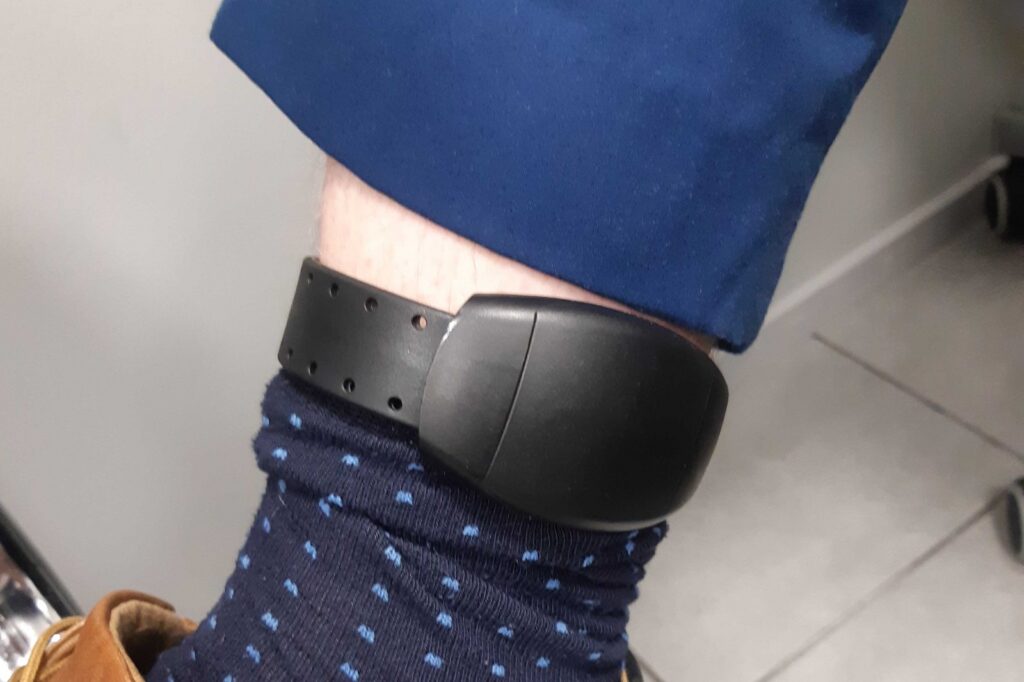
The mechanics of modern ankle monitors are a blend of established technologies. For wide-area monitoring, a GPS unit tracks the wearer’s location, transmitting data to authorities over long distances. For short-range monitoring, radio frequency technology is often used, which can detect when a person moves outside a predetermined perimeter, such as their home. The devices are typically affixed to the ankle and are designed to alert authorities if they are removed, damaged, or tampered with. The constant presence of the device, as one wearer described, serves as a reminder that authorities “know where to find you.”
The Scale of a Growing Program
The expansion of the Alternatives to Detention program is stark. This trend is not uniform; it reflects a strategic pivot by the administration. In the Chicago area alone, ICE’s field office—which covers six states—has issued nearly 3,800 ankle monitors so far in 2026, a nearly 40% jump since 2024. This escalation raises a critical question: what is the calculus behind this massive increase, and what does it signal about the broader stakes of immigration enforcement?
The Psychological Toll and Systemic Implications
While framed as an alternative to detention, the psychological impact on those subjected to constant surveillance is profound. Immigration advocates argue that the program’s expansion has come at a significant human cost. “We have seen so many people across the country who have been complying with their immigration cases, who have families, who have jobs, who have strong community ties, no significant criminal history, going to their regular appointments and suddenly getting shackled with ankle monitoring,” says Lauren Hodges, senior attorney with Amica Center for Human Rights. For individuals like Liz, a Guatemalan asylum-seeker in Chicago, the device induces a state of constant anxiety, jolted awake at night by vibrations that signal a potential visit from ICE agents. The broader stakes of this strategy are now being questioned, as advocates point out that detentions have also increased even as more people are placed under electronic monitoring. The system, in effect, is creating a new class of surveiled individuals, tethered to a digital leash that tracks their every move. A recent inquest in the UK highlighted another dimension of risk, where a man’s suicide was hastened after a security company failed to fit his electronic tag, demonstrating the lethal potential of system failures in such programs.
Sources
- As the Trump administration puts ankle monitors on more immigrants, it’s taking over this Chicagoan’s life
- Electronic tagging
- Alleged spy hastened suicide after electronic tag failures, inquest finds
- Alleged spy hastened suicide after electronic tag failures, inquest finds – AOL
- Alleged Hong Kong spy died by suicide after tag failure, jury finds
- Man charged with breaching electronic monitoring conditions four days after being fitted with device – TVMnews.mt
Photo: Russellin teekannu (CC BY-SA 4.0)