SACRAMENTO, November 18, 2026 — More than two dozen family members of murder victims and a coalition of 30 county district attorneys have asked the California Supreme Court to block Gov. Gavin Newsom’s commutation of over 500 death sentences. The legal challenges argue the governor failed to provide required notice to victims and neglected mandated individualized review of each case.
The Legal Challenge
A petition filed Monday with the state Supreme Court contends that Newsom’s personal opposition to capital punishment cannot override judgments rendered by thousands of jurors and hundreds of judges. Marc Klaas, whose 12-year-old daughter Polly was abducted and murdered in 1993, is among the petitioners. “The criminal justice system can turn on a whim,” Klaas said following the governor’s announcement.
A separate lawsuit filed by the Criminal Justice Legal Foundation on behalf of the prosecutors and victims’ families alleges two specific procedural failures. Plaintiffs argue Newsom failed to give proper notice to victims, denying them the opportunity to be heard before commutation decisions. They further allege the mass commutations were executed without the mandated individualized consideration of each condemned inmate.
“Thousands of jurors and hundreds of judges set aside their personal views on the merits of the death penalty to render judgments based on the evidence and the law,” said Anne Marie Schubert, president of the Criminal Justice Legal Foundation and former Sacramento County district attorney. “Governor Newsom decided his personal views should override all those who actually participated in the process, followed and applied the law.”
Scope of the Commutations
Newsom announced the commutations on November 5, moving to grant clemency to 548 people—529 men and 19 women—currently sentenced to death. It represents the nation’s largest act of mass clemency. Of that total, the vast majority were waiting for appointed lawyers for appeals and challenges; only 45 faced imminent execution if the moratorium were lifted.
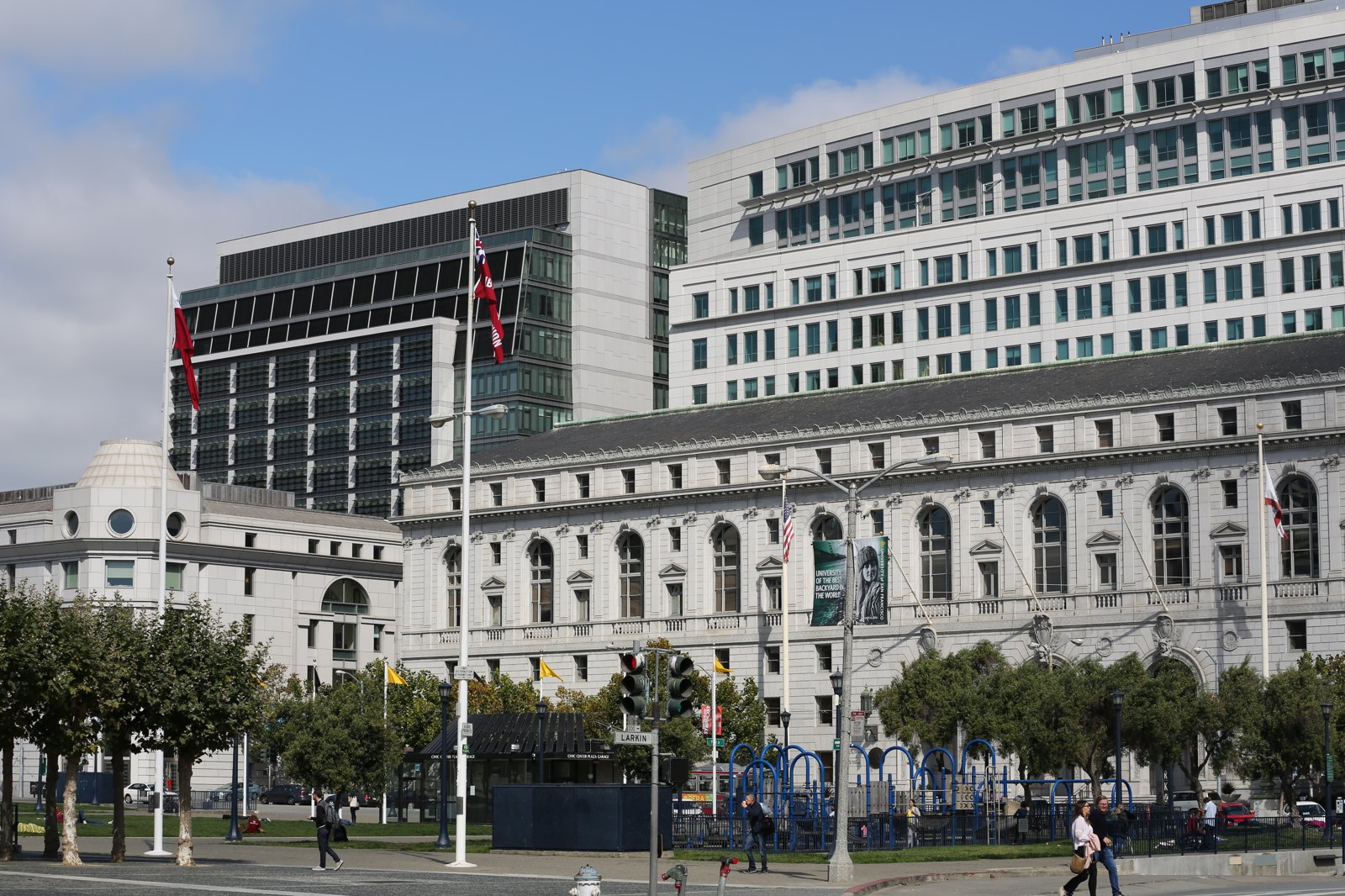
Under the California Constitution, the Supreme Court must affirm any commutation recommended by the governor for a felon with more than one felony conviction. That condition applies to approximately 70 percent of condemned inmates, meaning the court would have to sign off on 382 of the proposed commutations, according to the governor’s office.
Constitutional Authority and Precedent
The governor’s clemency power is broad, but the requirement for Supreme Court affirmation on multi-conviction felons creates a structural check. Legal scholars describe the current moment as uncharted territory. “This is all new and we don’t really have answers,” said Michael Vitiello, a professor at the University of the Pacific’s McGeorge School of Law. “There’s no record of a previous mass commutation. This is not something that we have a great deal of precedent.”
University of California Law San Francisco professor Hadar Aviram noted that if there is no detailed mandate for judicial review, the governor’s action may not be subject to extensive scrutiny from the bench. “This is an executive decision,” Aviram said.
Political and Policy Context
California has not executed anyone since 2006. Newsom issued a formal moratorium on executions in 2019, dismantled the San Quentin State Prison death chamber, and moved condemned prisoners to other facilities. Governor-elect Xavier Becerra has stated he also would not execute anyone while in office.
The political calculus is complicated by a 2016 voter referendum. Californians passed a ballot measure to speed up executions and rejected a separate measure to repeal the death penalty entirely. The state retains the death penalty on the books and allows for a death sentence under broader circumstances than any other state, including the murder of a police officer, prosecutor, or public official, and murders involving gang activity or financial gain.
A pending court case argues the death penalty is applied in a racially biased manner that violates the state constitution, a ruling that could end the imposition of death sentences indefinitely. Local prosecutors have vowed to continue pursuing capital punishment when allowed, meaning the state may slowly continue sending defendants to death row even if the Supreme Court approves Newsom’s commutations.
Reactions and Next Steps
Newsom called the state’s system for administering the death penalty “a failure” in an open letter announcing the decision. “Many Californians feel that those who commit brutal crimes deserve to die,” Newsom wrote. “But as Governor, I have concluded the state cannot morally kill them.”
The announcement was applauded by the ACLU and some victims’ family members, including Paul Wilson, the husband of a murder victim who initially supported the execution of his wife’s killer before changing his position on the death penalty. The California Supreme Court has not yet indicated a timeline for reviewing the petitions.
Sources
- Families of California murder victims ask state Supreme Court to block governor’s commutation of death sentences | CNN
- Gavin Newsom
- Standing on Ukrainian soil, Governor Newsom announces new lifesaving aid for the defenders of freedom | Governor of California
- California governor Gavin Newsom endorses global fossil fuel phaseout
- Gavin Newsom sued by prosecutors and victim rights group to stop mass death row commutation
- What’s the future of the death penalty in California after Newsom’s clemency?
Photo: Xuthoria (CC BY-SA 4.0)