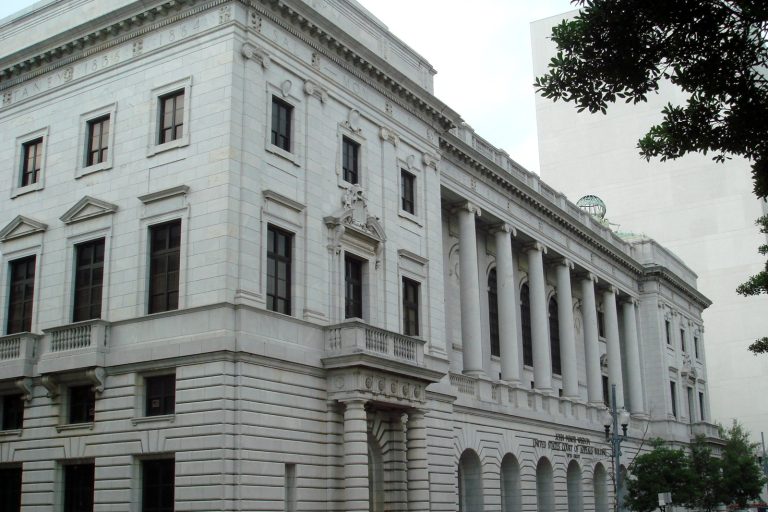
WASHINGTON DC, October 23, 2026 — The U.S. Court of Appeals for the Fifth Circuit ruled 10-7 on Friday that noncitizens who have not been admitted to the United States are not entitled to bond hearings under due process. The decision stands as a major legal victory for the Trump administration’s mass deportation efforts, which have relied heavily on mandatory detention policies in recent months.
By the numbers, the split was stark. Ten judges supported the majority view, while seven dissented. The ruling directly impacts immigration proceedings in Texas, Louisiana, and Mississippi, the three states within the Fifth Circuit’s jurisdiction. For the Trump administration, the outcome validates a strategy that has fast-tracked removal proceedings to fulfill the president’s promise of mass deportations.
The Legal Basis and Majority Opinion
Judge Cory Wilson, a Trump appointee, authored the majority opinion. He was joined by eight colleagues, with Judge Priscilla Richman concurring in the result. Wilson’s central argument rests on the petitioners’ legal status. Because the individuals in question were never formally admitted to the country, Wilson wrote, they do not possess the full spectrum of Fifth Amendment protections that would mandate a bond hearing.
“Because Petitioners have never been admitted to the United States, due process does not entitle them to additional proceedings beyond what Congress has provided before they may be detained pending removal,” Wilson stated. The opinion emphasizes that Congress holds broad authority over immigration policy and the design of related proceedings. Wilson noted that the Constitution entrusts this power to the legislative branch, not the courts. Therefore, the judiciary cannot rewrite immigration policy or create rights that Congress has not explicitly granted.
Wilson also addressed the practical aspect of detention. He wrote that noncitizens can be released from detention “at any moment by agreeing to leave the country.” Furthermore, he determined that the length of stay in immigration detention presented no constitutional issues warranting release. This logic aligns with a principle codified in 1996 legislation, which the administration argues has been ignored by federal courts for decades.
Detention in Texas and the Dissent
The case, Sosnava Rodriguez v. Ortega, involved three men detained in Texas. None of the petitioners had criminal histories, according to the American Immigration Council. They were held without access to a bond hearing, a procedural step that allows a judge to review the necessity of detention. The plaintiffs argued they were entitled to this review before deportation proceedings concluded.
The dissenting judges, all appointed by Democratic presidents or Republican President George W. Bush, rejected the majority’s framework. Judge Leslie Southwick, writing for the dissent, described the majority’s logic as building “an impenetrable wall between the Constitution and these long-term residents.” Southwick argued that while detention can be a valid part of deportation, there is no support for locking up a noncitizen for an indefinite period, “however delayed,” without an option for release.
Other dissenting judges, including Judge Dana Douglas, criticized the majority for relying on what she called “sham history.” Judge Andrew Oldham, a Trump appointee, wrote a lengthy response to Douglas, asserting that the writ of habeas corpus does not define the “strike zone” of immigration law. He argued that this authority rests solely with Congress, which can expand or contract the scope of detention as it sees fit.
Impact on Habeas Corpus Petitions
The ruling has immediate implications for the flood of habeas corpus petitions filed in the Fifth Circuit. Last year, the Trump administration began classifying noncitizens who have lived long-term within U.S. borders as “seeking admission.” This legal interpretation, a departure from nearly three decades of practice, denied these individuals bond hearings. The new ruling reinforces that classification, effectively barring judicial review of their detention based on due process grounds.
Attorneys for the petitioners warned of the consequences. Ellie Norton, Supervising Attorney at the National Immigration Project, stated that the ruling opens the door to more people being locked up for no reason. She noted that the petitioners were fathers who had lived in the U.S. for years, contributing to their communities and supporting their U.S. citizen children. “Their circumstances are far from unique,” Norton said, highlighting the risk to families and communities across the region.
James Percival, the general counsel for the Department of Homeland Security, called the decision a “big win” for mandatory detention. He characterized the ruling as a correction of a principle that had been ignored by the “deep state” for decades. The administration views this policy as a legal cornerstone of its deportation strategy, which aims to expedite the removal of noncitizens without the delays associated with bond proceedings.
Supreme Court Review and Future Outlook
While the Fifth Circuit’s decision is final for the circuit, the legal battle is not over. The Supreme Court has agreed to consider a separate question: whether the Trump administration’s mandatory detention scheme correctly interprets the relevant statute. This is a distinct legal issue from the constitutional due process question decided by the Fifth Circuit. The outcome in Washington could further clarify the limits of executive power in immigration enforcement.
The American Immigration Council, which argued the case before the Fifth Circuit, condemned the ruling. Rebecca Cassler, a senior litigation attorney at the council, called the decision an “affront” to the U.S. Constitution. “The right to due process is a fundamental constitutional protection, and it is meant to protect every person in this country,” Cassler said. She argued that the decision hollows out that right for immigrants in Texas, Louisiana, and Mississippi, and threatens the meaning of liberty for all.
Investors and policy watchers will note the broader trend. The Fifth Circuit is an outlier among appellate circuits in upholding this specific detention policy. Only one other circuit has blessed the policy, while nine have ruled against it. This divergence suggests that the legal landscape for immigration detention remains fragmented, with the Supreme Court poised to provide a final, national standard. Until then, the 10-7 ruling in the Fifth Circuit will govern detention practices in some of the busiest immigration jurisdictions in the country.
Sources
- Fifth Circuit Immigration Detention Ruling a Major Setback for Due Process
- Fifth Circuit gives Trump 'the most consequential ruling yet' on deportations | Blaze Media
- Trump Migrant Detention Policy Upheld by Full Fifth Circuit (2)
Photo: Bobak Ha'Eri (CC BY 3.0)