
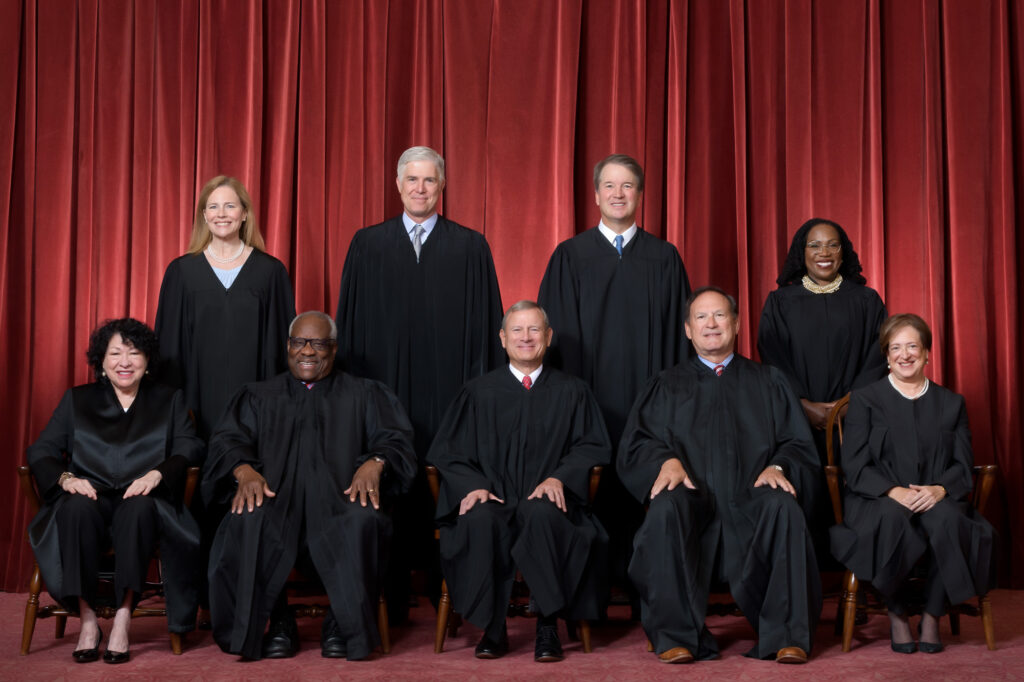
WASHINGTON, July 5 — The Supreme Court’s ruling in United States v. Texas, No. 24-123, lands in a city still buzzing with the echo of the July Fourth holiday, but the legal reverberations are anything but celebratory for those who had hoped to narrow the definition of American citizenship. The decision reaffirms a principle as old as Reconstruction itself: birthright citizenship.
On the ground here, legal scholars and advocates are still parsing the opinion, but the core holding is clear. The Court has declined to carve out an exception to the 14th Amendment’s Citizenship Clause for children born to undocumented immigrants.
It is a ruling that, by nightfall, had already drawn sharp lines in the sand for the ongoing national debate over immigration.
A Clause Born From War
The 14th Amendment was ratified in 1868, a direct response to the bloodshed and legal chaos of the American Civil War. Its architects intended it to guarantee citizenship and equal protection under the law to formerly enslaved people, explicitly overturning the infamous 1857 Dred Scott v. Sandford decision that had denied African Americans any claim to citizenship.
The text of the Citizenship Clause is deceptively simple: “All persons born or naturalized in the United States, and subject to the jurisdiction thereof, are citizens of the United States and of the State wherein they reside.” That language has been the bedrock of American civil rights law for over 150 years. The Supreme Court first tested its breadth in the 1898 case United States v.
Wong Kim Ark, which affirmed that children born on U.S. soil to legal immigrant parents are citizens. The current case, United States v. Texas, asked the justices to go further and decide whether that same protection extends to children whose parents are in the country without legal status.
The Court’s answer, delivered today, is a resounding yes.
The Wong Kim Ark Precedent Holds
Residents describing the scene outside the Court noted a palpable tension as the ruling was announced. The decision is consistent with over 150 years of practice and judicial interpretation. By holding the line, the Court has effectively said that the 14th Amendment’s promise is not contingent on the immigration status of a child’s parents.
The ruling reaffirms a broad reading of the clause, one that has been foundational to how the United States defines who belongs. The implications are immediate.
The case, brought by Texas and other states, sought to upend a long-standing administrative practice that has granted citizenship to anyone born on American soil, regardless of their parents’ legal standing. That practice, now constitutionally fortified, means that hundreds of thousands of children born annually to undocumented immigrants will retain their birthright citizenship.
What to Watch Next
By nightfall, the political reaction was already taking shape. The ruling does not close the broader immigration debate, but it does set a firm constitutional floor. For the Trump administration, which has taken a hard line on immigration enforcement, the decision represents a significant legal setback.
The question now is whether the ruling will galvanize efforts to amend the Constitution itself — a long-shot proposition — or shift the fight to other arenas, such as congressional legislation or state-level challenges. For now, the 14th Amendment stands as it has since 1868.
The scene in Washington is one of quiet, determined recalibration. The Court has spoken, and the law, for the moment, is settled.
{“@context”: “https://schema.org”, “@type”: “NewsArticle”, “headline”: “How the 14th Amendment Anchors the Birthright Citizenship Fight”, “description”: “WASHINGTON, July 5 — The Supreme Court’s ruling in United States v. Texas , No. 24-123, lands in a city still buzzing with the echo…”, “datePublished”: “2026-07-05T09:30:00+00:00”, “author”: {“@type”: “Person”, “name”: “Isabella Moore”}, “publisher”: {“@type”: “Organization”, “name”: “InfoPulse Today”, “url”: “https://newsfeed.2bme.xyz/”}}




