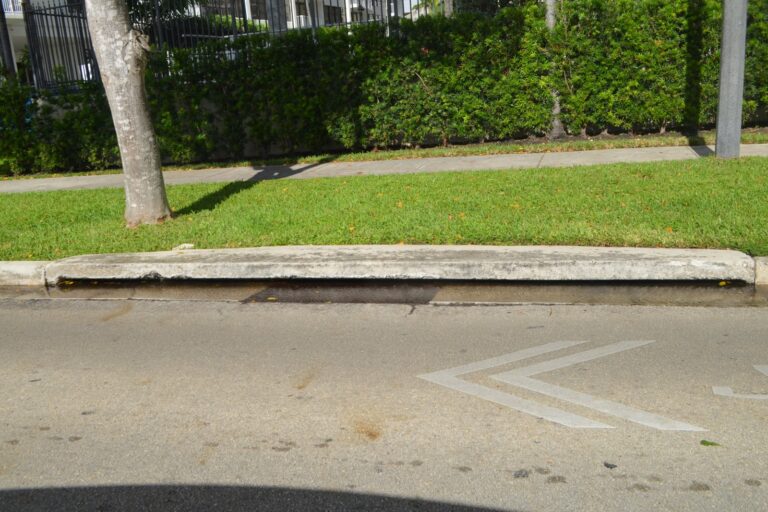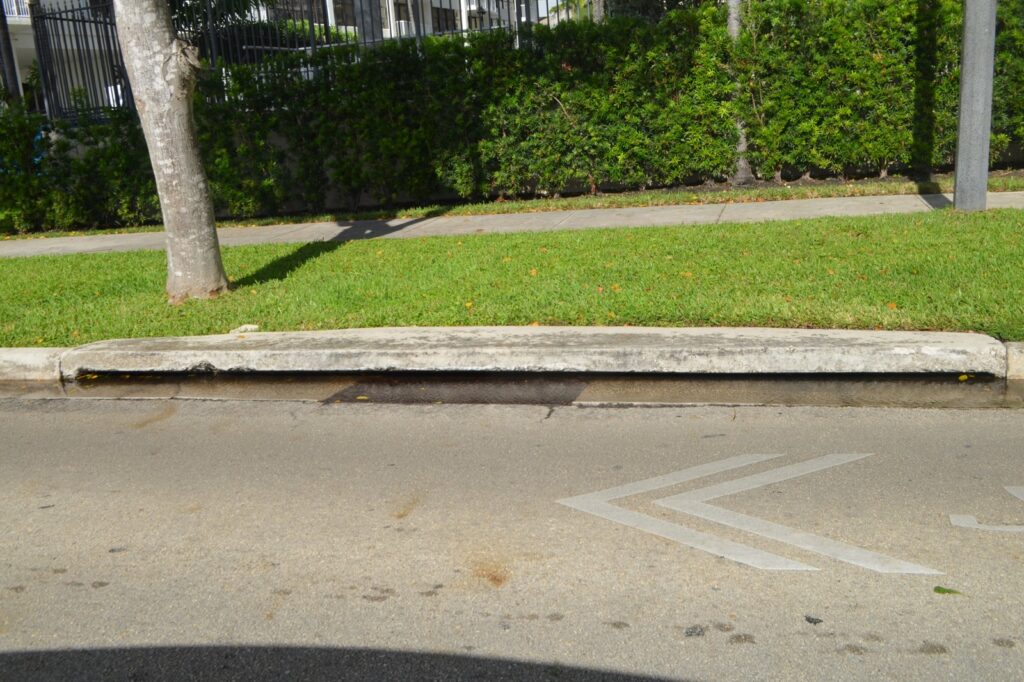
South Florida is already bracing for rising waters, and the peak of the current king tide is just days away. Residents describe the streets filling with saltwater, cars being stranded, and homes at risk of damage from the relentless surge of the ocean.
What Are King Tides and How Are They Formed?
King tides are the highest tides of the year, driven by the gravitational pull of the Moon and Sun. They occur when the Earth, Moon, and Sun align at specific points in their orbits — perigee for the Moon and perihelion for the Earth. These alignments create the strongest gravitational forces, leading to the most extreme tidal ranges. Tides are a natural phenomenon, but king tides are particularly intense, occurring three to four times a year. They are not a scientific term, but they are a growing concern for coastal communities.
Why King Tides Are a Growing Concern in South Florida
South Florida is especially vulnerable to king tides due to its low-lying geography and extensive coastal development. The region has seen increasing instances of tidal flooding, with water spilling over seawalls and into streets. In Newport Beach, for example, residents have described water flowing continuously through streets, a sight that has not been seen before. The city has declared a state of emergency and is taking measures to mitigate the damage, including deploying sandbags and building protective berms.
How Communities Are Preparing for King Tides
In response to the threat of king tides, cities like Newport Beach have activated emergency operations centers and are working to reinforce their defenses. City crews are building sand berms and positioning pumps and tide valves in flood-prone areas. Residents are also being encouraged to take precautions, such as obtaining sandbags and avoiding low-lying areas during high tide. These efforts are part of a broader strategy to protect infrastructure, homes, and businesses from the impact of rising waters.
Looking Ahead: The Science and the Impact
The science behind king tides is well understood, but their impact on coastal communities is becoming more severe with each passing year. As sea levels rise due to climate change, the effects of king tides are expected to worsen. Coastal areas are already experiencing more frequent and severe flooding events, and the situation is likely to get worse. For now, residents and city officials are working together to manage the immediate threat, but the long-term challenge remains clear: adapting to a changing coastline.
Regional Impact And Flood Warnings
The National Weather Service (NWS) has issued a coastal flood advisory for beaches in Los Angeles, Ventura, Santa Barbara, and San Luis Obispo counties, warning of possible flooding due to “very high” king tides. High tides are likely to reach up to eight feet each morning, which is 1.0 to 1.5 feet above astronomical projections.
According to the NWS, minor to moderate flooding of sea water is likely over vulnerable low-lying coastal areas, especially around the time of high tide, including over beach parking lots, bike paths, and harbor walkways. Moderate to significant beach erosion is also likely.
A coastal flood warning has also been issued for San Diego County and Orange County, with the NWS advising coastal residents to be alert for rising water and take appropriate action to protect life and property. The high tides are expected to occur in the morning, with water levels potentially reaching 1 to 1.7 feet above astronomical tide predictions.
Gravitational Mechanics of the Moon and Sun
The Moon circles Earth in an elliptical path that completes roughly every 29 days. Because of this shape, the lunar distance varies: at perigee the Moon is closest and its pull on the oceans is strongest, while at apogee the pull weakens. The Moon’s influence on tides exceeds the Sun’s, even though the Sun also contributes a measurable component.
Earth’s own orbit around the Sun is likewise elliptical, taking just over 365 days to close. The planet reaches perihelion—its nearest point to the Sun—around 2 January, when solar gravity adds a modest boost to tidal ranges. Conversely, at aphelion near 2 July the Sun’s effect is at its minimum. When a new or full moon coincides with the Moon’s perigee and Earth’s perihelion, the three bodies line up and produce the largest possible tidal swing, known as a perigean spring tide.
Spring tides recur about every 14 days, at each new and full moon, because that is when the Sun‑Moon alignment maximizes the combined pull. The additional amplification from perigee and perihelion is what distinguishes ordinary spring tides from the exceptionally high “king tides” that flood coastal streets and overwhelm infrastructure.
Weather Patterns and Halloween Weekend Rainfall
The National Weather Service indicates that predicted king tide heights can be further augmented by local weather patterns and ocean conditions. This interaction is particularly relevant for Southern California, where the NWS forecasts a “wet Halloween weekend” coinciding with the peak tidal events. Coastal water levels are expected to crest at elevated heights from October 26 to 28, with high tides beginning on October 26 at a predicted height of 6.5 feet and potentially reaching 8.3 feet.
According to the forecast, there is high confidence in measurable rainfall for most, if not all, of the area Friday through the weekend. However, confidence in the specific timing of rainfall and total amounts remains very low. The NWS advises that residents should expect Halloween activities to be impacted by rainfall to some level, adding a layer of complexity to the already elevated water levels caused by the astronomical alignments.
Sources
- King tide
- Newport Beach declares state of emergency ahead of expected king tides
- Flood alert for LA, Ventura, Santa Barbara and San Luis Obispo ahead of king tides
Photo: B137 (CC0)