
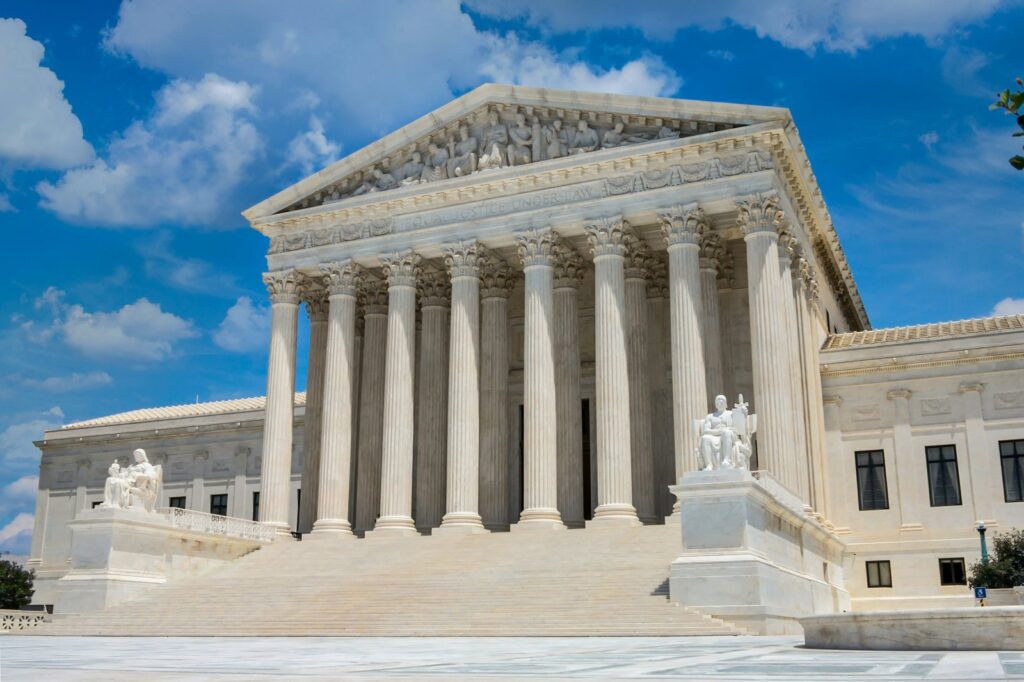
WASHINGTON, October 15, 2026 — The Supreme Court heard arguments Wednesday on whether a 1988 law written to protect video rental records applies to modern websites and streaming services. The justices appeared divided over extending the statute to digital platforms where users watch content for free.
Blockbuster-Era Law Meets Digital Tracking
The Video Privacy Protection Act (VPPA) was passed by Congress in 1988 after a journalist published Supreme Court nominee Robert Bork’s video rental history during his Senate hearings. The case, Salazar v. Paramount, centers on whether that statute governs how companies like 247Sports track viewer data today. A district and appellate court dismissed Salazar’s case, but the Supreme Court took the appeal to resolve a circuit split over the law’s reach.
Justices Test Boundaries of ‘Consumer’ and ‘Provider’
Several conservative justices expressed skepticism about applying the 1988 law to modern websites. Justice Clarence Thomas asked early in the arguments whether “goods or services from a videotape service provider would be video related services.” Justice Amy Coney Barrett pressed Salazar’s lawyer, Joshua Hammack, on what makes 247Sports a video service provider, to which Hammack replied that it was profit motivated.
Justice Elena Kagan hypothesized a judge watching “women wrestling” videos to illustrate Congress’ intent to prevent embarrassing disclosures. “That’s embarrassing and exactly the way Congress thought they were passing the statute to prevent disclosure of that information,” Kagan said. Justice Ketanji Brown Jackson questioned why Congress would define “consumer” broadly if it meant only video services.
Paramount Argues for Narrow Reading
Paramount argues that Salazar is not a “consumer” under the law because he did not purchase video content. The company says 247Sports is a free sports news website that posts video clips alongside articles and photos and should not be covered by the VPPA. “That is a completely different business from renting video cassette tapes. The VPPA does not address it,” company lawyers wrote.
Paul Clement, representing Paramount, warned that accepting Salazar’s view could open the floodgates of litigation. “When one refers to goods or services from a videotaped service provider, one does not logically refer to chicken sandwiches or dog bandanas,” he said. Justice Samuel Alito asked Hammack why lower court judges had overwhelmingly rejected similar attempts to expand the law’s reach.
Consumer Advocates Cite Broad Legislative Intent
Salazar’s lawyer argued the VPPA was not “technology specific” and should apply to any consumer of video content. Hammack told the court the disclosures happen “constantly, instantly every time someone, including a consumer, watches a video on the website.” He conceded there was “some mystery” to the statutory definitions but said the court should “live” with that rather than “rewrite” the law. Consumer advocates say the law was written broadly to adapt to technological change.
Decision Expected by Summer 2027
The Supreme Court is expected to rule before its current session ends in late June 2027. The decision could reshape digital privacy rights for online video viewers and determine which companies qualify as video service providers under the decades-old statute.
Origins of the VPPA in the Bork Video Rental Disclosure
The Video Privacy Protection Act was enacted in direct response to the 1987 disclosure of Supreme Court nominee Robert Bork’s video rental history. A Washington City Paper reporter obtained a list of 146 movies rented by Bork from a video store clerk and published it during his Senate confirmation hearings. Although the list contained no scandalous content, the release sparked bipartisan outrage over the invasion of privacy. This incident prompted Congress to pass the VPPA the following year to prevent the unauthorized disclosure of personally identifiable information tied to video viewing habits.
Free Access vs. Paid Models in VPPA Application
Justices explored whether the VPPA’s protections should extend to free websites like 247Sports, which offer video content without requiring payment. Justice Amy Coney Barrett questioned whether a site that provides sports news alongside free video clips qualifies as a “video service provider” under the law, noting the absence of a direct transaction. Salazar’s lawyer, Joshua Hammack, countered that the service is profit-driven through advertising, making it functionally similar to traditional video providers despite lacking user fees.
Paramount’s counsel, Paul Clement, argued that applying the VPPA to free platforms would distort the statute’s original scope, which was designed around paid video rentals. He warned that interpreting “goods or services” to include ad-supported content could lead to absurd expansions, such as covering retailers that incidentally show videos. The justices debated whether Congress intended to protect only those who pay for video access or all individuals whose viewing data is collected, regardless of payment model.
Sources
- Blockbuster-era law governing privacy of video rentals gets a fresh look from the Supreme Court – AOL
- US Supreme Court weighs applying 1980s video-renter privacy law to digital age
- Supreme Court weighs scope of 1980s video privacy law in internet newsletter age
Photo: Fine Photographics / Unsplash (Unsplash License)




