
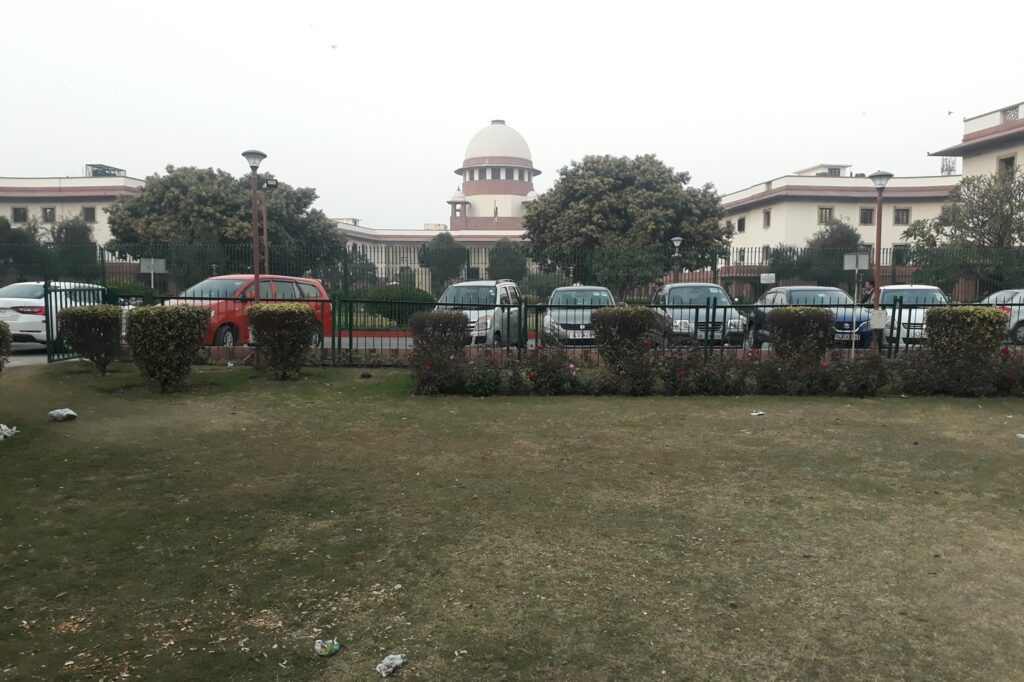
NEW DELHI, October 18, 2026 — The Supreme Court ruled that children hold a fundamental right to internet access while calling for enforceable safety frameworks rather than total bans.
Fundamental Rights and Digital Freedom
NEW DELHI — The Supreme Court held that the right to access and use the internet is a fundamental right under Article 21 read with Article 19(1)(a) of the Constitution, according to an order issued by a Bench of Justices J.B. Pardiwala and Vinod K. Chandran. The Bench stated that children, irrespective of their age, enjoy the same rights, and to deny the access altogether would be as absurd as saying individuals below a certain age do not have a conscience worth protecting. The court observed that the safety of children and their freedom are not at odds with each other, adding that children are entitled to both.
For all the noise surrounding digital consumption, the salient point from the Bench is that children do not cease to use the internet merely because a blanket ban prohibits them from doing so. According to the Supreme Court, children continue to use the internet without the knowledge of their parents or authorities, moving instead to other platforms and websites that are unregulated and even more unsafe. The court noted that blanket restrictions are unproven measures of proven disproportionality, and no jurisdiction has demonstrated that children are safer on account of such measures.
Legal Challenges and School Concerns
The legal challenge originated from a public interest petition filed under Article 32 by Emerald Heights International School in Indore and its director of academics, Siddharth Singh Girnar, according to court documents. The school, which states it has about 4,115 students and stands in the position of a guardian to them, asked the Supreme Court to direct the Centre to frame an enforceable child-safety regime for social media. The petition was drawn by Advocates Khusbhu Jain, Mayank Singh Rawat and Zaid Ahmed, and filed through Advocate-on-Record Vaibhav Choudhary.
According to the petition, social media platforms lack the age verification standards already required for OTT content and online games under the IT Rules, 2021. The petition notes that children can buy neither liquor, tobacco nor acid, yet can open a social media account without any verification. The Digital Personal Data Protection Act, 2023 defines any person below 18 as a child, while platforms rely on a self-declared threshold of 13 years. The school reported that students are frequently sleep-deficient, distracted, unable to concentrate, and contacted by strangers due to social media use.
Safety Tools Versus Total Restrictions
The Supreme Court emphasized that intelligent restraints and mandatory safety tools are preferable to total restrictions. The Bench acknowledged that some form of safeguards is necessary for the safety of children online and the moderation of content. However, the court noted that stringent restrictions might discourage children from reporting abuse to parents, guardians or trusted adults for fear of punishment for using the internet, which would undermine safety objectives.
Experts argue that relying solely on parental vigilance is insufficient given the technical risks and the scale of online threats. Parents cannot watch every screen or inspect every message, meaning the government must establish clear rules and technology companies must take responsibility for the systems they build. Age-based safeguards, stronger verification, safer default settings and meaningful penalties for non-compliance are noted as measures that deserve serious consideration.
Sources
- Social Media Ban For Children Under 13? Indore School Moves Supreme Court For Age Verification And Parental Consent Rules | Social Media Ban For Children Under 13? Indore School Moves Supreme Court For Age Verification And Parental Consent Rules
- Child Online Safety: Why Internet Freedom Needs Safeguards
- Children have fundamental right to access and use internet: Supreme Court – United States
Photo: Pinakpani (CC BY-SA 4.0)




