
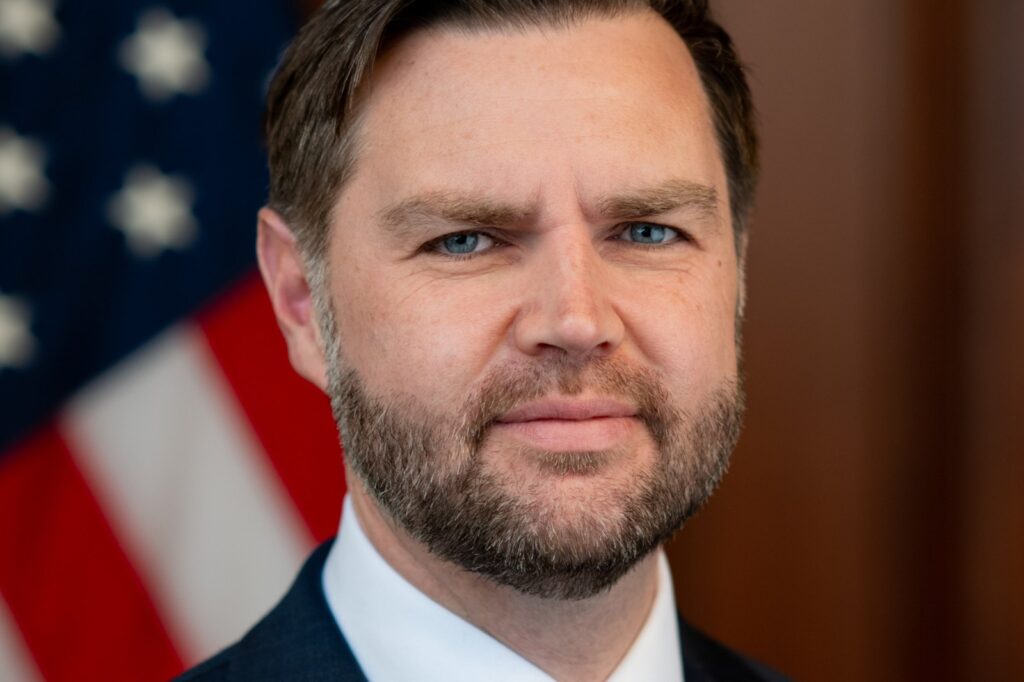
WEST PALM BEACH, October 19, 2026 — Vice President JD Vance faced sharp questions from Michigan voters about the Trump administration’s handling of the Iran war and rising gasoline prices during a CBS News town hall.
Vance acknowledged errors in troop placement that contributed to the deaths of six U.S. soldiers in Kuwait, stating, “there were issues with where troops were located that we realized was a huge mistake that we could do better on, and we have changed that.” He said he had not previously heard the specifics of the incident when questioned by Joey Amor, widow of Master Sgt. Nicole Amor, who was killed in an Iranian drone strike on March 1, 2025, the day after President Trump began military action against Iran. Vance responded, “This literally is the first time I’ve heard of this,” and expressed a desire to speak further with Amor to learn more.
On gasoline prices, Vance attributed the increase to regional instability, saying, “I think it’s important to be honest about why they’re so elevated.” He pointed to “what’s happening in the Middle East” and described Iran as “the largest state sponsor of terrorism that’s trying to choke off world energy supply.” He also blamed former President Joe Biden for diminishing America’s refining capacity during his term. When pressed on administration responsibility for the current situation, Vance suggested that assigning blame for past decisions was unproductive, stating, “Fundamentally, we are where we are, and you have to, in my view, look forward.”
On economic policy, Vance argued that long-term underinvestment, not current administration actions, was responsible for economic challenges. He said, “What broke the United States, as much as I might like to criticize Joe Biden, but it was a bipartisan, multi-generational failure to under-invest in American workers, to under-invest in American manufacturing, to ship all of our good jobs overseas.” He cited new investment by General Motors, Ford, and Stellantis as evidence the administration was “turning the tide” on manufacturing decline.
Regarding a potential 2028 presidential run, Vance said there was “of course” a chance he would not run, describing himself as a procrastinator on major life decisions. He noted he and his wife, Usha Vance, have four young children, and that while she has never loved politics, she values public service. The town hall was hosted by CBS News anchor Tony Dokoupil and aired on Saturday evening in West Palm Beach, Florida. Vance is widely viewed as an early frontrunner in the Republican primaries and a possible successor to former President Trump’s political movement. A Michigan voter who supported Trump in 2024 but now plans to vote for Democratic Senate candidate Abdul El-Sayed questioned Vance on gas prices during the event.
Vance Cites Information Gaps and Accountability Questions
During the exchange with Joey Amor, Vance offered a specific explanation for his initial lack of knowledge regarding the incident. He stated, “This job is an amazing honor, but you live in a bit of a bubble and sometimes information doesn’t filter up.” This comment provided context for his previous assertion that he had not heard the specifics of the drone strike until that moment. Amor, who identified his late wife as Master Sgt. Nicole Amor, asked specifically about the mistakes and fundamental failures that led to the deaths of the soldiers, as well as how leaders would be held accountable for those errors.
The source material notes that Vance seemed taken aback by the depth of Amor’s inquiries. While Vance acknowledged the placement errors and confirmed that changes had been made to troop locations, he did not detail the specific nature of the “fundamental failures” Amor referenced. The interaction highlighted a disconnect between the administration’s high-level strategic view and the specific operational details concerning the six U.S. soldiers killed in Kuwait. Vance’s response focused on the structural limitations of information flow within the vice presidency rather than providing a granular account of the decision-making process surrounding the March 1, 2025, strike.
Vance Links Iranian Energy Threats to Gasoline Price Hikes
During the CBS News town hall, Vice President Vance explicitly connected the rise in gasoline prices to Iran’s actions in the Middle East. He stated, “We’ve never had a situation like this where you have effectively the largest state sponsor of terrorism that’s trying to choke off world energy supply.” This framing positioned Iran’s alleged efforts to disrupt global energy markets as a primary driver of the price increases, rather than attributing them solely to the ongoing war or domestic policy decisions.
Vance’s remarks did not acknowledge the role of the Trump administration’s decision to initiate military action against Iran in March 2025. Instead, he focused on Iran’s status as a state sponsor of terrorism and its purported attempts to manipulate energy supplies. This defensive framing shifted the narrative away from the administration’s responsibility for the war’s consequences and toward an external threat narrative. By emphasizing Iran’s actions, Vance sought to justify the current economic challenges as a response to geopolitical aggression rather than a result of policy choices.
Bipartisan Underinvestment Cited as Root Cause of Economic Decline
Vance attributed the stagnation of the American economy to a long-term, bipartisan failure rather than the current administration’s policies. He stated, “What broke the United States, as much as I might like to criticize Joe Biden, but it was a bipartisan, multi-generational failure to under-invest in American workers, to under-invest in American manufacturing, to ship all of our good jobs overseas.” This argument shifted the focus from recent political decisions to a historical pattern of disinvestment that spans multiple generations and political parties.
To illustrate the consequences of this decline, Vance told a voter that if all good jobs are overseas, people in Michigan cannot spend money at local family businesses. He cited new foreign investment in the United States by General Motors, Ford, and Stellantis as evidence that the administration is “turning the tide” on the decline in U.S. manufacturing. By framing the economic challenges as a result of past bipartisan inaction, Vance positioned the current administration’s efforts as a necessary correction to a multi-decade trend.
Sources
- Vance faces tough questions on Iran war, immigration and more in CBS town hall
- JD Vance
- 7 highlights from JD Vance's CBS News town hall: Iran, immigration, corruption and 2028 plans
Photo: Emily J. Higgins (Public domain)




