
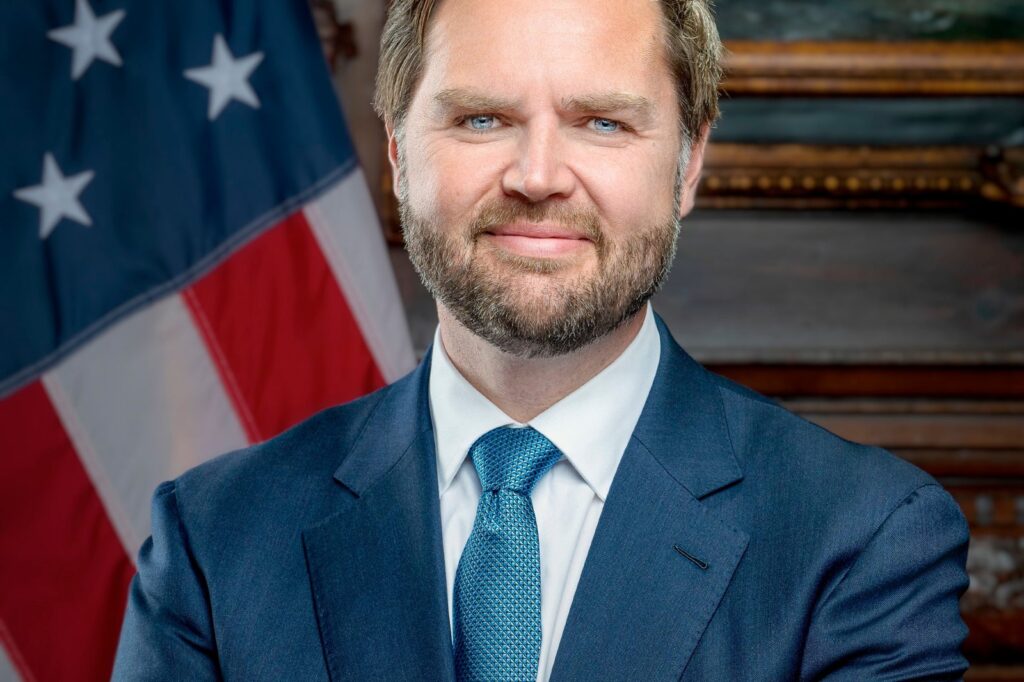
President Donald Trump and Vice President JD Vance have publicly linked recent violent riots in France to the nation’s immigration policies, urging American voters to view the unrest as a warning for the United States. As protests involving over half a million people against the high cost of living resulted in arson and property damage across French cities, the administration has framed these events as a direct consequence of failed assimilation and border control.
The Rhetoric Of International Instability
The connection between French civil unrest and American immigration policy has become a central theme for the White House ahead of the November 3 midterm elections. President Trump stated on his Truth Social platform that France is burning and urged the country to close its borders before it is too late. The president further claimed that the immigration of people from an entirely different world has shattered the nation.
Vice President Vance echoed these sentiments while sharing footage of a burning city hall in Limoges. According to Vance, Western liberals ignored fundamental questions of assimilation and compatibility in their pursuit of diversity and compassion. He warned that the current situation in France is the future that congressional Democrats seek for the United States. These remarks arrive as the administration continues to promote restrictive immigration policies and aggressive deportation measures as necessary safeguards for domestic stability.
Defining The Scope Of Immigration Law
Immigration law encompasses the national statutes, regulations, and legal precedents that govern how individuals enter, exit, and are deported from a country. While distinct from naturalization and citizenship, these laws often regulate internal rights, such as the duration of stay, freedom of movement, and the ability to participate in government or commerce. National laws regarding the immigration of a country’s own citizens are also subject to international standards, such as the United Nations’ International Covenant on Civil and Political Rights, which mandates that countries allow entry to their own citizens.
Policy frameworks often vary based on the prevailing social and political climate, shifting between inclusive approaches and nationalist or isolationist stances. Beyond basic border control, immigration policy includes the treatment of refugees seeking asylum from persecution based on race, religion, nationality, or political opinion. Some states have also implemented immigrant investor programmes, which offer residency or citizenship in exchange for capital. These programmes have faced criticism from the European Parliament and other entities due to security concerns and a lack of demonstrable economic benefits.
The Debate Over Assimilation And Social Cohesion
The argument linking immigration to social unrest centers on the concept of assimilation. Supporters of stricter policies, such as Diana McAllister, a founder of the Family Academy, argue that those who enter the country unlawfully have not paid their dues and should return home. McAllister, who describes herself as ultra-conservative, shifted her views from an earlier liberal stance toward a focus on prioritizing the needs of her own community. She maintains that employers should make the effort to hire workers through legal channels, even if the current visa application process remains burdensome.
Conversely, others express concern over the human impact of aggressive enforcement. Mark Ibay, a naturalized citizen who immigrated from the Philippines, describes the current environment as scary. Despite having legal status, Ibay carries his passport card everywhere due to the intensity of recent enforcement efforts. He argues that many innocent people are caught in the crossfire of current detention and deportation practices. Ibay, who considers himself neutral, emphasizes that his community aims to build and contribute to the country that provided them with an opportunity.
Domestic Impacts Of Enforcement Policies
The implementation of immigration enforcement has produced measurable shifts in public opinion and local conditions. A recent Fox News poll indicates that President Trump’s approval rating on immigration stands at 43%, representing a five-point decline from the previous summer. Data analysis of ICE activity in Washington state, conducted by KUOW using datasets from the Deportation Data Project, shows that a majority of recent arrests involved individuals with no criminal record. This finding contrasts with the administration’s stated focus on targeting those with criminal histories or those present in the country unlawfully.
Public opinion remains deeply divided as the midterm elections approach. While some citizens support the administration’s get-tough approach to border security, others express fear regarding the methods used by federal agencies. The tension between the desire for national order and the realities of immigrant communities continues to shape the discourse. As voters prepare for the upcoming elections, the debate over whether immigration policy is the primary driver of social stability remains a defining issue in American politics.
Political Implications For Upcoming Elections
The US midterm elections, scheduled for November 3, will see all seats in the House of Representatives and roughly a third of the Senate contested, according to Yahoo News. President Trump’s restrictive immigration policies and aggressive deportation measures have been a central theme for the White House ahead of the elections.
Vice President JD Vance has warned that the current situation in France is the future that congressional Democrats seek for the United States, as stated on his X platform. This rhetoric is likely to influence the upcoming elections, with voters being asked to consider the potential consequences of immigration policies on domestic stability.
Global Perspectives on Investor Immigration
Beyond standard border control and asylum policies, some nations have adopted immigrant investor programmes. These initiatives offer permanent residence or citizenship in exchange for capital investment. Such programmes originated in the 1980s when tax havens in the Pacific and Caribbean introduced “cash-for-passport” schemes intended to facilitate visa-free travel and tax avoidance.
These programmes have faced significant scrutiny and criticism from entities such as the European Parliament. Common concerns include a lack of demonstrable economic benefits and potential security risks. In 2014, the Canadian government suspended its golden visa programme, though Quebec maintains its own version. Furthermore, the European Parliament approved a non-binding resolution in 2014 declaring that an EU passport, which grants the right to reside in any EU or EEA jurisdiction, should not have a “price tag” attached to it.
Sources
- Trump joins Vance in blaming immigration for French riots
- Immigration law
- 7 Washingtonians share their views on Trump's immigration policy
Photo: Daniel Torok (Public domain)




