
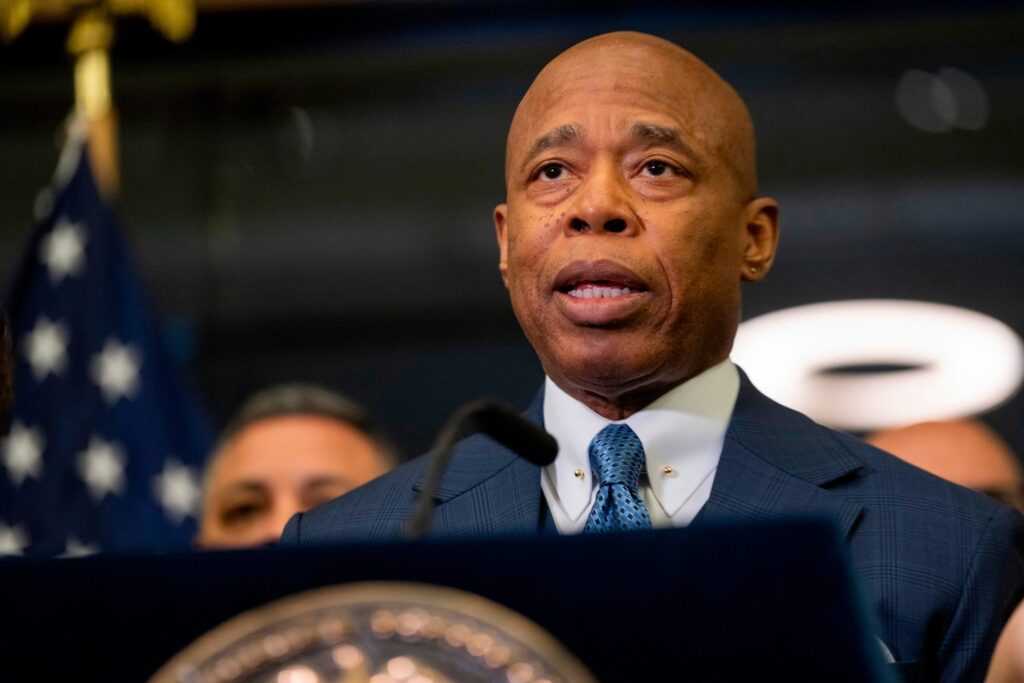
On October 2, 2024, New York City’s 111th mayor, Eric Adams, found himself under heightened examination as a series of probes into his administration gathered momentum throughout September. The mayor, who has held office since 2022, is a longtime public‑service veteran, having spent more than two decades with the city’s police forces before entering elected politics. Adams began his career in the New York City Transit Police and later served in the New York City Police Department, retiring at the rank of captain.
His law‑enforcement background informs the “tough‑on‑crime” stance that has characterized his mayoralty, a policy mix that has drawn both commendation and criticism from residents and commentators. Before assuming the city’s top office, Adams represented Brooklyn’s 20th district in the New York State Senate from 2006 to 2013.
He then broke new ground as the first Black American elected Brooklyn Borough President, a role he occupied until 2021. In that year, he secured the Democratic nomination for mayor through a crowded, ranked‑choice primary and subsequently defeated Republican Curtis Sliwa in the general election by a wide margin. Since taking office, Adams has rolled out several initiatives aimed at bolstering public safety.
Notably, he reinstated a plain‑clothed NYPD unit that the previous administration had disbanded, positioning the move as a cornerstone of his crime‑reduction strategy. The mayor has also increased police visibility in targeted neighborhoods and adopted a zero‑tolerance approach toward individuals sleeping in subway cars.
While some applaud the effort to address homelessness in the transit system, others argue the policy is overly punitive, sparking a broader debate about how best to manage the city’s complex homelessness challenge. The investigations that have intensified over the past month have put Adams’ leadership under a microscope. Although specific details of the probes remain limited, they have already prompted a vigorous public discourse. Critics call for greater transparency and accountability, suggesting the inquiries reveal shortcomings in the mayor’s governance.
Conversely, supporters contend that the investigations are politically motivated attacks on an administration that has delivered on its law‑and‑order promises. As the inquiries progress, their potential impact on the city’s direction and on Adams’ political future remains uncertain.
Stakeholders—including community groups, business leaders, and ordinary residents—are watching closely for outcomes that could shape policy and public trust. Looking ahead, the coming weeks and months are expected to be decisive. The investigations will likely continue to fuel discussion about the efficacy of Adams’ policies, the balance between security and civil liberties, and the broader trajectory of New York City’s governance.
Observers are urged to follow developments closely, weighing multiple perspectives as the story unfolds. For now, the city awaits further findings, aware that the conclusions of these probes could either reinforce the mayor’s agenda or prompt significant adjustments to his administration’s approach to crime, public safety, and homelessness.




