
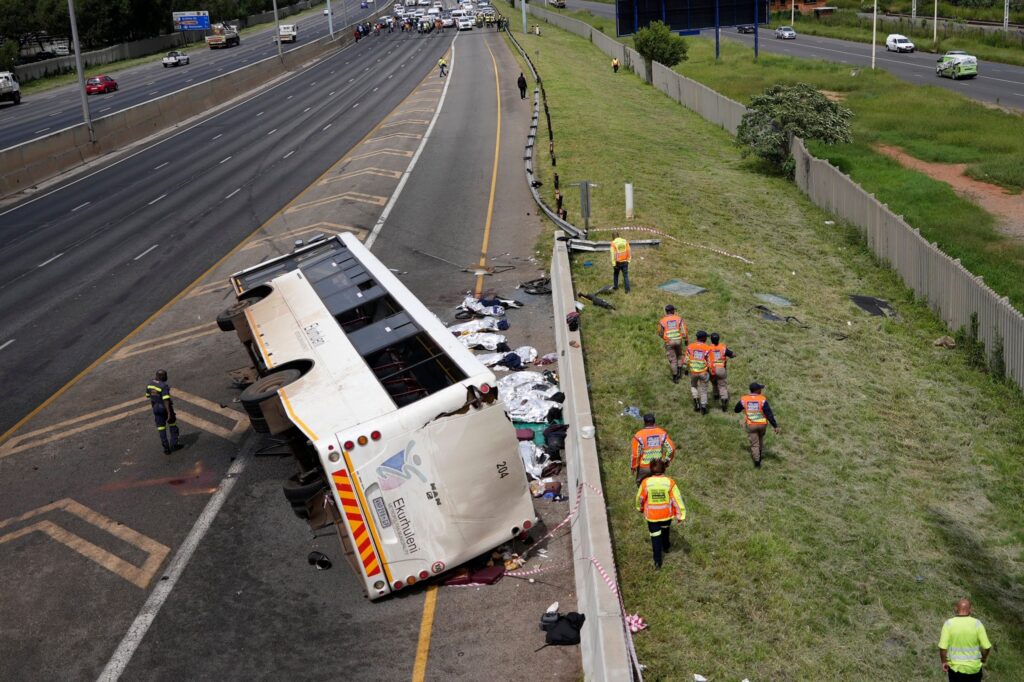
A tragic crash on Sunday involved a bus carrying Zimbabwean passengers and a private car on the N6 highway near Stutterheim, in South Africa’s Eastern Cape province. Local authorities confirmed that the collision claimed five lives and left sixty people wounded.
The N6, a key arterial road linking the Eastern Cape with inland provinces, was the site of the accident. Emergency crews arrived promptly, transporting many of the injured to hospitals in Stutterheim and East London. Among the fatalities were occupants of both the bus and the car, according to early statements from traffic officials.
Investigators are still determining the cause of the crash. Road‑safety officers are reviewing possible contributors such as the condition of the vehicles, driver fatigue and the state of the roadway.
Zimbabwe, a landlocked country of about 16.9 million people that shares its southern border with South Africa, has a long history of its citizens crossing the border for employment, trade and family reasons. The N6 is a frequently used corridor for buses ferrying travelers between Zimbabwe and South Africa’s coastal areas. The incident underscores the hazards present on regional highways, where long‑distance buses often share narrow two‑lane stretches with private cars and heavy trucks.
In response, transport authorities in the Eastern Cape have dispatched additional traffic‑enforcement teams to the area and are urging motorists to exercise heightened caution, especially on routes with heavy cross‑border traffic. Those injured are receiving care at facilities including Cecilia Makiwane Hospital in Mdantsane, with reports that several victims remain in serious condition.
South Africa’s Department of Transport notes that fatal crashes on major routes have persisted at high levels in recent years, frequently attributing them to human error, inadequate road infrastructure and vehicle defects. The N6, while vital for commerce and travel, contains sections lacking proper barriers and sufficient lighting—a point often raised by safety advocates. For the families affected, the loss is profound. Many Zimbabwean nationals rely on bus travel as the most affordable means to reach South Africa for economic opportunities.
Community leaders in Stutterheim have offered assistance to survivors, and Zimbabwean consular officials are expected to help with repatriation and the necessary documentation for the deceased. Road‑safety experts see the crash as a catalyst for a wider discussion on the safety of long‑distance bus travel across the region.
They suggest that improvements such as better road maintenance, stricter speed‑limit enforcement and enhanced driver training could reduce the likelihood of similar tragedies. At present, attention remains on the injured passengers and the grieving relatives, as the Eastern Cape community comes together to support those impacted by the accident.




