
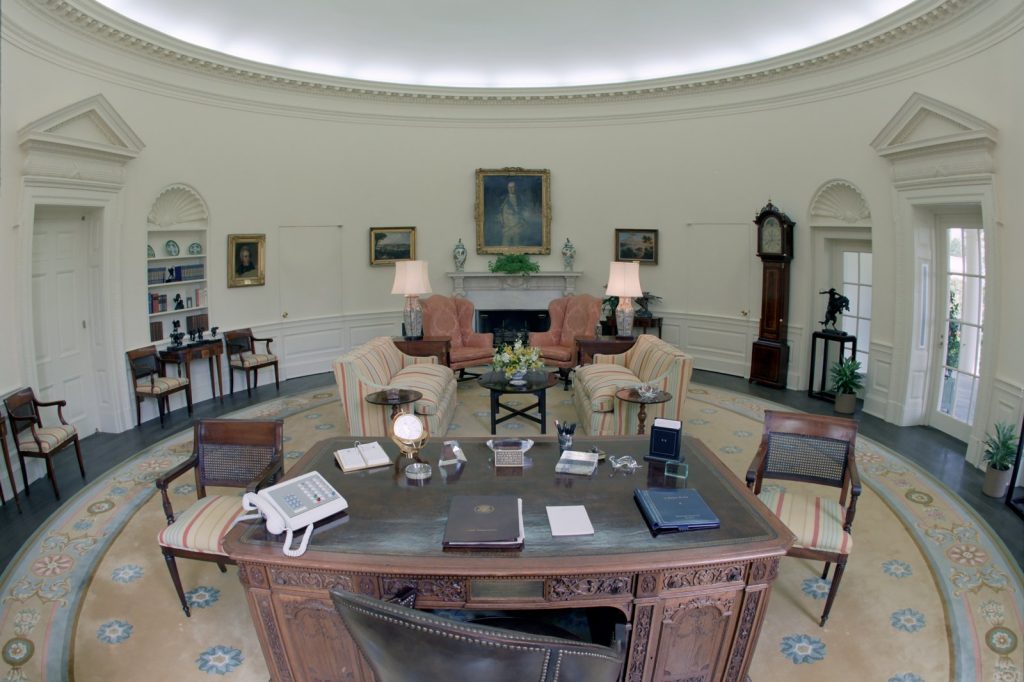
WASHINGTON, July 16 — President Donald Trump used a primetime Oval Office address tonight to press for sweeping election security reforms, alleging that China carried out what he called the largest compromise of election data in history and that federal officials concealed the scope of the intrusion. The speech, delivered from the White House, immediately set the stage for a contentious debate over voting laws and national security. The president opened with an upbeat assessment of the nation’s standing.
“Good evening. Before we begin, I’m proud to report that our country is safer, stronger, and far wealthier than it has ever been before,” Trump said.
He then turned directly to electoral integrity, declaring, “No country could be great without fair and honest elections.”
Contested Allegations of Chinese Interference
At the core of the address were claims that have been disputed by the majority of the U.S. intelligence community. Trump stated that “the People’s Republic of China carried out what is believed to be the largest compromise of election data in history, resulting in China’s illicit acquisition of 220 million US voter files.” He further alleged that “members of the deep state worked to actively suppress and downplay information about the extent of China’s sinister election meddling, covering it up from both the president and the American people.” These assertions align with a known dissent within the intelligence community.
The declassified 2021 Intelligence Community Assessment’s majority found that China did not deploy interference to change the 2020 outcome. However, then-DNI John Ratcliffe and the ODNI analytic ombudsman, a person identified only as Zulauf, dissented, arguing that China’s role was downplayed. Trump’s speech tonight mirrors that minority position, drawing a direct line between the dissenting intelligence view and his call for legislative action. The president did not provide new evidence during the address to support the claim that 220 million voter files were compromised, nor did he identify specific federal officials involved in the alleged cover-up.
The speech relied on the same framework that has been publicly debated since the 2021 assessment was released.
Legislative Agenda and Voting System Claims
Trump used the address to promote the SAVE America Act, a bill he described as a landmark reform. According to the president, “This landmark bill requires that all voters must show photo voter ID” and “all voters must provide proof of citizenship.” He also made broad claims about the integrity of voting infrastructure, stating, “Our machines and ballot counting systems are exposed to hacking and manipulation and corruption,” and asserted that “mail-in ballots are inherently corrupt.” These statements run counter to established findings from federal election-security officials.
The Cybersecurity and Infrastructure Security Agency (CISA) has reported no evidence that voting-machine manipulation altered past election results. The president’s characterization of mail ballots and machine vulnerabilities directly contradicts those official assessments.
The SAVE America Act would impose new requirements on voters nationwide, but its prospects in Congress remain uncertain given the disputed factual basis the president presented. The address underscored a fundamental divide between the executive branch’s stated position and the conclusions of career intelligence and security professionals. While Trump framed the issue as a matter of national sovereignty and electoral integrity, the majority of the intelligence community and federal election security officials have not corroborated the scale or nature of the threat he described.
Political Fallout and Congressional Response
By nightfall, the political landscape was set for a fierce debate. Trump closed the address with a familiar refrain: “Thank you.
God bless you. God bless our great military, and God bless America.” The immediate question is how Congress will respond to the SAVE America Act. With the president’s claims about Chinese interference and voting machine vulnerabilities already disputed by the majority of the intelligence community and federal election security officials, the coming days are likely to see sharp partisan divisions over both the substance of the allegations and the proposed legislative remedies.
Democratic leaders have previously expressed skepticism about the need for nationwide voter ID requirements and proof-of-citizenship mandates, arguing that such measures could disenfranchise eligible voters. Republicans, by contrast, have embraced the SAVE America Act as a necessary safeguard.
The president’s address did not include any new bipartisan outreach or compromise proposals, suggesting that the issue will be fought along familiar partisan lines. The White House has not yet scheduled any follow-up events or briefings to provide additional details on the alleged Chinese data compromise. Intelligence committee staff in both chambers are expected to request briefings in the coming days to assess whether any new information supports the president’s claims.




