
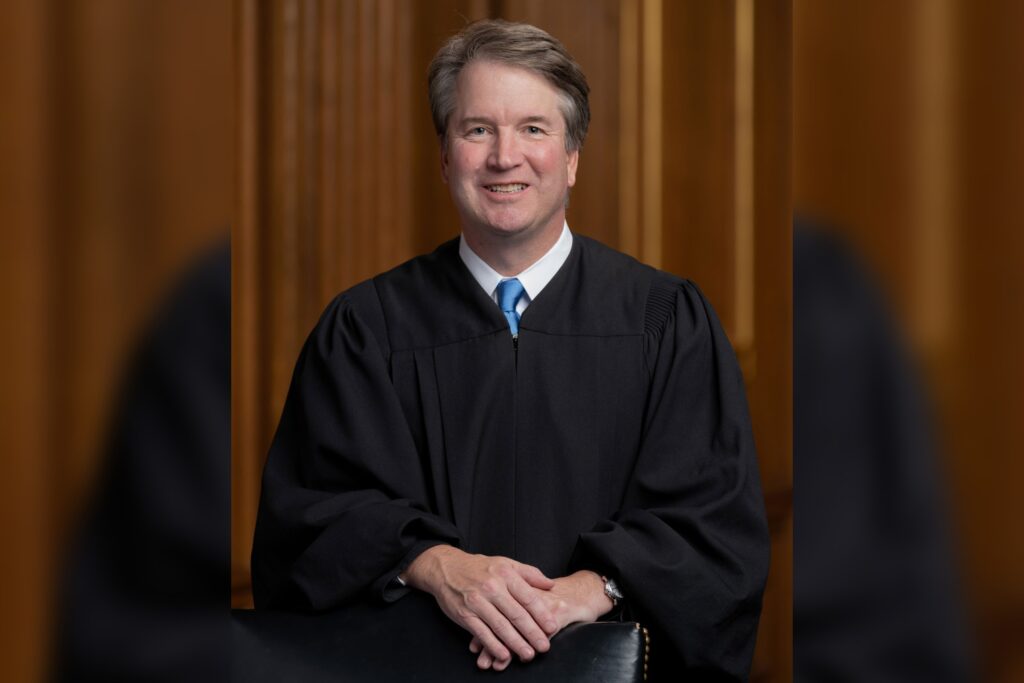
JEFFERSON CITY, September 8 — Justice Brett Kavanaugh on Tuesday declined to let Missouri use its new congressional map in the November 2026 elections, turning down an emergency request from the state’s top election official to pause a Missouri Supreme Court ruling that barred the state from deploying it. The order, sent to reporters Tuesday afternoon, came on the Supreme Court’s interim docket. Kavanaugh handles emergency appeals from the 8th Circuit, which includes Missouri.
Though the matter arrived on the interim docket rather than through full briefing, the ruling likely settles the map question for the 2026 election, restoring the map Missouri adopted in 2022 in the wake of the 2020 census.
The Map at Issue
Missouri was one of several states that redrew its congressional maps ahead of the 2026 elections with the encouragement of President Donald Trump. The new map, known as HB 1, was intended to give Republicans seven of the state’s eight seats in the U.S. House of Representatives. The fight over that map moved quickly through the state’s institutions.
In December 2025, opponents of the new map — including Richard von Glahn, the plaintiff in the case now before the Supreme Court — submitted more than 300,000 signatures in support of a petition to put a statewide referendum on the new maps on the November 2026 ballot. Missouri Secretary of State Denny Hoskins rejected the petition on August 4, 2026, the last day on which he could make that determination and the same day as the state’s primary election.
Hoskins’ position was that Missouri’s constitution does not authorize a referendum on congressional redistricting plans passed by the General Assembly. Just a few hours later, von Glahn filed suit asking a state court to reverse Hoskins’ decision and bar Missouri from using the new map.
A Unanimous State Ruling
The Missouri Supreme Court granted that request in a unanimous ruling on September 3, 2026. The court wrote that the plain language of the Missouri Constitution authorizes a referendum as to any act of the general assembly and that no exception applies. Because the referendum petition was legal, sufficient and timely, the court concluded, the new map was never in effect and will not go into effect unless and until approved by the voters at the November 2026 general election.
The state supreme court deemed wholly unpersuasive Hoskins’ argument that, if the state cannot use the new map, it will lead to confusion, expense and practical difficulties. Those arguments, the court said, are particularly misplaced given the secretary’s delay created the problems about which he complained.
Strategically, the calculus here runs through the calendar. Hoskins’ rejection landed on the final day available to him and on primary day itself; the referendum petition had already cleared its signature threshold months earlier. The state court’s reading of the constitution left the secretary’s timing, not the petitioners’ paperwork, as the decisive fact.
What this signals for the broader stakes is a familiar pattern in the 2026 cycle. States that redrew maps at the encouragement of the Trump White House now face a patchwork of state-court and emergency-docket outcomes, and the Supreme Court’s interim docket is absorbing the pressure one state at a time.
For Missouri Republicans, the practical effect is a reversion to the 2022 lines for this cycle. The party’s seven-seat target under HB 1 is off the table unless voters approve the map in November. Watch the referendum itself.
If it qualifies and passes, HB 1 takes effect; if it fails, the 2022 map stands. Either way, the emergency docket has now had its say for 2026.




