
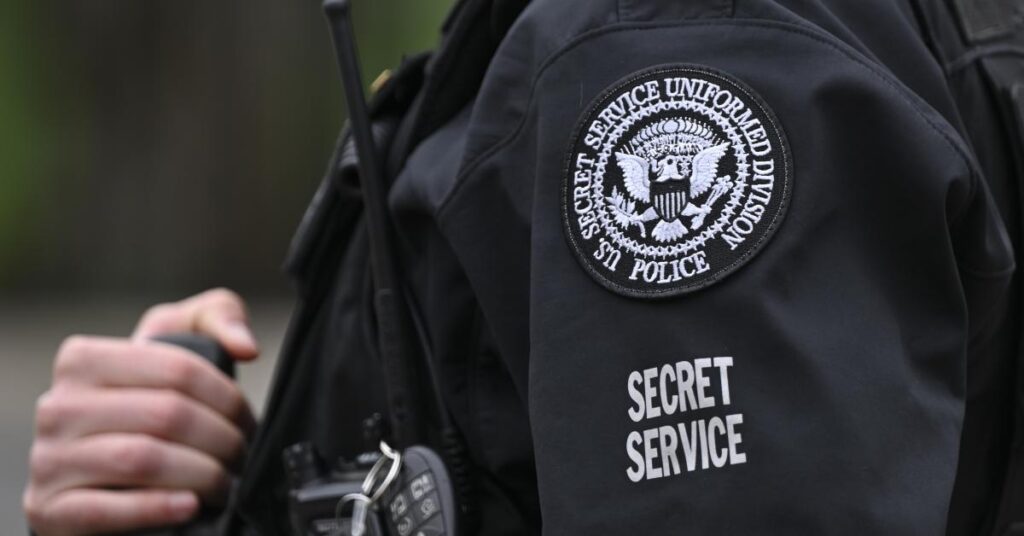
The United States Secret Service investigated more than 9,000 threats against its protectees in 2023 alone, a figure that marks a historic floor for the agency’s modern protective mission. That number does not encompass the broader universe of suspicious activity or the operational demands of securing public events, campaign rallies, and the White House complex itself. The agency now fields a force of over 7,000 personnel, including special agents and uniformed officers, to meet those demands.
But the Secret Service’s current scope is the product of more than a century of gradual expansion, driven by presidential assassinations and evolving national security priorities.
From Counterfeiting to Presidential Protection
The Secret Service traces its origins to 1865, when it was created within the Department of the Treasury to combat the counterfeiting of U.S. currency. That financial focus kept the agency under Treasury for over a century, until it moved to the Department of Homeland Security in 2003.
Its protective role emerged only after tragedy. Following the assassination of President William McKinley on September 6, 1901, Congress informally requested Secret Service protection for presidents. It took another 12 years for formal protection to be authorized by law, in 1913.
The figure that matters most for the agency’s current scope is the assassination of President John F. Kennedy on November 22, 1963.
That event prompted a major expansion of the Secret Service’s protective duties, broadening its mandate beyond the sitting president to a wider circle of current and former officials. The agency also conducts criminal investigations, retaining its original law enforcement function.
A Broad Protective Mandate
The agency’s protective net now covers current and former presidents, their spouses, and minor children. The legal basis for lifetime protection of former presidents is the Former Presidents Act of 1958, though former presidents retain the option to decline it.
This mandate ensures that a wide circle of officials and their families are secured as a matter of national security. The workforce of over 7,000 personnel includes both uniformed officers, who handle physical security at the White House and other facilities, and special agents, who lead protective details and investigate threats. By the numbers, the agency must manage a high volume of threats while simultaneously securing public events and the White House complex itself.
The workload has only intensified, as the 9,000-plus threats investigated in 2023 represent a baseline for the security environment facing protectees.
Security Challenges and Oversight
The Secret Service has also faced scrutiny for security lapses. A notable incident occurred in 2014, when a fence jumper breached White House grounds, exposing gaps in the agency’s perimeter security protocols.
That episode, along with other documented failures, has kept the agency under oversight pressure from Congress and the Department of Homeland Security. The agency’s personnel count of over 7,000 will be tested against the growing volume of threat investigations and the demands of an active political season. Lawmakers and agency leadership continue to weigh the balance between providing protective coverage for former presidents and maintaining the operational capacity to secure current protectees.
The Secret Service remains a federal law enforcement agency within the Department of Homeland Security, charged with both criminal investigations and the protection of American political leaders, their families, and visiting foreign heads of state. Its history, from 1865 to the present, underscores how a mission born of financial crime evolved into a cornerstone of executive branch security.




