
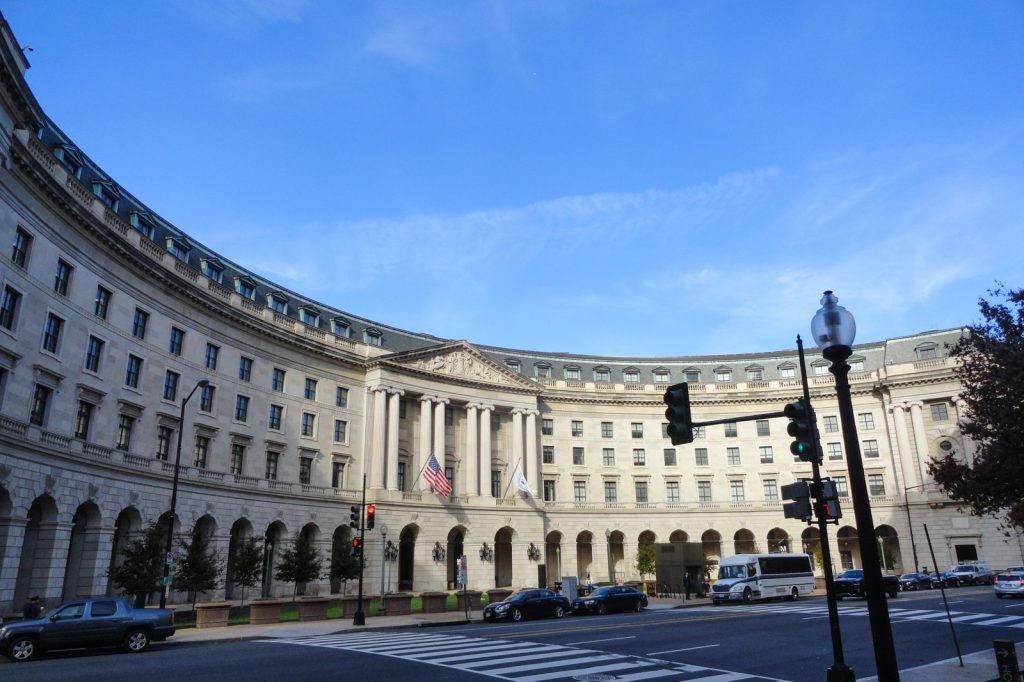
The fight over how much soot is safe to breathe just hit a legal dead end for industry and state challengers. On June 26, the U.S. Court of Appeals for the D.C. Circuit rejected their bid to scrap the Environmental Protection Agency’s tighter national air quality standard for fine particulate matter, known as PM2.5. The rule, finalized last year, cuts the allowable annual average concentration from 12 micrograms per cubic metre down to 9.
The court said the EPA acted reasonably. That number — 9 micrograms per cubic metre — is not arbitrary.
It sits at the center of a decades-long regulatory tug-of-war over one of the most dangerous forms of air pollution. PM2.5 particles measure 2.5 micrometres or less in diameter. That is roughly 30 times smaller than the width of a human hair.
Their size is their weapon. They slip past the body’s natural defenses, lodge deep in lung tissue, and cross into the bloodstream.
The epidemiological evidence, which the court noted the EPA relied on heavily, links exposure to heart attacks, strokes, aggravated asthma, and premature death. The EPA’s own analysis projected the tighter threshold would prevent thousands of premature deaths each year. The agency also calculated net health benefits worth many billions of dollars — far more than the expected compliance costs.
That cost-benefit gap was central to the agency’s argument for the rule, and the court found no reason to second-guess it. The legal challenge came from industry groups and a coalition of Republican-led state attorneys general. They argued the EPA set the limit arbitrarily and without adequate scientific justification.
The D.C. Circuit panel disagreed. The judges said the agency had properly interpreted the Clean Air Act and had grounded its decision in a substantial body of research.
The EPA also followed its standard procedure: it opened the rule for public comment and consulted the Clean Air Scientific Advisory Committee, a panel of outside experts Congress created to review the science behind such standards. The legal bar for overturning an agency rule in the D.C. Circuit is high. Challengers must show the action was “arbitrary and capricious.” The court concluded the industry coalition did not meet that standard.
This ruling does not rewrite the Clean Air Act. It does not ban soot overnight.
It means the 9-microgram limit stays in place, and the EPA can enforce it. For communities near highways, power plants, and industrial zones — places where PM2.5 concentrations tend to run highest — the decision locks in a lower ceiling on what comes out of smokestacks and tailpipes. The health benefits the EPA projected depend on that ceiling holding.
The case is the latest in a long line of D.C. Circuit challenges to EPA air rules. The pattern is familiar. An administration tightens a standard.
Industry and some states sue. The court defers to the agency’s scientific judgment unless the challengers can prove the decision was irrational.
Here, they could not. The opinion itself did not break new legal ground; it applied settled precedent to a specific set of facts and numbers. What changed this time was the number itself.
The old limit of 12 micrograms per cubic metre had been in place since 2012. Dropping it to 9 represents the first tightening of the annual PM2.5 standard in over a decade.
The EPA estimated the move would yield major public health gains. The court just said the agency had the authority to make that call.
{“@context”: “https://schema.org”, “@type”: “NewsArticle”, “headline”: “Court Rejects Challenge to EPA’s Stricter Fine Particle Air Quality Rule”, “description”: “The fight over how much soot is safe to breathe just hit a legal dead end for industry and state challengers. On June 26, the…”, “datePublished”: “2026-06-26T08:30:00+00:00T09:30:00+00:00”, “author”: {“@type”: “Person”, “name”: “Ava Anderson”}, “publisher”: {“@type”: “Organization”, “name”: “InfoPulse Today”, “url”: “https://newsfeed.2bme.xyz/”}}




