
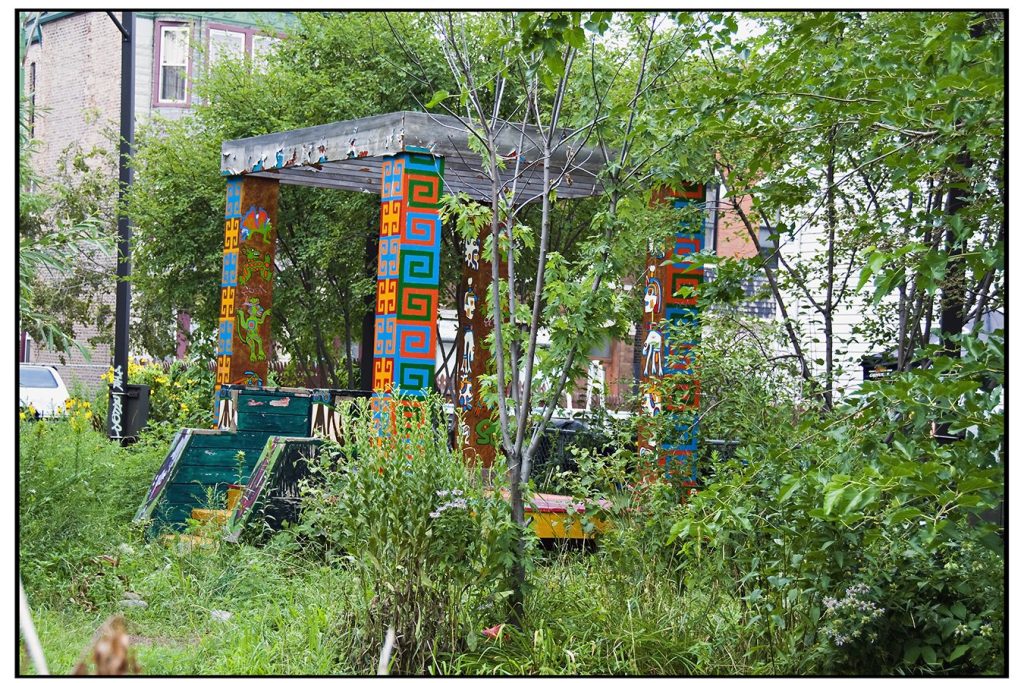
You could not have eaten what grew on these blocks two years ago. Nothing grew. The ground was packed dirt, broken glass, and weeds tough enough to push through cracks.
Now, on the same streets two miles north of Midway Airport in Chicago, tomatoes climb stakes. Pepper plants stand in rows.
Sunflowers lean toward the sun. The Academy for Global Citizenship, a K-8 charter school, sits at the center of this shift. But the school did not start it.
Residents did. They saw vacant lots—overgrown, derelict, useless—and decided those lots could be something else.
The city’s existing lot-transfer programs gave them a legal path. Neighbors organized themselves. They secured permissions.
They dug. This matters because the neighborhood was a food desert. It was also a heat island.
Concrete and asphalt absorb sun and radiate it back. Trees and gardens do the opposite.
They cool the air. They absorb stormwater. They produce food.
The technical benefits are measurable: less runoff, lower temperatures, calories where there were none. But the work is not romantic.
Soil varies wildly on former industrial and residential lots. Lead contamination is a known risk. Testing for it costs money that not everyone has.
Some plots needed raised beds with imported topsoil before anything edible could go in. Others needed drainage work. That is the unglamorous grunt work that makes a garden viable—digging, hauling, testing, waiting.
It does not make the brochure. It makes the difference between a plot that grows food and a plot that grows nothing.
The Academy for Global Citizenship became a hub. Students and families planted along the school’s perimeter. Then they pushed outward.
The pattern spread block by block, not by decree. No city planner drew a map and told people where to plant.
No outside NGO flew in with a blueprint. Residents made the calls. They decided which lots to reclaim.
They decided what to grow. The result is a patchwork. Not every block has a garden.
Not every garden thrives. Some fail.
But a block that was barren two years ago now has tomatoes, peppers, and sunflowers. Another block now has a small orchard—apple and pear trees. The pattern is spreading, unevenly, but spreading.
The constraints are real. Soil quality is unpredictable.
Lead contamination is a known risk, and testing is not always affordable. Some plots required raised beds with imported topsoil before anything edible could go in. Others needed drainage work—the kind of unglamorous grunt work that does not make the brochure but makes the garden viable.
The result, under the hood, is a patchwork. Not every block has a garden. Not every garden thrives.
But the pattern is spreading. A block that was barren two years ago now has tomatoes, peppers, and a row of sunflowers.
Another has a small orchard—apple and pear trees. This is not a story about a school. It is a story about neighbors who looked at empty land and decided it should not stay empty.
They did the digging. They did the paperwork.
They did the grunt work. The gardens are the result. The next block is the question.
{“@context”: “https://schema.org”, “@type”: “NewsArticle”, “headline”: “Chicago Residents Transform Vacant Lots into Thriving Community Gardens”, “description”: “You could not have eaten what grew on these blocks two years ago. Nothing grew. The ground was packed dirt, broken glass, and weeds tough…”, “datePublished”: “2026-06-27T07:00:00+00:00T09:30:00+00:00”, “author”: {“@type”: “Person”, “name”: “Isabella Moore”}, “publisher”: {“@type”: “Organization”, “name”: “InfoPulse Today”, “url”: “https://newsfeed.infopulsetoday.com/”}}




