
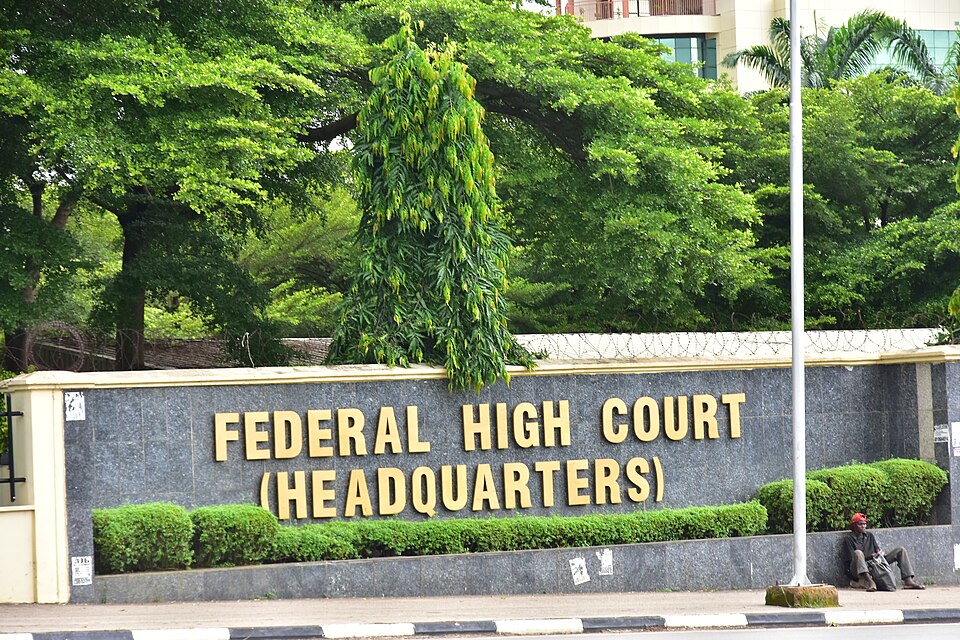
The Federal High Court in Abuja did not just rule against five political parties last week. It stepped around a higher court’s order to do so. That act — not the ruling itself — is what now threatens to pull Nigeria’s politics into a constitutional fight nobody planned for.
Judge Peter Lifu on June 15 heard a case that the Court of Appeal had told him, on May 22, to stop. The appellate court issued a stay of execution.
It blocked the reserved ruling Lifu had scheduled for June 5. He went ahead anyway. He took the argument from the National Forum of Former Legislators — that the Accord Party, Action Alliance, Action Peoples Party, African Democratic Congress, and Zenith Labour Party failed electoral performance thresholds — and he ordered the Independent National Electoral Commission to deregister them.
The immediate question is not whether these parties performed poorly in the 2023 general elections. They did.
The litigants argued that allowing them to contest the 2027 elections would violate the 1999 Constitution, specifically Section 225 A-C, which gives INEC the power to deregister parties that fail to meet standards. That argument may have merit. But the process matters in a system where courts are supposed to police each other.
What happened here is a direct clash between two tiers of the judiciary. The Court of Appeal issued a stay. The Federal High Court ignored it.
That is not a procedural quibble. It is a fracture.
If trial judges can disregard appellate stays when they choose, the entire ladder of appeals becomes a suggestion. Parties in future cases will cite this as precedent. Litigants will shop for judges willing to act despite higher-court orders.
The system relies on the assumption that a stay means stop. That assumption just took a hit.
The ruling also puts INEC in a bind. The commission now holds a court order to deregister five parties and a stay of execution from a superior court that says the order should not have been issued. INEC cannot obey both.
Whichever path it takes, someone will drag it back to court for contempt. This is not a hypothetical. The commission has been sued before for acting on conflicting judicial directives.
It will happen again. Behind the legal mess lies a political reality.
Nigeria has 18 registered political parties. Removing five of them shrinks the field ahead of 2027. The National Forum of Former Legislators, the group that brought the case, argued that poor electoral performance undermines the integrity of the system.
That is a defensible position. But the group’s composition — former lawmakers — means the case was not brought by neutral actors.
It was brought by people who once held power and who now want to shape who can run for it. The five parties listed are not major players. None of them won a governorship or significant bloc of legislative seats in 2023.
But deregistration by judicial fiat, especially one that defies an appellate stay, sets a precedent that could be used against larger opposition parties later. The threshold for “poor performance” is not defined in stone. It is defined by whoever wins the argument in court.
Nigeria’s judiciary has spent years trying to rebuild public trust after periods of perceived interference. A judge openly ignoring a stay from the Court of Appeal does not help that effort.
It raises the question the report already flagged: how independent is the bench when individual judges can decide which higher-court orders to follow? The case is not over. The Court of Appeal’s stay still exists.
The affected parties can challenge Lifu’s ruling on the grounds that he lacked jurisdiction to make it. That appeal will test whether appellate courts can enforce their own orders.
If they cannot, then the political chaos the ruling was supposed to prevent — weak parties clogging the ballot — may be replaced by a different kind of chaos: a judiciary that no longer speaks with one voice.
{“@context”: “https://schema.org”, “@type”: “NewsArticle”, “headline”: “Judge Overruled Higher Court Order, Sparking Nigeria Constitutional Crisis”, “description”: “The Federal High Court in Abuja did not just rule against five political parties last week. It stepped around a higher court’s order to do…”, “datePublished”: “2026-06-23T13:05:00+00:00T09:30:00+00:00”, “author”: {“@type”: “Person”, “name”: “Ariel Antonio”}, “publisher”: {“@type”: “Organization”, “name”: “InfoPulse Today”, “url”: “https://newsfeed.infopulsetoday.com/”}}




