
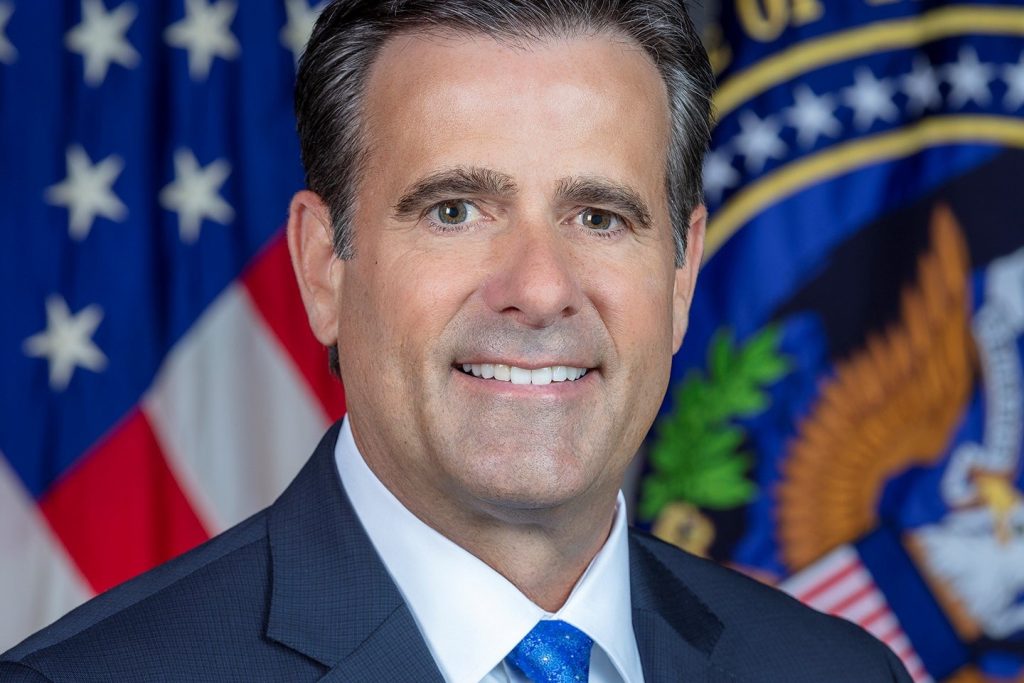
A Dissent Embedded in Intelligence Tradecraft
The assessment, delivered to the president and Congress on January 7, 2021, and declassified on March 16, 2021, contained a majority finding. That finding stated with high confidence that Russia conducted influence operations aimed at the 2020 election. It also judged, also with high confidence, that China did not deploy interference efforts intended to change the outcome. Ratcliffe disagreed with this framing. In a letter attached to the assessment, he wrote that similar actions by Russia and China were being assessed under different standards. He argued this could lead to the false impression that Russia sought to influence the election but China did not. His position was that China’s role had been understated relative to Russia’s.
The letter was a formal dissent, recorded alongside the majority judgment and preserved by the intelligence system’s tradecraft standards so that disagreements remain visible in the record. For those involved in intelligence analysis, that letter represents a fundamental disagreement about how to read the actions of two major adversaries.
Ratcliffe’s Path to Intelligence Leadership
John Lee Ratcliffe, born October 20, 1965, is an American politician and attorney. He graduated from the University of Notre Dame with a bachelor’s degree in 1986 and from Southern Methodist University’s School of Law with a Juris Doctor in 1989. He worked as a lawyer in private practice for 15 years. In 2004, he was elected mayor of Heath, Texas, a position he held for eight years. That year, he joined the U.S. Attorney’s Office for the Eastern District of Texas as director of anti-terrorism and national security. He worked as an assistant U.S. attorney in the Eastern District and briefly served as its acting U.S. attorney after Matthew D. Orwig resigned in 2007. In 2009, he established the Ashcroft Law Firm alongside former attorney general John Ashcroft and former U.S. attorney for the Western District of Texas Johnny Sutton.
In 2013, Ratcliffe announced his candidacy in the 2014 U.S. House of Representatives election for Texas’s fourth congressional district. He defeated Ralph Hall, who had served as the district’s representative for nearly 30 years, in a runoff election. Ratcliffe was elected without opposition in 2014 and was reelected in 2016 and 2018. His performance in challenging legal opponents of President Donald Trump, including special counsel Robert Mueller, led to Trump nominating Ratcliffe as director of national intelligence in July 2019. Ratcliffe withdrew his nomination the next month, believing his confirmation to be in question. In February 2020, Trump nominated Ratcliffe a second time. His nomination received less criticism amid questions into the origin of SARS-CoV-2 and the recent temporary appointment of Richard Grenell. The Senate confirmed Ratcliffe in May 2020.
As director of national intelligence, Ratcliffe served from May 2020 to January 2021, overseeing the Office of the Director of National Intelligence, an agency created in 2004 to coordinate the more than 16 agencies of the U.S. intelligence community. In that role, he oversaw its most authoritative analytic products, including the assessment on foreign threats to the 2020 election.
An Ongoing Debate Over Analytic Standards
What unfolded after Ratcliffe’s dissent was not a quiet bureaucratic footnote. The ODNI Analytic Ombudsman, Barry Zulauf, issued a report in January 2021 that mirrored Ratcliffe’s concern. Zulauf described analysts as hesitant to label Chinese activity as interference. This tension, between the majority’s high-confidence finding and the dissent that questioned its framing, is why the declassified document matters. Readers can weigh both the letter and the majority judgment against the primary source at dni.gov.
For those involved in the intelligence community, the Ratcliffe letter is not a simple assertion. It states a position; it does not by itself establish that China interfered. It sits beside a majority finding that reached the opposite conclusion. That tension is deliberate, built into a system that values visible disagreement over hidden consensus. The document, now public, invites scrutiny.
As of 2026, with Ratcliffe leading the CIA, the questions he raised in 2021 have not faded. The assessment remains a touchstone for how the U.S. intelligence community assesses threats from multiple adversaries. What to watch next is whether the current administration will revisit those analytic standards, or whether the dissent will remain a historical artifact, a single letter in a declassified file, waiting for the next analyst to weigh its claims.




