
WASHINGTON, July 21 — The White House Office of Public Engagement has operated for more than half a century as the administration’s essential gear for managing its relationships with outside groups — corporations, activists, religious coalitions, and ethnic constituencies. Strategically, the office functions as a central clearinghouse for interest-group access to the executive branch. Its name has shifted with each occupant of the Oval Office, but the calculus behind it remains the same: control the narrative by controlling who gets a meeting.
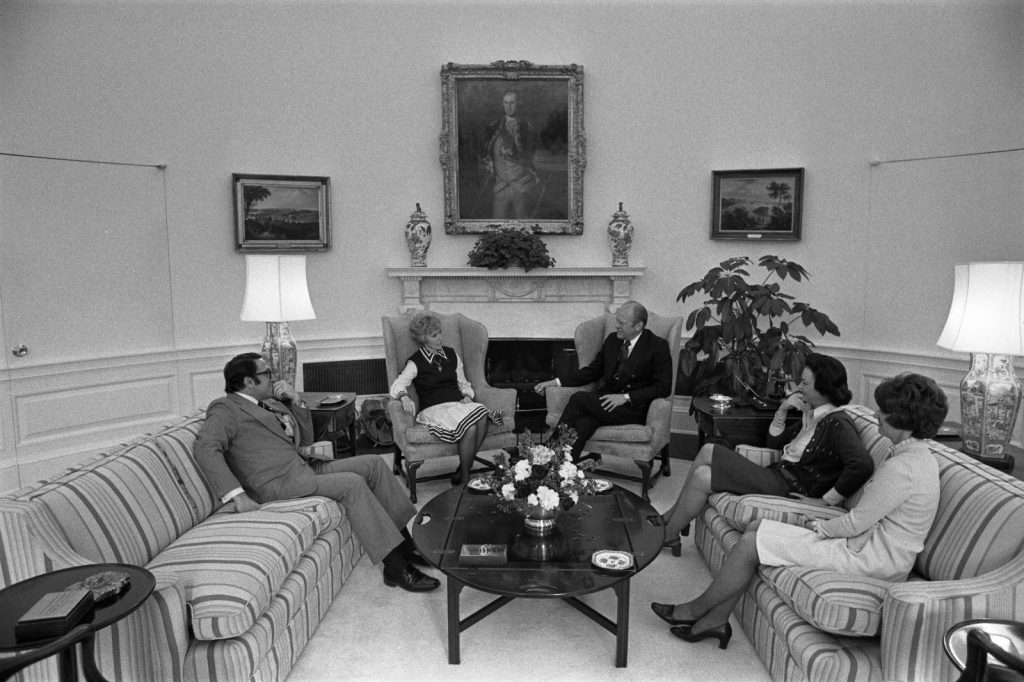
President Gerald Ford formalized the operation in 1974, appointing William J. Baroody Jr. to lead what the administration billed as an “instrument for projecting the image of a truly open administration.” Baroody built a staff of roughly thirty and organized regional conferences that were, in practical terms, preparation for Ford’s reelection campaign.
But the office’s roots run deeper: under President Richard Nixon, Charles Colson had performed similar outreach — a clear example of the institutional machinery that predates the formal structure.
A frontline of political combat
From its earliest days, the office has been a battleground for competing visions of the presidency. Under President Jimmy Carter, director Midge Costanza used the post to broaden influence for gays and lesbians. Under President Ronald Reagan, Faith Ryan Whittlesey turned the office into a platform for the Christian right and anti-communist groups, including the Contras.
Elizabeth Dole, who led the office from 1981 to 1983, went on to become a cabinet secretary and U.S. senator — a trajectory that signals the weight the role carries inside Washington. The office’s name changed repeatedly.
President Barack Obama renamed it the Office of Public Engagement and Intergovernmental Affairs in 2009, calling it “the front door to the White House.” President Donald Trump restored the name Office of Public Liaison in 2017 and separated intergovernmental affairs. President Joe Biden rebranded it the Office of Public Engagement in 2020, again with a separate intergovernmental office. Trump reverted that change at the start of his second term in January 2025, signaling that the office’s structure remains a lever of presidential control.
Directors and outreach in practice
Notable directors include, under President Bill Clinton, Alexis Herman, Maria Echaveste, Minyon Moore, and Mary Beth Cahill. In April 2009, actor Kal Penn was named associate director for outreach to Asian American and Pacific Islander and arts communities. Trump announced Anthony Scaramucci to lead the office but appointed George Sifakis in March 2017 instead.
Under Biden, the office was headed by Cedric Richmond until May 2022 and then by Adrian Saenz in an acting capacity. Biden’s office also launched a Health Care Leaders in Social Media team that included Joel Bervell.
What this signals, across administrations, is a consistent institutional logic: whoever controls access to the White House controls the political narrative among key constituencies. The office’s core function — facilitating meetings between administration officials and outside groups — has remained constant, even as its name and emphasis shifted with each presidency. The broader stakes are clear: in a polarized Washington, the Office of Public Engagement is the administration’s frontline for coalition management.
Watch for whether the current White House uses the office to consolidate support among business allies or to mobilize the conservative base — that choice will define the political chessboard for the remainder of the term.
Sources
{“@context”: “https://schema.org”, “@type”: “NewsArticle”, “headline”: “White House Office of Public Liaison Plays Key Role in Political Coalition Management”, “description”: “WASHINGTON, July 21 — The White House Office of Public Engagement has operated for more than half a century as the administration’s essential gear for…”, “datePublished”: “2026-07-21T09:30:00+00:00”, “author”: {“@type”: “Person”, “name”: “Noah King”}, “publisher”: {“@type”: “Organization”, “name”: “InfoPulse Today”, “url”: “https://newsfeed.infopulsetoday.com/”}, “citation”: [{“@type”: “CreativeWork”, “url”: “https://en.wikipedia.org/wiki/White_House_Office_of_Public_Engagement”}]}




