
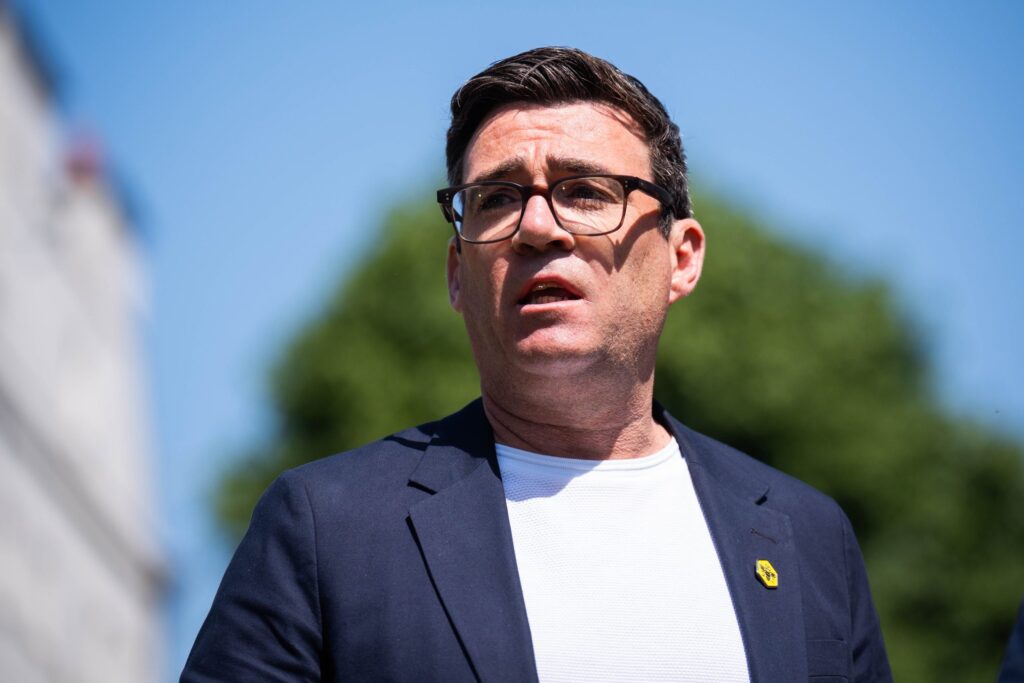
Andy Burnham walked into Westminster on Monday and refused to say whether he would send the country to the polls. That silence is already a political weapon being used against him. The former Greater Manchester mayor, now the new MP for Makerfield, is the man the Labour Party expects to replace Keir Starmer as Prime Minister.
His by-election win last week all but sealed that path. But with the prize in reach, the questions he will not answer are piling up.
Burnham dodged a direct challenge about calling a snap general election. His response was a sidestep: “You’re jumping several hurdles ahead there.” His priority, he said, was swearing in as an MP. That is the kind of answer that satisfies no one and invites more pressure.
The charge of hypocrisy is the sharpest knife here. Burnham spent years demanding a fresh mandate when the Conservatives swapped prime ministers.
He called for an election when the Tories changed leaders. Now he is poised to take the top job himself without one. The contradiction is plain, and his opponents are not letting it slide.
Reform UK leader Nigel Farage made the point bluntly. Labour, he said, could not simply ignore the need for a fresh mandate. That is not just noise from the populist right.
Some Labour MPs are also pushing for a new mandate for the incoming premier. The pressure is coming from inside the building.
The strategic logic is brutal. If Burnham enters Downing Street without a general election, he governs without a personal mandate. Every major decision — budgets, reforms, foreign policy — can be challenged as the work of a man who never faced the voters.
His opponents will say he is afraid of the ballot box. His own past words will be read back to him in Parliament.
If he calls an election, he risks losing it. The by-election win was strong, but a general election is a different beast. The national mood is volatile.
A snap vote could hand the Conservatives a chance to regroup or hand smaller parties a platform. Burnham knows the gamble. The timeline matters.
He arrived in London to take his seat. That is the procedural first step.
The real clock starts ticking when Starmer steps aside. No one knows when that will happen. But the demands for an election are already loud and they will only get louder.
Burnham’s own history is the noose. He demanded an election when the Tories changed prime ministers.
He said the country deserved a say. Now he is in the same position and he is dodging the question. That is not a trivial inconsistency.
It is the central fact of his political positioning right now. Officials confirmed he will face charges of hypocrisy if he enters Downing Street without sending the country to the polls. That is not a hypothetical.
That is a guarantee. The opposition will use it.
The press will use it. Some of his own MPs will use it. Burnham’s answer on Monday was careful but empty.
He said his priority was swearing in. That buys him a day.
Maybe two. But the question does not go away. It sits in the room, waiting for a real answer.
The forces at play are straightforward. A man who demanded democracy for his opponents is now being asked to practice it himself. The outcome will define the start of his premiership.
If he calls an election, he stakes his mandate on the voters. If he does not, he governs under a cloud of his own making.
Either way, the silence from Monday will not hold.




