
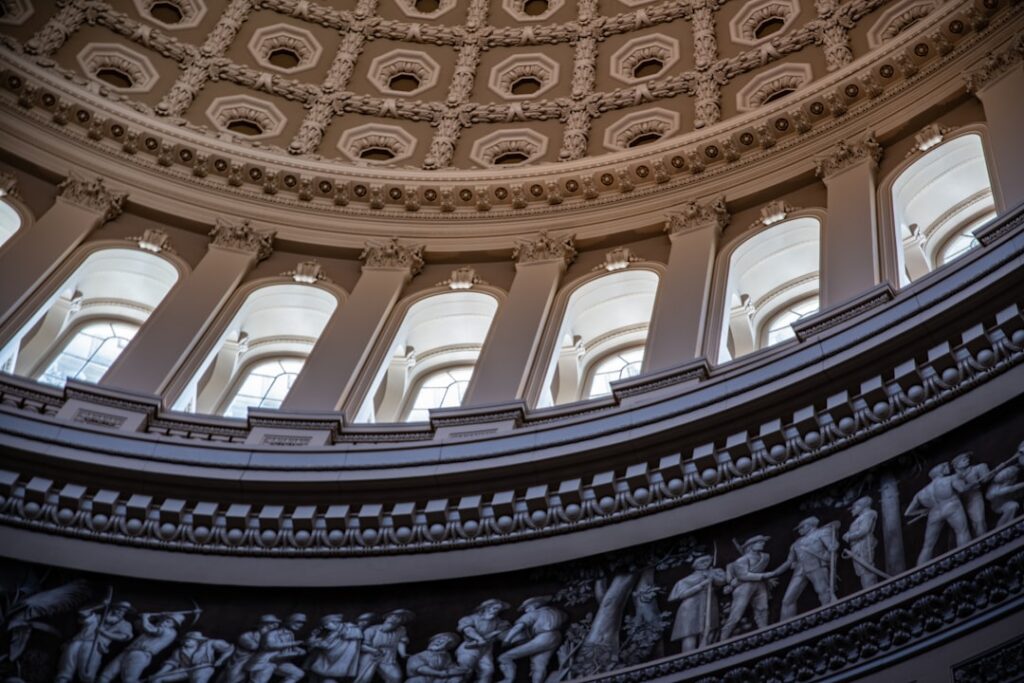
On Monday, Donald Trump took the presidential oath for a second time, becoming the 47th commander‑in‑chief of the United States. Because a cold front brought sub‑freezing temperatures and strong gusts, officials moved the ceremony from the traditional West Front steps to the interior of the Capitol’s rotunda. The rotunda, which can accommodate roughly 600 guests, held a fraction of the crowd that would normally line the National Mall.
The exact number of attendees has not been released. This setting made the event markedly more intimate than past inaugurations, which often feature a sea of spectators on the Mall.
Trump’s second swearing‑in marks the 60th presidential inauguration in American history and places him in a very narrow historical group. He is only the second former president to be inaugurated again after a break in service, the first being Grover Cleveland in 1893. JD Vance was sworn in as vice president, beginning his first term alongside a president entering a second.
Despite the change of venue, the day followed the customary sequence of events. After the oath, a signing ceremony took place, followed by an inaugural luncheon, a first‑honors ceremony, and a parade that concluded at Capital One Arena.
Inaugural balls were hosted at several locations throughout the city, preserving the ceremonial rhythm that signals continuity and the peaceful transition—or, in this case, the return—of executive power. Trump originally assumed office on January 20, 2017. Eight years later, he begins what is expected to be his final term.
Historically, presidents in their second term operate with fewer political constraints, as they are no longer facing a re‑election campaign. This shift often influences policy decisions, appointments, and foreign‑policy strategies.
The choice of the Capitol rotunda added symbolic weight to the ceremony. The dome serves as the Capitol’s central hub and has hosted numerous historic moments, from lying‑in‑state services for former leaders to impeachment trials and electoral vote certifications. Holding the inauguration beneath that iconic ceiling linked Trump’s return to a venue that has witnessed pivotal chapters of the nation’s story. While weather forced the move indoors, the reduced audience size also altered the public’s experience of the inauguration.
Traditionally, the event allows the American public to observe the workings of government up close; the indoor setting limited that exposure, turning the ceremony into a more controlled gathering for invited guests. Beyond the pageantry, the inauguration reaffirmed the institutional nature of the presidency.
The rituals—oath, signing, luncheon, parade, and balls—remain the same regardless of location, underscoring that the office endures beyond any single individual. What follows the ceremony will be the substantive work of Trump’s second administration, beginning with the signing ceremony that officially opened his new term.




