
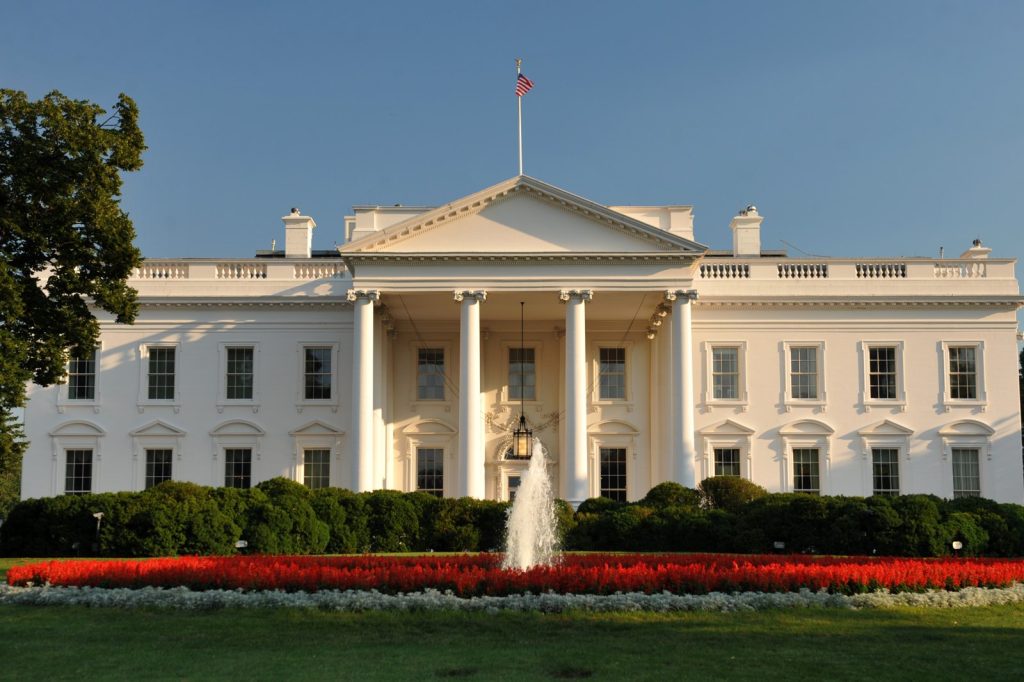
WASHINGTON, September 9 — A majority of Americans now express little or no trust in information provided by the federal government across major policy domains, according to a poll released Tuesday by The Associated Press-NORC Center for Public Affairs Research and USA Facts. The finding marks a notable deterioration since 2024 and registers higher even than the closing period of President Donald Trump’s first term, signaling a deepening credibility crisis for the executive branch under his renewed leadership. The most striking shift is on the left side of the aisle.
Democrats now show particularly pronounced skepticism toward government information. The poll indicates that recent attempts to dismantle parts of the federal bureaucracy may have affected public confidence in the executive branch.
This shift carries broader stakes. What this signals is not merely routine cyclical distrust—where opposition voters reflexively distrust a government controlled by the rival party—but a broader erosion of trust in government information across major policy areas.
Policy Domains in Question
The survey identifies three specific arenas where federal credibility has declined: elections and politics, foreign affairs, and the environment. Each represents a domain where government information is not merely advisory but operational—where public buy-in determines whether policies can be implemented effectively or contested into paralysis. This mistrust complicates the administration’s ability to marshal domestic support for its foreign policy.
The diplomatic apparatus now operates in an information environment where official narratives face preemptive skepticism from a substantial portion of the electorate. The broader stakes extend to alliance management; partners assessing American reliability must weigh not only institutional capacity but whether the public will sustain commitments across electoral cycles.
Historical Context and Trajectory
The poll’s temporal markers deserve attention. That mistrust now exceeds levels recorded at the end of Trump’s first term suggests that the dynamics of his return to office have accelerated rather than arrested institutional decay. The 2024 comparison point indicates this is not merely a carryover from the polarized pandemic years but a continuing slide.
The sitting administration inherits this communications challenge alongside the President. The task of rebuilding or bypassing traditional information channels falls to officials who themselves rose through political movements that systematically attacked those same channels.
What to Watch
Looking forward, the critical question is whether this erosion proves reversible or structural. Administrations facing credibility deficits typically attempt to route around legacy institutions—direct presidential communication, alternative media ecosystems, agency-specific outreach. What this signals for the remainder of this term is a likely intensification of such experiments, with uncertain effects on governance capacity.
The firm analytical read: institutions that cannot speak credibly to their publics cannot long sustain their functions, and the current trajectory points toward continued fragmentation of the American information space.




