
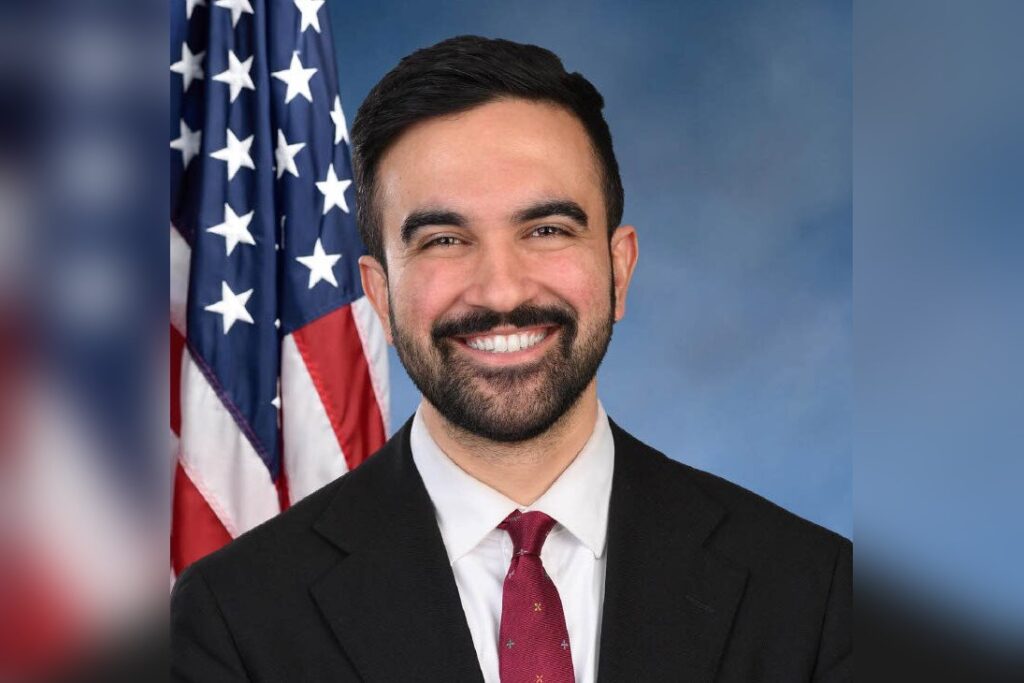
NEW YORK — The coffee shop that called out Rep. Dan Goldman over his pro-Israel stance did not act in a vacuum. Its public criticism, and the muted response from Mayor Zohran Mamdani, lands in a city where the Israeli-Palestinian conflict has long simmered beneath the surface of local politics. What made this incident stand out was not the criticism itself, but what followed — or rather, what did not.
Mamdani was out campaigning when the story broke. Reporters caught up with him.
He offered a tepid non-response. That is the phrase in the record: a tepid non-response. He did not defend Goldman.
He did not condemn the coffee shop. He did not engage at all, directly.
For a mayor who has built a reputation on taking clear positions, the silence was loud. The coffee shop had made a deliberate choice. According to the record, its criticism of Goldman was public and based on his pro-Israel views.
That takes a level of confidence. In a city where small businesses rarely wade into foreign policy, the move signaled something deeper — a willingness to take a stand even if it meant crossing a sitting congressman. The shop did not hide behind anonymous statements.
It put its name out there. Goldman, a Democrat representing parts of Manhattan and Brooklyn, has been a vocal supporter of Israel.
That has made him a target before. But this was different. This was a local business, not a protest group, not an activist organization.
A coffee shop. The kind of place where people grab a morning latte and read the news.
That it felt compelled to speak out suggests the issue has moved from the halls of government into the streets — and into the storefronts. Mamdani’s non-response raises questions. He is a progressive Democrat.
He has spoken on Gaza before. But here, he chose silence. The record does not say why.
It notes only that his response was subdued and failed to address the controversy directly. Sources familiar with the situation confirmed that.
The timeline is clear: the coffee shop criticized Goldman first. Mamdani responded after. His response was notable for what it lacked.
Some see this as calculation. Others as caution.
Either way, it leaves a gap. The coffee shop took a risk. Goldman took a hit.
And the mayor, who could have shaped the narrative, stepped back. In a city where every political move is scrutinized, that absence is itself a statement. The broader debate over Israel and Palestine has been heating up in New York for years.
City Council resolutions. Campus protests.
Street demonstrations. Now, a coffee shop. Each escalation pushes the conversation further into everyday life.
The coffee shop’s action shows that the issue is no longer confined to politicians and activists. It has reached the corner café.
And when a mayor who usually has something to say says nothing, that too becomes part of the story. What happens next is uncertain. The record does not say whether Mamdani will address the issue later.
It does not say whether Goldman will respond. It only reports what happened: a public criticism, a non-response, and a city watching. For now, the coffee shop’s sign remains up.
The mayor’s silence remains intact. And the debate continues, one cup of coffee at a time.




