
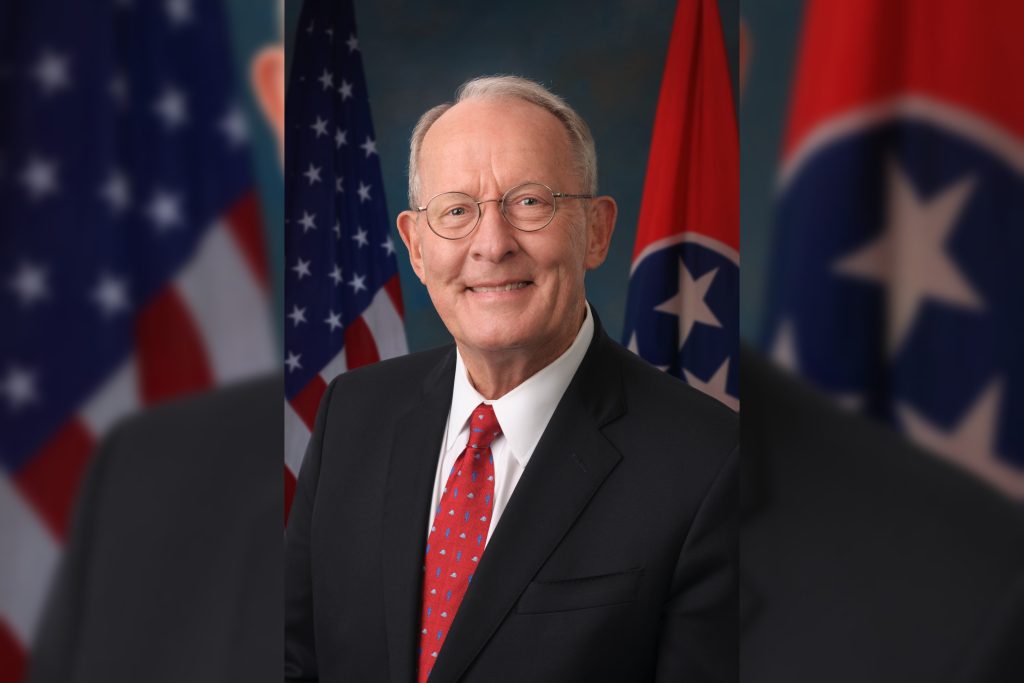
NASHVILLE — The ground under Tennessee politics didn’t crack all at once. It shifted county by county, dinner by dinner, name change by name change. Former Senator Lamar Alexander’s new memoir, “The Education of a Senator: From JFK to Trump,” traces that slow, grinding transformation.
The book arrives as a kind of autopsy for a two-party state that no longer exists. Alexander won 65 percent of the vote in his 2008 re-election.
That same year, Tennessee gave John McCain a comfortable win. Barack Obama lost white rural voters in Middle and West Tennessee counties — the same counties Harold Ford Jr., a Black Democrat, had carried just two years earlier. The Democratic sweep of 2008 barely touched Alexander.
He even carried majority-Black Shelby County for the sixth time in four decades. That feat, Alexander argues, shows something.
Friendships among Black and white constituents can still pay off for Republicans. But those friendships are harder to maintain when the party’s base has shifted toward more extreme activist groups. The numbers tell one story.
The symbols tell another. Democrats stopped naming their annual dinners after Thomas Jefferson and Andrew Jackson. Republicans stopped calling their Lincoln Day dinners by that name.
They became Reagan Day dinners instead. Two parties, each abandoning its own history.
What does that mean for Tennessee? The state’s four decades of genuine two-party competition ended quietly. The 2008 election results looked uneventful at first.
They weren’t. They marked the last gasp of a system where Democrats could still win rural white voters in counties named for Sam Houston and Andrew Jackson.
Those counties began switching. Solid Democrat became solid Republican. The shift was thorough.
Alexander’s own success sits oddly against this backdrop. He won Shelby County — Memphis, majority Black — while his party was losing ground everywhere else with the voters who live there. The senator’s personal relationships insulated him from the polarization he describes.
But insulation is not immunity. The consequences for Tennessee politics are plain.
Without competitive statewide races, primaries become the real elections. Primary voters tend to be more ideological. They reward the activist groups Alexander identifies as drivers of polarization.
The party base shifts further. The cycle tightens.
National consequences follow. Tennessee was once a bellwether, a place where both parties competed and compromise was possible. Alexander served in the Senate when cross-party deals still happened.
He watched that era end. His memoir documents the process from inside the chamber. The question his book raises — without answering it — is whether any politician can replicate Alexander’s 2008 coalition today.
A Republican winning Shelby County. A Republican pulling 65 percent statewide while a Democrat loses rural white voters by landslides.
That math may no longer add up. Polarization has a price. The price shows up in elections that look like landslides but feel like standoffs.
It shows up in party dinners named for Reagan instead of Lincoln. It shows up in counties that once voted for Democrats named Jackson and Houston now voting Republican by margins that would have seemed impossible forty years ago.
Alexander won his races by building friendships across racial and partisan lines. His memoir suggests that approach still works — for individual candidates. Whether it can work for a party is a different question entirely.




