
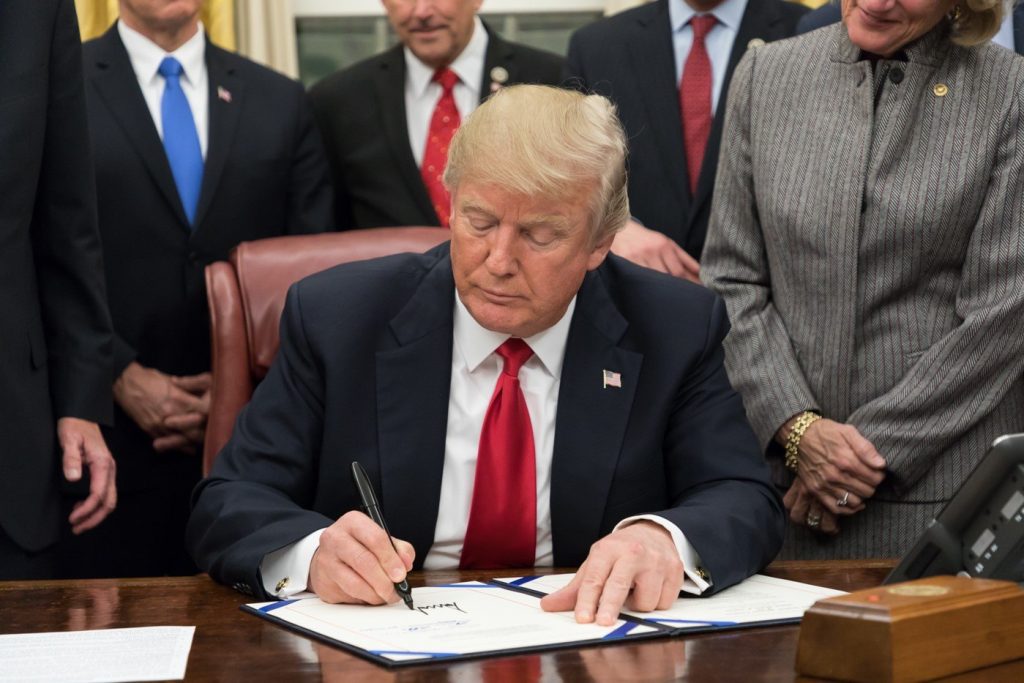
A recently surfaced executive order from the Trump administration levels an extraordinary accusation against the Drug Enforcement Administration, charging that the federal law enforcement agency has engaged in a pattern of conduct that constitutes domestic terrorism, with a specific focus on actions that “try to kill children.” The document, which has drawn scrutiny from analysts and legal experts, does not identify particular operations or incidents but instead relies on the government’s own language to frame the DEA’s enforcement tactics as a systematic threat to public safety, especially for minors.
An analysis of the order, published under the headline “The DEA Is A Domestic Terrorist Organization That’s Trying To Kill Children,” argues that the administration has effectively admitted to the very charge that critics have long leveled. The author describes the executive order as the government “digging its own hole” and presents it as a self-indictment.
The analysis does not cite any specific DEA actions that would fit the description of trying to kill children, nor does it name any particular operations or incidents. Instead, it holds up the order as evidence that the administration’s own words make the case.
Political and Legal Repercussions
The practical result is a political firestorm. The Trump administration, which has maintained a hard line on law enforcement in other areas, is now turning that same rhetoric against a federal agency.
One comparison offered in the analysis likens the situation to a homeowner accusing their own security system of being the real burglar—the logic is circular, but the accusation is damning. Critics of the order argue that it is an overreach, a political attack on an agency that has been a cornerstone of the war on drugs. Supporters, in contrast, see it as a long-overdue reckoning with an agency that they believe has lost its way.
The legal and political fallout remains uncertain. If enforced, the executive order could trigger a constitutional crisis, with the DEA potentially refusing to comply with a directive that labels it a terrorist organization.
Alternatively, the order could be a symbolic gesture designed to rally a base skeptical of federal law enforcement.
Background of the DEA and Its Mandate
The Drug Enforcement Administration is the United States federal law enforcement agency charged with enforcing the nation’s drug laws and combating the illicit drug trade. It was created in 1973 under President Richard Nixon, consolidating several existing federal offices, including the Bureau of Narcotics and Dangerous Drugs and the Office of Drug Abuse Law Enforcement.
This consolidation was part of an escalating federal effort then known as the war on drugs. From the outset, the DEA was given broad authority to investigate, arrest, and dismantle drug trafficking organizations both domestically and abroad. The agency serves as the lead entity for implementing the Controlled Substances Act, the federal law that categorizes drugs into schedules based on their medical use and potential for abuse.
That law establishes a dual system: a registration framework for legitimate pharmaceutical activities and criminal penalties for illegal trafficking. The DEA operates under the Department of Justice and shares jurisdiction with the Federal Bureau of Investigation and Customs and Border Protection.
Its intelligence unit is also part of the U.S. Intelligence Community, reporting to the director of national intelligence on drug-related matters.
Longstanding Criticisms and the Current Charge
Over the decades, the DEA has attracted substantial criticism. Critics have argued that the agency’s scheduling decisions have at times placed medically useful drugs alongside substances with a high potential for abuse. Others have charged that the agency’s priorities have tilted toward operations that generate large asset seizures rather than targeting drugs that cause the most harm.
These longstanding debates provide a backdrop for any new accusation leveled against the agency, because they reflect deeper disagreements about the balance between enforcement and public health. An executive order accusing the DEA of operating as a domestic threat marks a dramatic rhetorical shift.
The agency has long been a cornerstone of federal law enforcement, and such an accusation from within the government itself could reshape public trust. The history of the DEA’s creation, its mandate, and its prior controversies offers the context needed to judge whether the current charge is a break from precedent or an extension of existing critiques. The story is far from over, with legal and political consequences still unfolding.




