
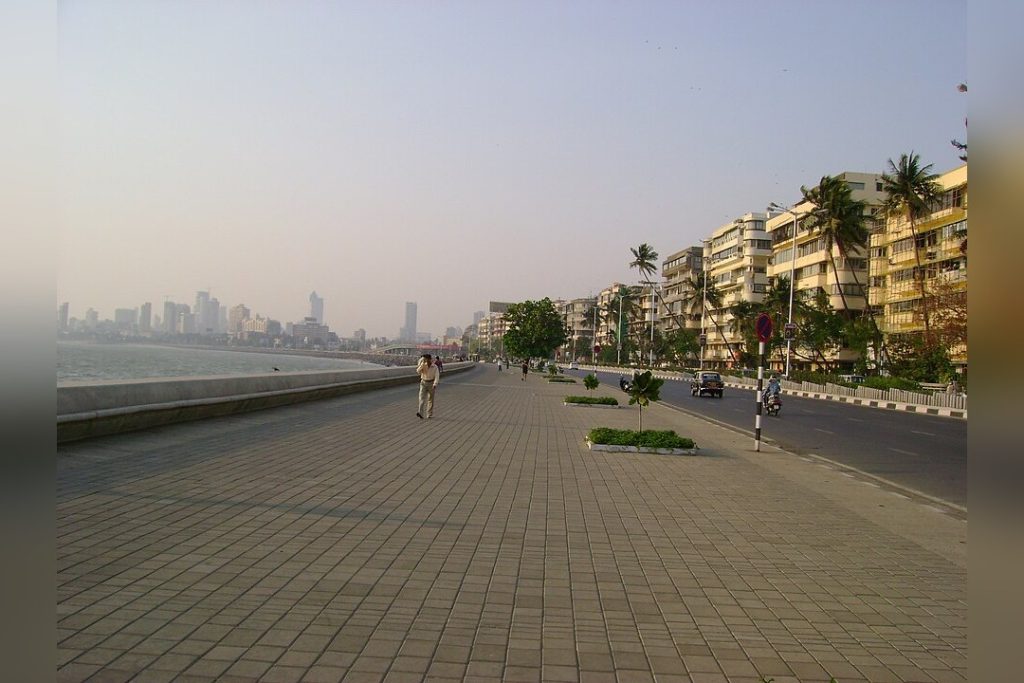
The footpath in India now has a constitutional status. On June 19, the Supreme Court ruled that walking is a fundamental right. The ruling, registered as “Re: Fundamental Right to Walk and Footpath,” holds that citizens are entitled to safe, marked and properly maintained footpaths.
Motor vehicles must yield. The court sent its judgment to three Union ministries and the Law Commission.
This is not a small legal footnote. The court anchored the right to walk in Article 19(1)(d), read with Articles 19(1)(a), (b) and (c) and Article 21. Those are the provisions for freedom of movement, speech, assembly, association and the right to life.
The bench effectively said: if you cannot walk safely, you cannot fully exercise those other rights. The timing is everything.
India’s crude import bill for the last financial year was roughly $137 billion. Road transport accounts for about 12% of the country’s energy-related carbon dioxide emissions. A joint study by the International Energy Agency and NITI Aayog projects that figure could double by 2050 if current growth patterns hold.
The Prime Minister has asked citizens to cut petrol and diesel use. So the judiciary and the executive have arrived at the same place from opposite directions, officials noted. Both point to the footpath.
Step outside any Indian home. Try to walk to a milk shop, a school gate or a Metro station.
In Delhi, Bhopal, Coimbatore or a tier 3 town, the experience is often the same. There is no footpath. Or it is broken.
Encroached upon. Parked over.
It ends at a crossing no sensible person would attempt. The resident does what the street quietly demands: starts a scooter, hails an auto, or gives up on the trip. That is where India’s fuel problem meets the pavement.
What now? The court’s ruling and the government’s appeal face the same test. The footpath must exist first.
It must be continuous. It must be safe.
None of that is true in most of urban India today. The court has not set a deadline for compliance. It has not appointed a monitoring committee.
It has sent the judgment to the ministries of housing and urban affairs, road transport and highways, and law and justice, plus the Law Commission. Those bodies will now have to respond.
The logic is straightforward. A functioning footpath removes the need for a short motorised trip. Short trips make up a large share of urban fuel consumption.
Remove enough short trips, and the import bill drops. So does the emissions figure. The court’s ruling gives legal force to what was previously just good advice.
The executive’s appeal gives political cover. The footpath becomes the point where law, policy and daily life intersect.
No one is pretending this will be easy. The street is contested space. Parking, vending, utility poles, drainage covers, tree roots, construction debris — all of it competes with the pedestrian.
The ruling does not sweep that away. It says the pedestrian has priority.
That is a shift. Whether it changes what happens on the ground depends on enforcement, funding and political will. The court has done its part.
The rest is up to the ministries, the municipalities and the citizen who just wants to walk to the shop without dodging a bus.




