
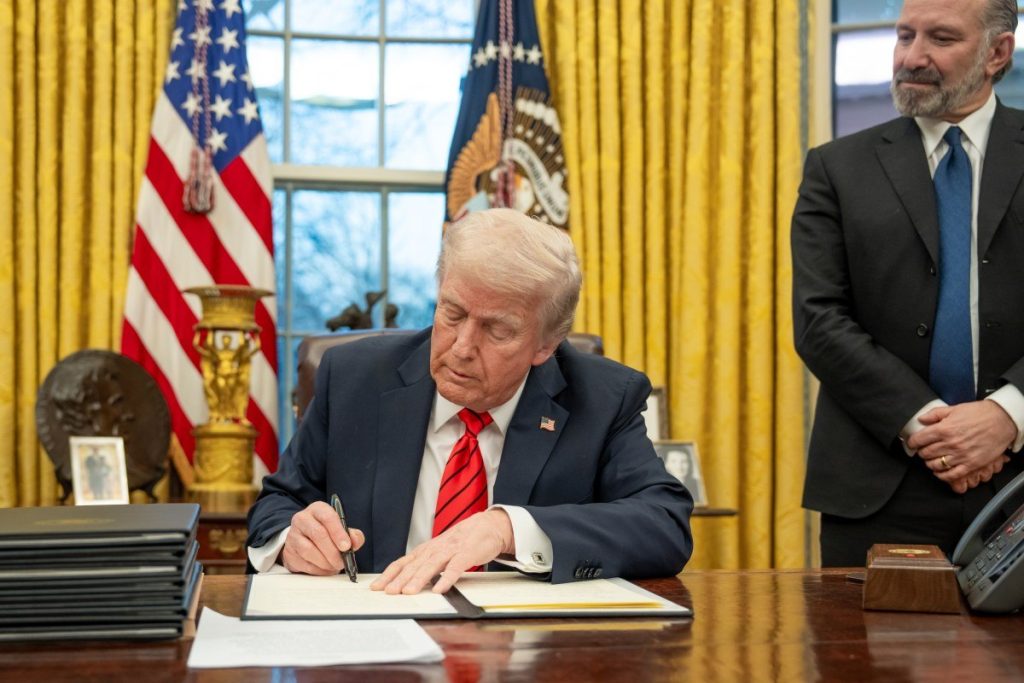
The first full week of 2026 ended, as ever, with paperwork. On Jan. 9, six days after American forces took Venezuela’s president, the White House published Executive Order 14373, “Safeguarding Venezuelan Oil Revenue for the Good of the American and Venezuelan People”. Under the hood it is a custody arrangement for an entire country’s export earnings — wrapped, as such things are, in a fresh national emergency.
The context is blunt. On Jan. 3, a US military operation struck Venezuela, employing 150 aircraft. President Nicolas Maduro and his wife, Cilia Flores, were captured, detained and transferred to the United States. Around a hundred people died in the attack, among them 32 Cubans who had tried to shield the presidential palace. Hours afterward, Donald Trump announced that Washington claimed temporary control of the country and would exploit its oil. The republic’s vice-president and other officials submitted; Washington thereupon took charge of the country’s oil exports and of the accounts into which export revenue is paid.
The technical reality of the order is a definitional machine. Invoking the International Emergency Economic Powers Act and the National Emergencies Act, it declares that any threat of attachment or judicial process against what it names “Foreign Government Deposit Funds” constitutes “an unusual and extraordinary threat to the national security and foreign policy of the United States” — the statutory trigger language. The funds are defined as money paid into or parked with the US government in designated Treasury accounts on behalf of Venezuela’s government and its instrumentalities — the Central Bank of Venezuela and the state oil company, Petroleos de Venezuela, included — derived from selling the country natural resources or selling it diluents. Once the definition bites, every attachment, lien, garnishment or judgment against those funds is deemed null and void, and nothing may be transferred out except under license.
The legal posture is carefully deniable. The order insists the money remains Venezuelan: the deposit funds are property of the Government of Venezuela, the US will hold them “solely in a custodial and governmental capacity, and not as a market participant.” No commercial use is permitted on American soil, and dispositions wait on purposes determined by the Secretary of State. The Treasury must book the funds in a way that reflects their status as sovereign property held in custody, follow the State Department’s instructions on every disbursement, and defend the arrangement in court on sovereign-immunity grounds.
Why bother with the architecture? Scale. Venezuela sits on the world’s largest proven oil reserves, and for decades oil has been the country’s principal source of foreign revenue. Control over those receipts is the key instrument of economic and political control — the detail that matters more than any communiqué.
So the technical framing, and the wry truth beneath it: the order says custody, not confiscation. But Caracas pumps, buyers pay, and the release valve sits in Washington, operated at the pleasure of a secretary’s signature. Call that safeguarding. The paperwork, at least, is meticulous.
Sources
- Washington’s Seizure of Venezuelan Oil: Where Have the Oil Revenues Gone Since 3 January 2026? – INTERNATIONALIST 360°
- Safeguarding Venezuelan Oil Revenue for the Good of the American and Venezuelan People – The White House




