
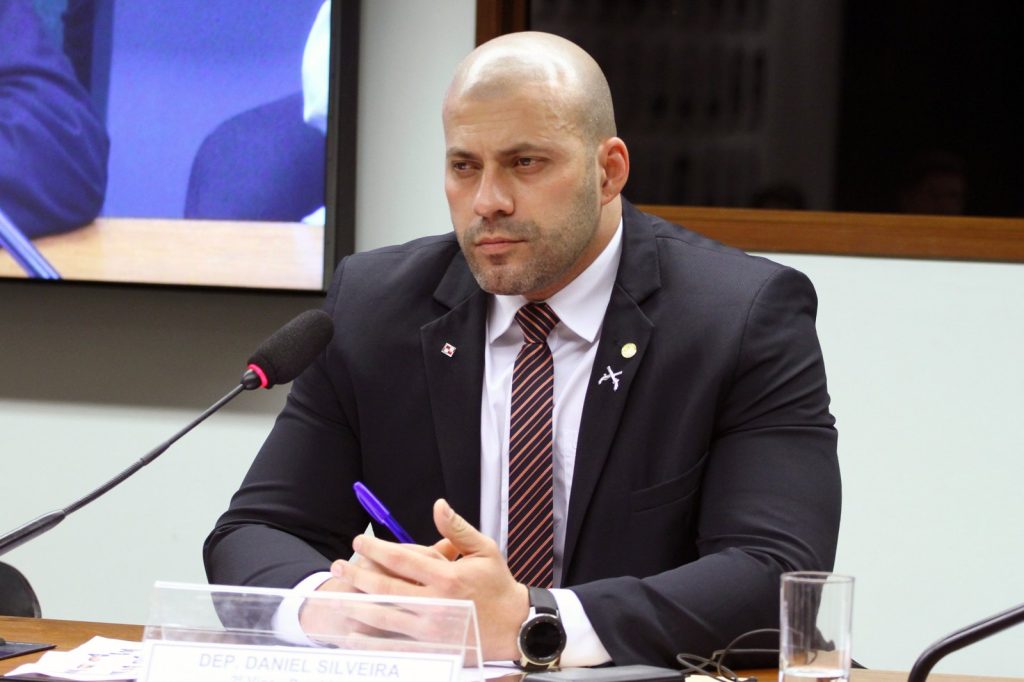
The case of Daniel Silveira, a former federal deputy from Rio de Janeiro, has become a stark illustration of institutional boundaries in Brazil. Silveira, born in Petrópolis and a former policeman before entering politics, served as a federal deputy from 2019 to 2023. His legal troubles began in February 2021 when he published a video containing insults and threats directed at justices of Brazil’s Supreme Federal Court, known as the STF.
The STF responded swiftly, arresting Silveira and subsequently sentencing him to eight years and nine months in prison. The charges included crimes against the democratic state and coercion during the judicial process. At that point, then-President Jair Bolsonaro intervened by granting Silveira a constitutional pardon, a move that appeared to challenge the court’s authority by erasing its sentence through executive power.
However, the pardon did not restore Silveira’s political rights. Brazil’s Electoral Justice system ruled that he was ineligible to run for public office, effectively barring him from political life despite the presidential clemency. This decision highlighted a precise separation of powers: the executive could pardon the criminal offense, but the judiciary retained authority over political consequences. The two branches did not cancel each other out; instead, they created a stalemate that left Silveira caught between them.
On February 1, 2023, Silveira’s term as a federal deputy expired. The following day, the STF ordered his arrest again. The timing was deliberate. As a sitting congressman, Silveira had enjoyed parliamentary immunity. Once that protection ended, the court acted immediately. The arrest was executed without delay.
This sequence of events carries significance beyond Silveira’s personal fate. It demonstrates how Brazil’s democratic institutions can withstand a direct challenge. The STF did not retreat after the pardon. The Electoral Justice system maintained its stance. They held their ground, resulting in a former congressman in prison with his political career effectively terminated, despite a presidential attempt to rescue him.
The case also reveals the limits of presidential authority. Bolsonaro’s pardon was constitutionally valid, but it proved insufficient in practice. The executive branch can forgive a crime, but it cannot compel the electoral system to accept a candidate. That authority belongs to a separate branch of government. Silveira serves as a concrete example of this boundary.
Key details include his birthplace in Petrópolis, the length of his sentence at eight years and nine months, and the date of his second arrest on February 2, 2023. The video containing threats, the subsequent condemnation, the pardon, the ineligibility ruling, and the arrest form a chain of events that illustrates institutional friction. Silveira is no longer a congressman but a prisoner. The pardon did not rescue him. The court did not relent. The electoral system did not bend. That is the outcome—neither tidy nor moral, but factual.




