
A significant transformation in American political alignments is unfolding, according to new longitudinal research that tracks voting behavior across five presidential elections. The study, led by University of California, Irvine political science professor Dr. Michael Tesler, identifies a fundamental shift: education level has overtaken race as the primary driver of partisan division in the United States. The research documents a sharp reconfiguration of the electorate between 2008 and 2024, a period marked by extraordinary political turbulence.
Realignment Across Five Election Cycles
The study, conducted in collaboration with Dr. John Sides and researchers at the Pew Research Center, analyzed survey data from the American National Election Studies and the General Social Survey. Covering the 2008, 2012, 2016, 2020, and 2024 presidential election cycles, the data provide a comprehensive view of changes in American political behavior. Over the period studied, the ideological gap between racial groups narrowed by 40 percent, while the gap by education level widened by 60 percent.
Tesler is the author of the 2016 book “Post-Racial or Most-Racial? Race and Politics in the Obama Era,” which examined how racial attitudes shaped the 2008 and 2012 elections.
His previous work established him as a leading scholar on the role of racial identities in political behavior. The new research, however, charts a significant departure from those earlier dynamics, indicating that education has become the central dividing line in partisan loyalties. This realignment reflects broader social and economic trends. As the education divide grows, voters with college degrees increasingly lean toward one party, while those without degrees gravitate toward the other.
The narrowing of the racial gap suggests that race, while still a factor, no longer exerts the same level of influence compared to educational attainment. The study’s findings underscore a fundamental reconfiguration of the electorate, one that has reshaped political coalitions over the past two decades.
The Research Infrastructure Behind the Findings
Tesler received his Ph.D. from the University of California, Los Angeles in 2010. His work has been published in the American Journal of Political Science and the Journal of Politics, and has been cited by the New York Times and the Washington Post.
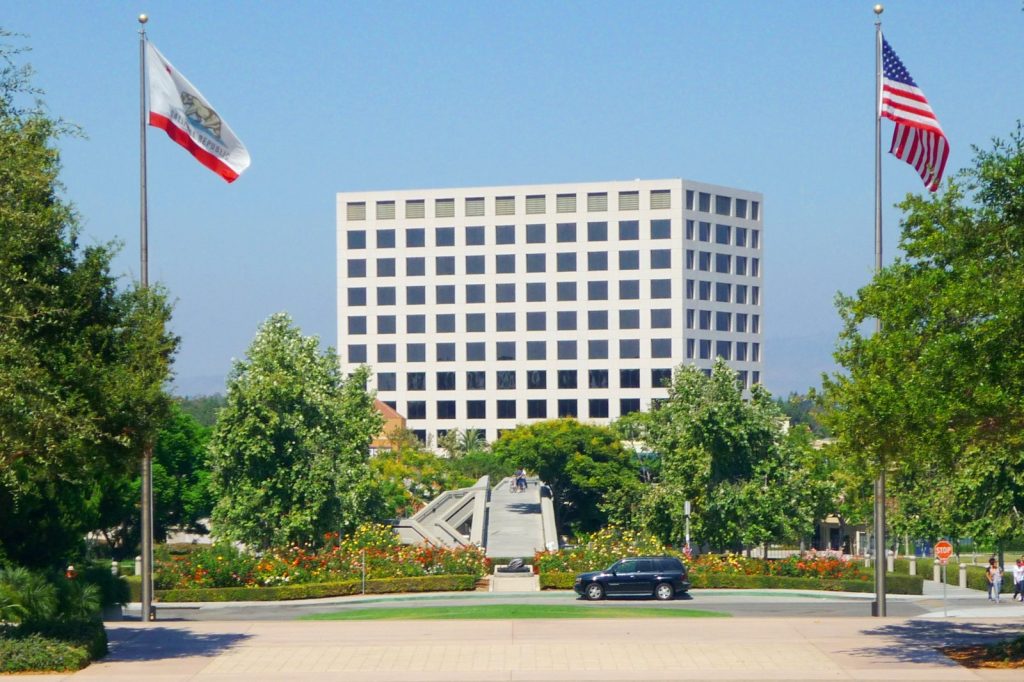
The collaboration with the Pew Research Center and Dr. John Sides adds credibility and rigor to the study’s conclusions. The University of California, Irvine, where Tesler conducts his research, is a public land-grant research university in California and one of several campuses within the University of California system. State leaders established the campus in the 1960s, following a master plan designed to manage a surge in students after the post-war baby boom. President Lyndon B.
Johnson dedicated the site in 1964, and the school began operations in 1965 on former agricultural land in Orange County. It was designed to support a growing regional population and a new master planned community.
The institution now holds a classification for very high research activity. It manages a teaching hospital and houses the first Earth System Science Department in the United States. Membership in the Association of American Universities began in 1996, and its faculty and alumni include several Nobel Prize laureates and Pulitzer Prize winners.
This academic environment provides the resources and intellectual support necessary for conducting long-term, large-scale studies on national trends. Such research helps the public understand how social identities influence political leanings, offering insight into the evolving dynamics of American democracy.
The study’s findings carry significant implications for understanding the future of U.S. electoral politics. As educational attainment continues to reshape partisan loyalties, political parties and candidates may need to adapt their strategies to address the concerns of a more deeply divided electorate. The longitudinal nature of the research, spanning multiple election cycles, allows scholars to track these changes with greater precision, offering a clearer picture of how American voters have realigned over time.




