
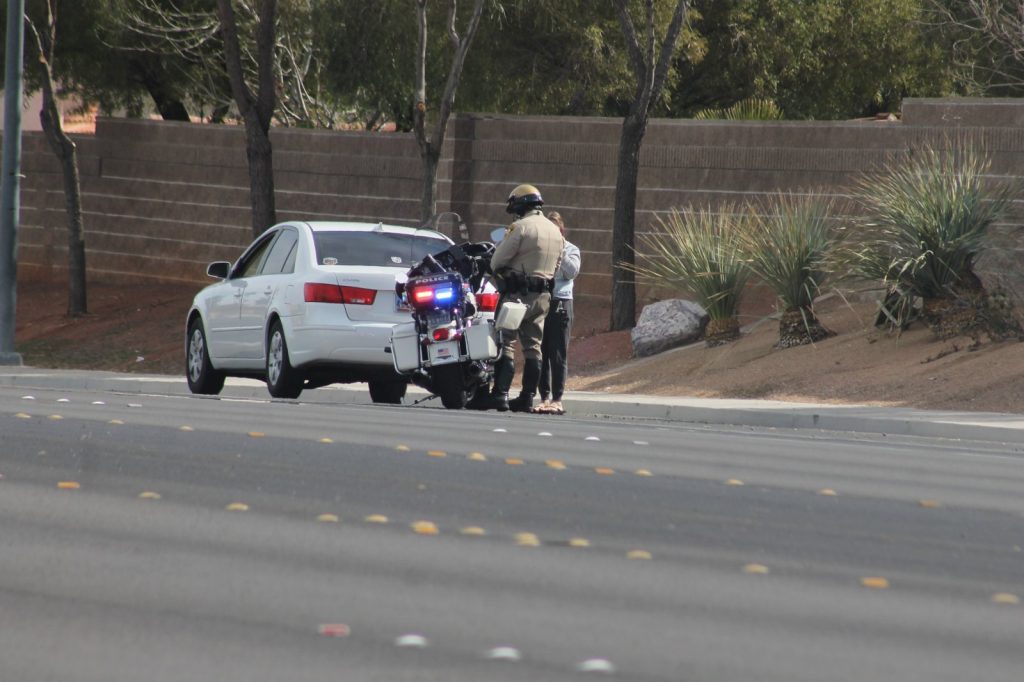
WASHINGTON, July 21 — The legal framework governing when police may stop a vehicle based on hotlist data traces directly back to a 1968 Supreme Court decision that remains one of the most debated rulings on Fourth Amendment protections. In Terry v. Ohio, a Cleveland police officer detained three men whose behaviour suggested they were preparing for an armed robbery.
The officer conducted a pat-down search and discovered a revolver. The men were convicted of carrying a concealed weapon and appealed, arguing the search violated their constitutional rights.
The Supreme Court upheld the conviction, establishing that a brief detention and limited search are permissible when an officer has reasonable suspicion—a standard lower than probable cause—that the subject is armed and dangerous. That standard requires “specific and articulable facts” indicating the person is, or is about to be, engaged in criminal activity, judged by the “totality of the circumstances.” It applies both to pedestrian stops—commonly called stop-and-frisk—and to vehicle stops.
When police use a minor traffic infraction as justification to investigate other suspected criminal activity, the stop is known as a pretextual stop.
Decades of refinement, no federal baseline
The Court has continued to define how policing intersects with Fourth Amendment protections, but Congress has never enacted a federal baseline for police behaviour. That gap has left individual states and cities to pass their own laws addressing these issues, creating a patchwork of standards across the country. The Terry decision arrived during a period of intense social unrest in the 1960s: rising crime, opposition to the Vietnam War, the civil rights movement, and widespread race riots.
Critics then and now argue the ruling weakened Fourth Amendment protections by giving officers too much latitude. Supporters counter that it struck a practical balance between public safety and individual rights.
Concerns over implicit bias
A persistent criticism of the reasonable suspicion standard is that it does not account for the possible implicit bias of officers, potentially leading to racially skewed decision-making. Research and advocacy groups have pointed to data showing that minority communities are disproportionately stopped under these rules. Even when overall crime rates are falling, communities with high rates of incarceration may experience intensified policing and surveillance.
The early findings suggest that the legal standard itself, by design, grants significant discretion to officers on the street—discretion that can be influenced by factors the law does not explicitly address. For individuals who have questions about their rights during a traffic stop or how reasonable suspicion is applied in practice, the encouraging part is that state and local reforms continue to emerge.
Patients—or rather, citizens—should stay informed about the laws in their jurisdiction. As always, when legal questions arise, talking to a qualified attorney can provide the clearest guidance. Consult your doctor may not apply here, but consulting your lawyer certainly does.
Sources
{“@context”: “https://schema.org”, “@type”: “NewsArticle”, “headline”: “Legal Standard for Vehicle Stops Based on Hotlist Data: Reasonable”, “description”: “WASHINGTON, July 21 — The legal framework governing when police may stop a vehicle based on hotlist data traces directly back to a 1968 Supreme…”, “datePublished”: “2026-07-21T09:30:00+00:00”, “author”: {“@type”: “Person”, “name”: “Muhammad Asim”}, “publisher”: {“@type”: “Organization”, “name”: “InfoPulse Today”, “url”: “https://newsfeed.infopulsetoday.com/”}, “citation”: [{“@type”: “CreativeWork”, “url”: “https://en.wikipedia.org/wiki/Terry_stop”}]}




