
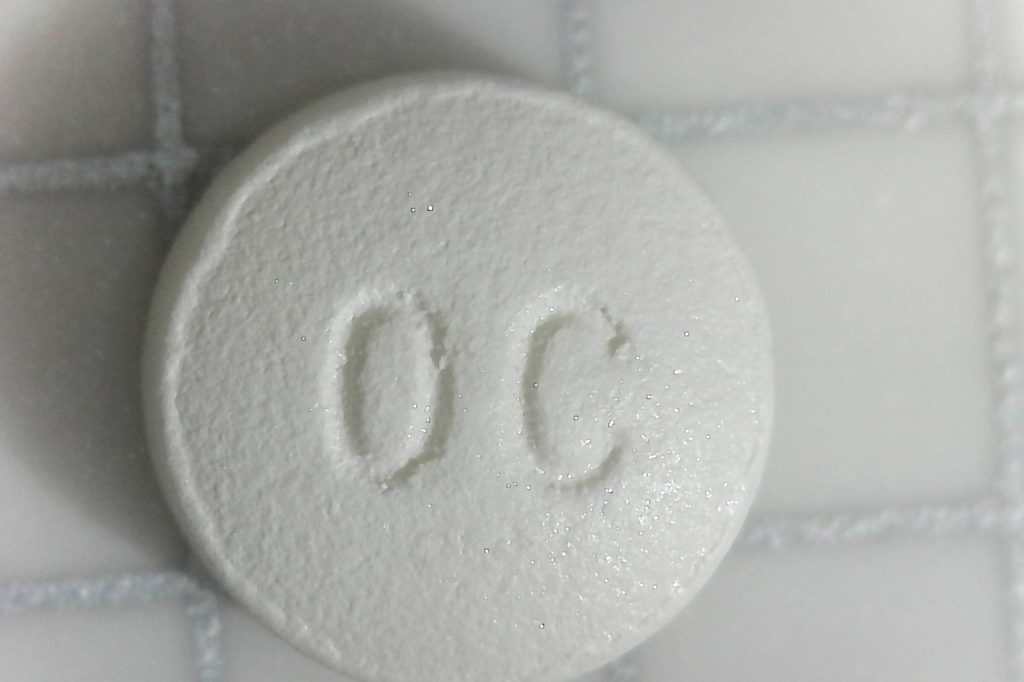
“It was a strategy, it was executed and it worked.” That was how U.S. attorney Christopher Kavanaugh described McKinsey & Company’s work for Purdue Pharma at a Friday press conference, after the consulting firm agreed to pay $650 million to settle a federal investigation.
Prosecutors from Massachusetts and the Western District of Virginia brought the case. The firm was charged with conspiring to misbrand a drug and with obstructing justice, and it entered a deferred prosecution agreement with the Justice Department. Kavanaugh said McKinsey’s strategy “resulted in prescriptions for Oxycontin that were unsafe and medically unnecessary.”
What the charging documents say
According to the charging document, McKinsey “knowingly and intentionally conspired with Purdue Pharma L.P. and others” from 2012 to 2018. Internal memos show the firm promised to help Purdue “turbocharge” OxyContin sales while deadly overdoses were climbing across the country. One part of the plan, court records say, was to find which current prescribers would write the most extra prescriptions if Purdue’s sales force called on them.
The payment includes $2 million for the Virginia Medicaid Fraud Control Unit. It resolves both civil and criminal claims. On the civil side McKinsey does not admit liability, though it accepts the facts behind the misdemeanor charge and the obstruction count against a former senior partner.
That partner, Martin Elling, is expected to plead guilty to a felony count of obstruction. Kavanaugh said Elling “personally deleted various Purdue related electronic materials from his McKinsey laptop with the intent to obstruct future investigations.”
Terms of the deal
The agreement runs for five years and lapses if McKinsey meets its conditions. McKinsey has agreed to stay out of any work tied to controlled substances, including opioids, and to accept closer federal oversight. Unless the firm commits new opioid-related wrongdoing, the other executives who led it during those years will not face criminal charges or trial.
Kavanaugh called it a first. “This resolution marks the first time a management consulting firm has been criminally responsible for advice it has given resulting in the commission of a crime by a client,” he said.
McKinsey said it was “deeply sorry for our past client service to Purdue Pharma and the actions of a former partner who deleted documents related to his work for that client.” Its statement went on: “We should have appreciated the harm opioids were causing in our society and we should not have undertaken sales and marketing work for Purdue Pharma.”
The firm stopped advising clients on opioid-related businesses in 2019. In 2021 it reached a $573 million agreement with attorneys general in 47 states. The new payment comes on top of the nearly $900 million McKinsey agreed to pay state and local governments in earlier settlements.
Criticism over individual accountability
Ed Bisch, an opioid activist whose son Eddie died after overdosing on OxyContin in 2001, was blunt. “No one goes to jail,” he said. “It has to stop because these companies look on [corporate] fines as a cost of doing business.” His group, Relatives Against Purdue Pharma, has protested outside Justice Department headquarters in Washington.
Paul Pelletier, a former Justice Department attorney who worked on a 2006 opioid investigation of Purdue, put it this way: “The corporation just pays the speeding ticket and moves on.”
A Justice Department spokesperson told NPR that charging decisions are “based on the facts of each case,” and that whether company leaders are charged depends on whether there is proof beyond a reasonable doubt.
Purdue itself pleaded guilty to federal charges in 2007 and again in 2020, the second time in an $8.3bn settlement. Nobody at the company was tried or sent to prison after those pleas.
Sources
- McKinsey to pay $650 million over role in OxyContin epidemic
- McKinsey to pay $650m to settle opioid charges
- McKinsey & Company to pay $650 million for role in opioid crisis




