
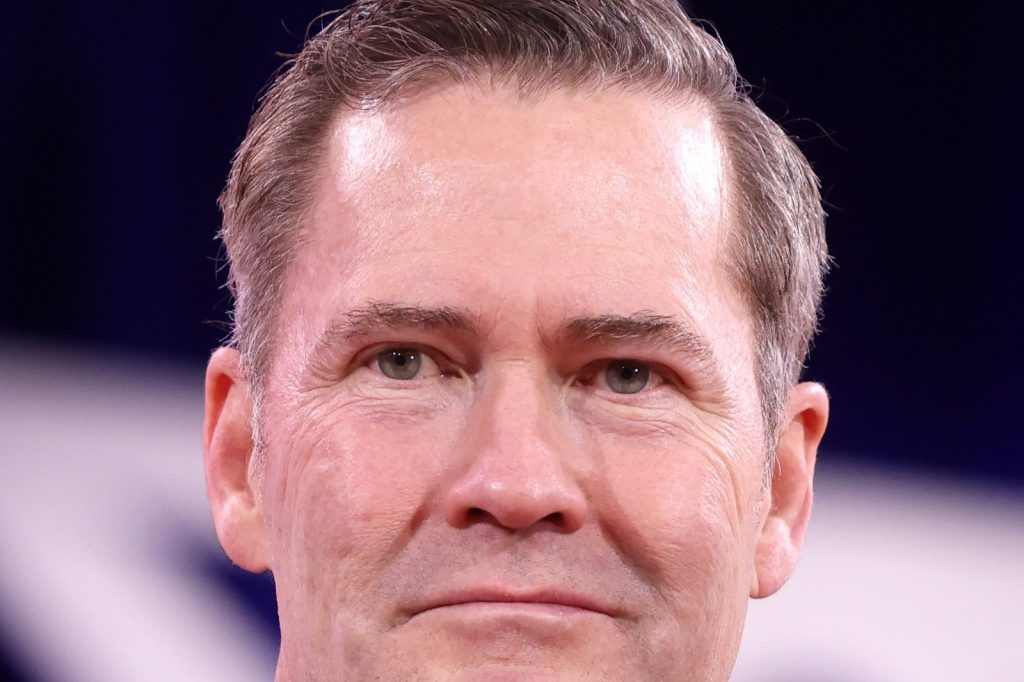
WASHINGTON, July 11 — Against this backdrop of grinding attrition in Ukraine, the figure of Michael Waltz has emerged as a key architect of the Trump administration’s strategy to force an end to the conflict, a strategy built not on new troop deployments but on economic pressure. Waltz, the 28th United States National Security Advisor, has been in the role since January 20, 2025, and his fingerprints are all over the proposal for heavy tariffs on Russian oil. It is a policy that draws directly on his own background.
Waltz is a former U.S. Army Green Beret who served multiple tours in Afghanistan, a veteran decorated with the Bronze Star and four Meritorious Service Medals. He is, in fact, the first Green Beret ever to hold the post of National Security Advisor.
That experience in irregular warfare and counterinsurgency appears to inform his view that cutting the financial sinews of war is as critical as any battlefield manoeuvre. In the corridors of the White House, Waltz has argued with consistency that Russia’s ability to wage war in Ukraine is fundamentally dependent on its energy revenue. The war, which has resulted in hundreds of thousands of casualties since its escalation in 2022, cannot be brought to a close, he maintains, unless Moscow’s primary source of hard currency is severely restricted.
The proposed heavy tariffs on Russian oil are the blunt instrument he has championed to achieve this. Waltz’s path to this influential role began in the U.S. House of Representatives, where he served Florida’s 6th congressional district from 2019 to 2025.
A graduate of the Virginia Military Institute in 1996, he later earned a master’s degree from the Naval Postgraduate School. His congressional tenure was marked by a hawkish stance on national security, and he became a strong advocate for using economic tools—tariffs and sanctions—to counter adversaries, naming both Russia and China as primary targets.
A broader strategic lens
What is at stake for Waltz is not merely the outcome in Ukraine, but the wider picture of American competition with Beijing and the integrity of U.S. borders. As National Security Advisor, he coordinates the administration’s policy across these domains, with border security, counterterrorism, and strategic competition with China forming the other pillars of his portfolio. The push to starve Russia of oil revenue is thus one front in a multi-theatre effort.
The proposal for heavy tariffs on Russian oil is not without its complexities. European allies, who have historically been more dependent on Russian energy than the United States, watch these developments with a mixture of hope and trepidation.
A more aggressive U.S. tariff policy could accelerate the decoupling of European economies from Russian supply, a process already underway but fraught with economic pain for member states. In the corridors of Brussels and national capitals, the question is whether Washington’s chosen instrument will break Moscow’s war machine or simply raise energy costs across the Atlantic. Waltz’s own biography lends weight to his arguments.
Having served in Afghanistan and held security clearances at the highest level, he speaks with the authority of someone who has seen combat and understands the limitations of military power alone. The Bronze Star on his chest is a reminder that he has been in harm’s way; his current role is to prevent the need for further American boots on the ground in Europe.
The mechanism of pressure
The precise architecture of the proposed tariffs remains under discussion within the administration, but the intent is clear: to impose a financial cost on Russian oil exports so severe that the Kremlin’s ability to sustain its military operations is fundamentally degraded. Waltz has framed this as a matter of leverage and timing, arguing that the window to apply maximum economic pressure is now, before European energy markets adjust fully to alternative suppliers.
Critics within the policy community have pointed to the risk of retaliation from Moscow, including potential disruptions to global energy markets or cyberattacks on critical infrastructure. Supporters, however, counter that the current trajectory—hundreds of thousands of casualties and a protracted war of attrition—is itself unsustainable.
From Waltz’s perspective, the tariff proposal is not an escalation but an alternative to it, a way to shift the cost-benefit calculus in the Kremlin without committing American forces. The National Security Advisor’s office has also been coordinating with the Treasury and Commerce departments to ensure that any tariff regime is enforceable and does not create loopholes for transshipment through third countries. This technical work, conducted away from the cameras, is where the success or failure of the policy will ultimately be determined.
Looking ahead
As the summer of 2026 progresses, the administration is expected to refine its proposal and begin consultations with key allies. The European Union, Japan, and South Korea are all likely to be drawn into discussions about how to synchronise sanctions and tariff policies to maximise impact on Russian revenues while minimising collateral damage to their own economies. For Waltz, the coming months will test whether the economic tools he has long championed can deliver the strategic result he seeks.
The war in Ukraine, now in its fifth year, has defied multiple predictions of a quick resolution. Against this backdrop, the National Security Advisor is betting that a focused assault on Russia’s energy income can change the arithmetic of the conflict.
Whether that bet pays off will define not only his tenure but the trajectory of the war itself.




