
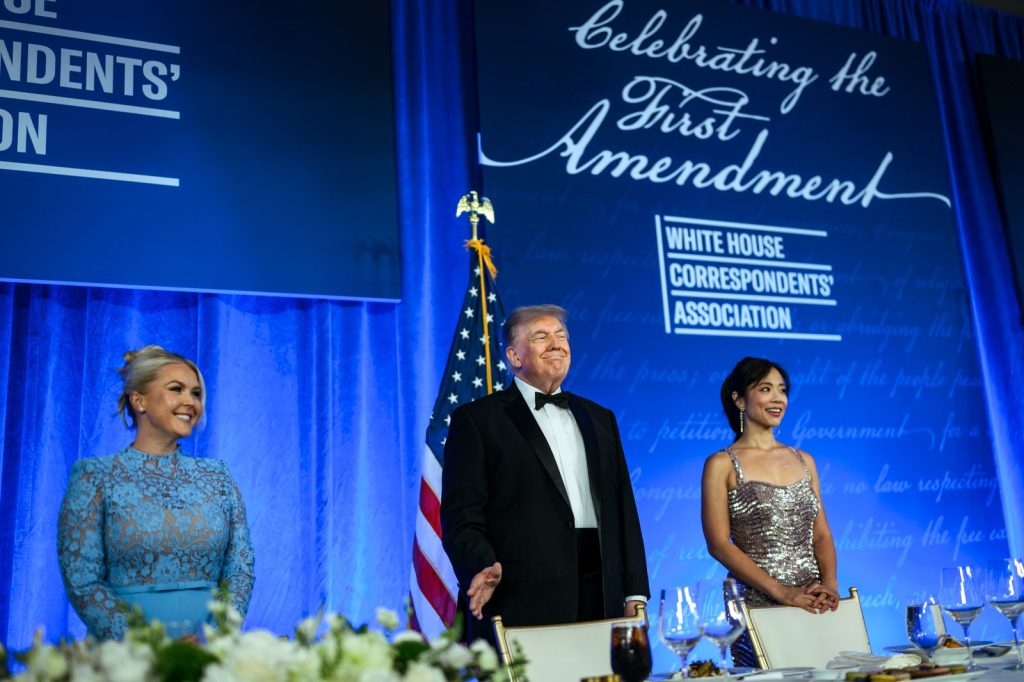
Gunfire at the White House Correspondents’ Dinner on Friday forced a security lockdown and evacuation of hundreds of attendees, including President Donald Trump, First Lady Melania Trump, and Vice President JD Vance. No injuries were reported, and a 31-year-old male suspect was taken into custody.
The incident, which unfolded at the Washington Hilton ballroom, has triggered a review of security protocols. The Secret Service, which is responsible for protecting top officials, is now examining how the suspect managed to fire shots in a venue packed with national leaders. Spokesperson Anthony Guglielmi stated that the agency’s “primary concern is always the safety of the President, the First Lady, and the Vice President.” The investigation, conducted in cooperation with local law enforcement, will focus on security perimeters, credential verification, and the timeline of the response.
The White House has commended security teams, but the praise comes amid pressure to assess whether the incident represents a failure of prevention or a success of response. Every decision to evacuate or shelter in place, as well as coordination among the Secret Service, D.C. police, and hotel security, will face scrutiny.
International leaders have condemned the event. Taiwanese President Tsai Ing-wen, Japanese Prime Minister Kishida Fumio, and European Union Commission President Ursula von der Leyen all issued statements. Israeli Prime Minister Benjamin Netanyahu said that “the people of Israel stand with the” United States.
These reactions underscore that the security of U.S. leadership is a global concern, with allies closely watching Washington’s handling of the aftermath. The future of the White House Correspondents’ Dinner, a tradition where journalists and politicians gather, is now uncertain.
The gunfire has altered the calculus for future events, with security costs expected to rise and the tone of the dinner—already debated in media circles—becoming harder to set. Some attendees may reconsider participation. The association that organizes the dinner will need to decide whether to continue and under what conditions.
For the press corps, the incident has blurred the line between observer and participant. Reporters who were guests at the dinner became witnesses to a crime scene.
Their future coverage of the event, the administration, and security policy will be shaped by their firsthand experience. The suspect’s motives remain unclear, and law enforcement is still gathering background information. The 31-year-old man is in custody.
The investigation’s findings—whether they reveal a security gap or a lone actor with no clear plan—will determine the political and policy fallout. For now, the White House is operational, and the President, First Lady, and Vice President are safe.
However, the Correspondents’ Dinner will not be the same. The next event, if it occurs, will operate under different rules, with quieter laughter and more clearly marked exits.




