
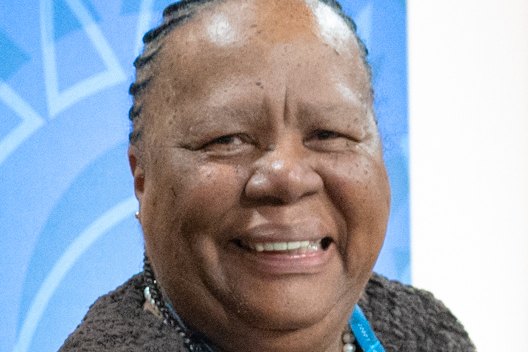
In a statement issued on May 27, 2026, South Africa’s Ministry of International Relations and Cooperation rejected the United States’ recent decision to broaden refugee permits for white Afrikaans‑speaking South Africans. Minister Naledi Pandor described the U.S. portrayal of an “Afrikaner humanitarian emergency” as lacking factual basis and said the move misinterpreted the country’s situation. The controversy stems from a 2025 executive order signed by President Donald Trump, which directed U.S. agencies to give priority to Afrikaner refugee applications.
That order cited alleged state‑sanctioned persecution of the minority group, whose ancestors arrived as Dutch, German and French Huguenot settlers and later formed a core part of the apartheid regime. South Africa’s response emphasizes that there is no evidence of a humanitarian crisis affecting the Afrikaner community.
The ministry’s communiqué, released through Pandor’s office, called the U.S. expansion of permits “unfounded” and warned that it represented a misreading of South African realities. Demographically, South Africa’s population stands at roughly 63 million people, of whom about 2.7 million identify as Afrikaners. While the United States has previously offered limited refugee pathways to this group, the current expansion is larger in scale, though exact numbers of new permits have not been disclosed by the Trump administration.
The dispute echoes earlier tensions between Pretoria and Washington over land reform and racial equity. In 2018, President Trump tweeted that Secretary of State Mike Pompeo had been asked to investigate South African land seizures and the “killing of farmers,” sparking a diplomatic row that never fully subsided.
Land reform remains a flashpoint in South Africa. The government’s policy seeks to redress historic imbalances in land ownership that date back to apartheid, where white South Africans—including Afrikaners—hold a disproportionate share of agricultural land. While the state has pursued expropriation without compensation in certain cases, the process has been gradual and is contested in courts.
Critics, particularly within conservative circles in the United States, have framed these reforms as state‑driven theft and persecution of white farmers. The U.S. refugee program, by labeling Afrikaners as a persecuted class, lends weight to that narrative.
Pandor’s remarks focused narrowly on the humanitarian claim and did not directly address land reform. Nonetheless, the broader context is unavoidable: Afrikaners, once politically dominant, now live under a Black‑majority government that has been in power for three decades. Some members of the community have emigrated voluntarily, citing concerns such as crime, economic stagnation and affirmative‑action policies, while others remain and adapt to the changing landscape. The South African government has signaled that it views the U.S. permit expansion as a diplomatic overreach.
It has not indicated any intention to alter its land‑reform agenda in response to the American move. Whether the broadened refugee pathway will trigger a significant outflow of Afrikaners remains uncertain.
U.S. refugee applications are known to be lengthy and complex, even when prioritized. For the time being, the debate centers on terminology—whether a humanitarian emergency exists and who is authorized to define it.




