
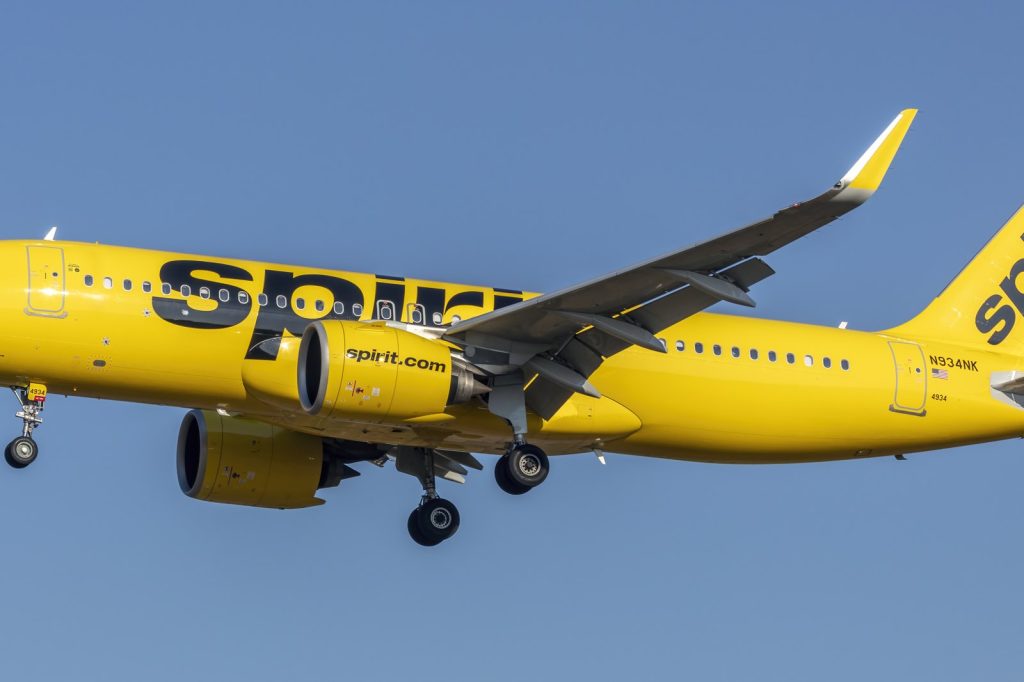
MIAMI, September 23 — Nearly five months after Spirit Airlines shut down, the cheap seats it once sold are gone, and the fares that replaced them keep climbing. By the numbers: August was the ninth straight month of rising airfare, with prices up another 2.7% from July, according to the latest CPI data. David Krauter, CEO of the flight deals site Going, told USA TODAY by email that fares now run 23% higher than a year ago.
Thanksgiving fares are tracking about 13% higher year-over-year, and winter holiday fares are close behind at roughly 11% higher.
Former Spirit flyers look elsewhere
Matthew Cappucci, a senior meteorologist at MyRadar, used to book quick weekend getaways whenever Spirit threw a cheap fare his way. He doesn’t do that much anymore. “Nowadays, I’m just not really doing that as much.
It’s disappointing,” he said. “I know that’s true for a lot of people.” Cappucci remembers the old math fondly.
“I’d go anywhere I could, and if the airline ticket was $50, $100, I’d do it. I would sit in a cramped seat for however many hours it took to get someplace exciting.” What replaced that, in his view, is a market with fewer brakes on pricing. “With Spirit being gone, not only is that no longer an option, but all the other airlines can become progressively greedier,” he said.
“Seems like everything’s starting at $300 or $400.” He mostly flies basic economy now and says he feels nickel-and-dimed. “In the past, Spirit charged extra for add-ons, but its base fares were very low.
Now other airlines can charge higher base fares and still tack on fees. Spirit’s presence helped keep that in check.”
Capacity filled, but not the same
Competitors moved fast to absorb Spirit’s routes. JetBlue and Frontier led the way, according to the aviation analytics firm Cirium, which found rivals fully replaced or surpassed Spirit’s capacity on 104 routes and partially replaced it on 95 by August. Joshua Sheats, host of the podcast Radical Personal Finance, valued the pick-and-choose model Spirit offered.
“If you wanted to travel cheaply, you could travel on Spirit very, very inexpensively. If you wanted all of the perks that you get with a full-service carrier, you could go ahead and purchase those perks.” He once checked 40 pieces of luggage for a family move with his household of eight, paying for a carry-on while each person used a free personal item.
Replicating that today, he said, would mean buying business class seats just to get two 70-pound checked bags. Sheats now mixes carriers by itinerary. “If I have a direct flight, just point-to-point, where I don’t need the reliability of the network that a full-service carrier has, I’ll use a low-cost carrier.
If I have multiple connections and I’m worried about travel disruptions or delays … I will choose a full-service carrier because of that stability, knowing that they might have another flight or two that same day to get me on where I need to go.” He also takes trains, noting Amtrak’s network is relatively limited but has less surge pricing.
The Department of Transportation requires all airlines to offer refunds if a flight is canceled for any reason and travelers choose not to fly; carriers offer various accommodations for significant delays within their control.
The accessibility gap
Tisha Savage tried other low-cost carriers, including Frontier and Allegiant, and found prices pretty comparable. She still preferred Spirit. Savage is CEO of the nonprofit Crowns for Change, founder of Revolutionary Pageants, and a travel advisor specializing in traveling with disabilities at Cruise Brothers.
As a traveler with psoriatic arthritis, she valued Spirit’s recognition of the Hidden Disabilities Sunflower, an initiative that began in the U.K. and encourages people with invisible disabilities to wear a sunflower to discreetly signal they may need more time or help. “I feel like every single agent or employee I ever came across with Spirit knew what it was immediately.
You didn’t have to explain yourself,” she said. “Now with other airlines, they have no idea what it is. They think you just are wearing a (sunflower) lanyard for fun on your trip … In my experience, it’s been pretty cold and no one’s really helping you with overhead bins.” Lifting luggage during a flare-up is hard, she said, and everyone is in a rush.
“Like my fingers are not even working right now.”
More than one in four U.S. adults has a disability, according to the Centers for Disease Control and Prevention. Savage is comfortable speaking up when she needs help, but said she knows the average person finds that harder. Her advice to travelers with disabilities and access needs: advocate for yourself. “You know your body more than anyone else, so definitely speak up and




