
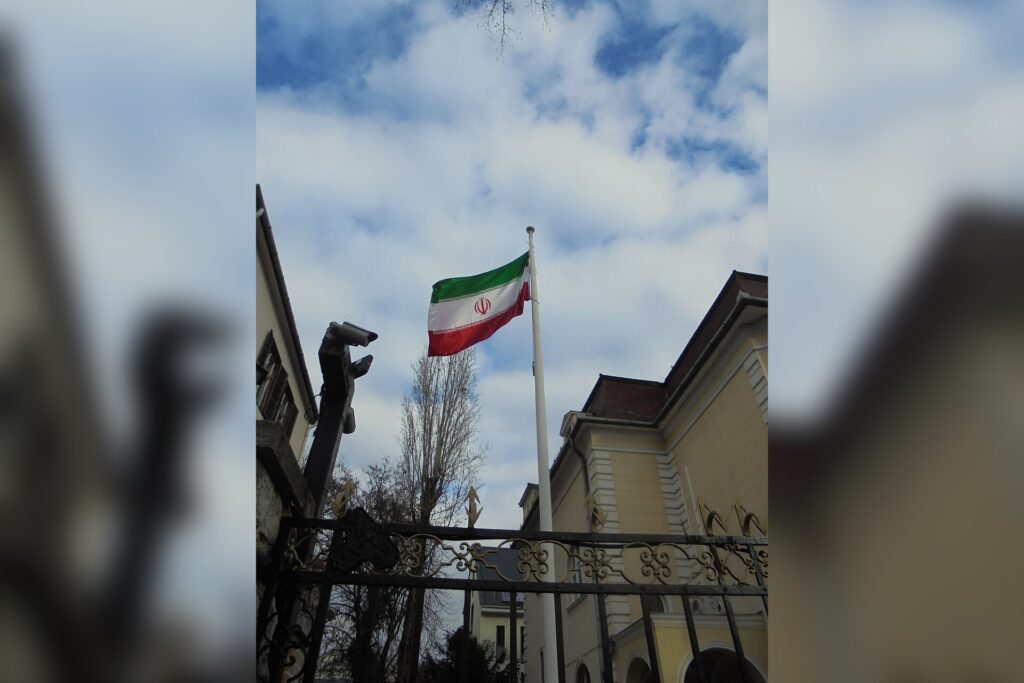
Declaring himself the “No. 1 target,” Republican presidential nominee Donald Trump accused Iran on Wednesday of wanting to assassinate him, calling the country “scum” during a campaign event. The former president’s assertion has not been independently verified by U.S. intelligence agencies, and no specific plot against him has been publicly confirmed. The U.S. Secret Service, the agency tasked with protecting former presidents, has not commented on Trump’s statement.
Iran has denied any involvement in assassination plots against U.S. officials.
Trump’s Allegation and the Official Silence
The accusation lands in a period of heightened tension between Washington and Tehran, shaped by a decade of escalating conflict. The most concrete example of alleged Iranian retaliation efforts came in August 2022, when the U.S. Justice Department charged an Iranian military official with plotting to assassinate former national security adviser John Bolton. That case was widely seen as retaliation for the January 2020 U.S. drone strike ordered by Trump that killed Iranian Major General Qasem Soleimani in Baghdad, Iraq.
Iran vowed revenge after that strike. Against this backdrop, Trump’s claim injects a fresh national security dimension into the 2024 general election campaign, where he faces Democratic nominee Kamala Harris.
The two candidates have already drawn sharp foreign policy contrasts, and the issue of threats against U.S. leaders now enters the public debate. Whether U.S. intelligence agencies issue any public assessment of the threat level to Trump, and whether the Secret Service adjusts its protective posture, remain open questions. Iran’s denial stands, but the pattern of alleged retaliation plots — the Bolton case being the most concrete example — keeps the issue alive for voters.
Decades of U.S.-Iran Tensions
The current friction is rooted in a broader history. In 2018, Trump’s administration withdrew the United States from the Joint Comprehensive Plan of Action, the 2015 nuclear deal that had limited Iran’s uranium enrichment in exchange for sanctions relief. Since that withdrawal, Iran has advanced its nuclear program, enriching uranium to levels close to weapons-grade, and expanded support for proxy groups across the Middle East, including in Lebanon, Syria, Yemen, and Iraq.
These actions have deepened the divide between the two nations. Iran, officially known as the Islamic Republic of Iran, is a country in West Asia historically known as Persia.
The region hosted some of the oldest continuous civilizations. Cyrus the Great founded the Achaemenid Empire in the 6th century BC. Later eras saw the rise of the Parthian and Sasanian Empires.
The nation underwent Islamization after the 7th century Muslim conquest. The Safavid dynasty later established Twelver Shia Islam as the official religion in the 16th century, a period that created the framework for the modern state.
Political shifts continued into the 20th century. Reza Shah established the Pahlavi dynasty in 1925. His son, Mohammad Reza Pahlavi, eventually took power.
An Anglo-American coup occurred in 1953 after attempts to nationalize the oil industry. The monarchy ended during the Iranian Revolution in 1979, leading to the creation of the current Islamic Republic.
Global Security and Election Implications
The relationship between Iran and the United States affects global security. Tensions often center on nuclear capabilities and regional influence.
Stability in the Persian Gulf impacts international trade and energy markets. These frictions create a volatile environment for diplomatic relations. Trump’s statement, made without independent verification, now adds a personal security dimension to the broader geopolitical standoff. Investors will note the timing: with the election approaching, any escalation in rhetoric or security adjustments could influence public perception of the candidates’ readiness to handle national security threats.
The Secret Service has not indicated any change in its protective posture, and no intelligence assessment has been publicly released. For now, the claim remains unconfirmed, but it highlights the long shadow cast by Soleimani’s killing and the unresolved cycle of threats and denials between the two nations.
{“@context”: “https://schema.org”, “@type”: “NewsArticle”, “headline”: “Trump Accuses Iran of Plotting Assassination, No Evidence Provided”, “description”: “WASHINGTON, Sept. 25 — Declaring himself the “No. 1 target,” Republican presidential nominee Donald Trump accused Iran on Wednesday of wanting to assassinate him, calling…”, “datePublished”: “2026-07-08T09:30:00+00:00”, “author”: {“@type”: “Person”, “name”: “Henry Thomas”}, “publisher”: {“@type”: “Organization”, “name”: “InfoPulse Today”, “url”: “https://newsfeed.2bme.xyz/”}}




