
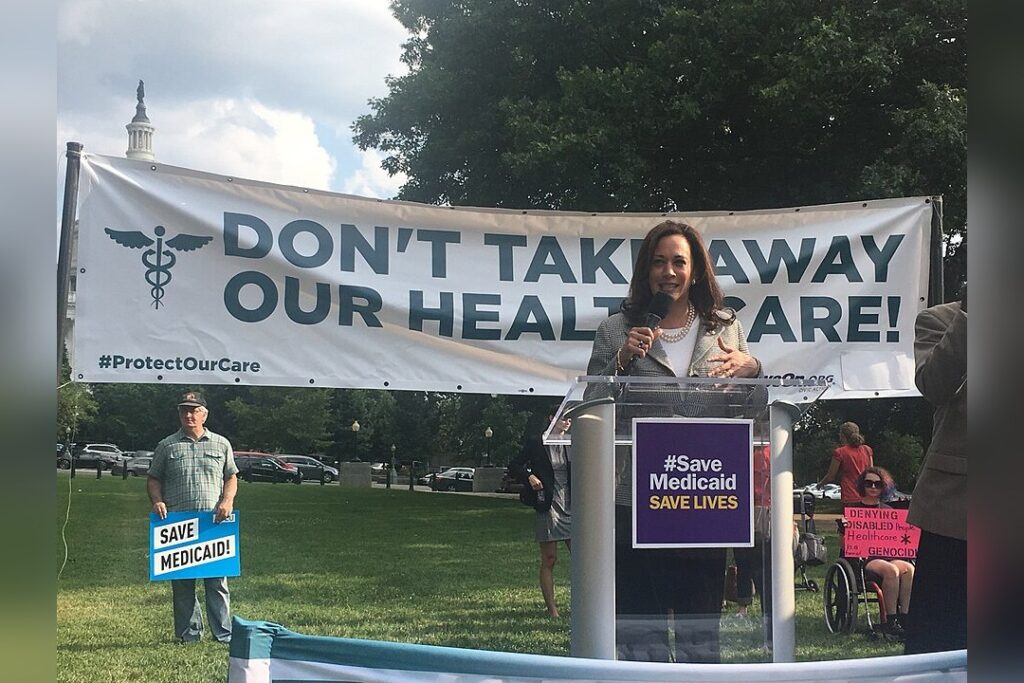
Washington, August 29 — The One Big Beautiful Bill Act, passed by the U.S. Congress in 2024, introduces work requirements and eligibility redeterminations for Medicaid recipients, potentially affecting up to 10 million Americans. The legislation mandates states to verify eligibility more frequently and requires certain beneficiaries to meet employment criteria, building on prior federal attempts to modify welfare eligibility, including the 1996 Personal Responsibility and Work Opportunity Reconciliation Act.
Medicaid, established in 1965 under the Social Security Act, provides health coverage to low-income individuals and families, currently covering 80 million Americans, including 1 in 4 children and 1 in 10 adults. The Congressional Budget Office estimated in 2024 that approximately 1.5 million individuals could lose Medicaid coverage annually under similar proposals, though the broader OBBBA’s specific impact remains under study.
The Centers for Medicare and Medicaid Services oversees implementation, while advocacy groups like the Center on Budget and Policy Priorities warn of disproportionate effects on vulnerable populations. The bill reflects ongoing debates about welfare reform and federal spending, with roots in 1990s policy shifts. Key demographic data shows Medicaid covers 80 million Americans, including 1 in 4 children and 1 in 10 adults, with eligibility expansions occurring during economic downturns such as the 2008 recession and 2020 pandemic.
The Act targets work requirements for specific groups, including women, unmarried individuals, White individuals, and those with limited education, who face heightened risk of coverage loss. These demographics align with prior research on Medicaid enrollment patterns, though the legislation does not specify exemptions for caregivers or individuals with disabilities.
The verification process requires more frequent eligibility checks, shifting administrative burdens onto states and applicants. The Congressional Budget Office’s 2024 estimate of 1.5 million annual coverage losses provides a benchmark for potential scale, though the OBBBA’s distinct provisions remain under analysis by policy institutes. Implementation will rely on state-level infrastructure, with CMS overseeing compliance and reporting.
Marco Rubio, as Secretary of State, has not publicly commented on the legislation, but the administration’s broader welfare agenda aligns with the Act’s goals of reducing federal spending on entitlement programs. The White House has framed the measure as promoting workforce participation, though critics argue it disproportionately impacts marginalized groups. The Center on Budget and Policy Priorities has highlighted that Medicaid covers 80 million Americans, making any coverage reduction a significant public health concern.
The 2024 CBO estimate of 1.5 million annual losses underscores the potential scale, though the OBBBA’s specific mechanisms differ from earlier proposals. Historical context reveals the Act’s place in a longer trajectory of welfare reform, dating to the 1996 Personal Responsibility and Work Opportunity Reconciliation Act.
The legislation emerges amid debates over federal spending and eligibility criteria, with Medicaid’s expansion during the 2008 recession and 2020 pandemic serving as contrast points. The Act’s focus on employment requirements marks a shift from previous approaches, though its demographic targeting — particularly toward women and low-education groups — raises concerns about equity. The 10 million figure represents the upper bound of potential affected individuals, though actual outcomes depend on state implementation.
Looking ahead, the key watchpoint is how states navigate the new verification requirements and employment criteria. The Centers for Medicare and Medicaid Services will monitor state plans, while advocacy groups prepare legal challenges based on the disproportionate impact on vulnerable populations.
The next phase hinges on CMS guidance and state-level legislative responses, with potential for litigation to shape the Act’s final form. The 80 million coverage baseline and 1.5 million annual loss estimate remain central to assessing its real-world consequences.




