
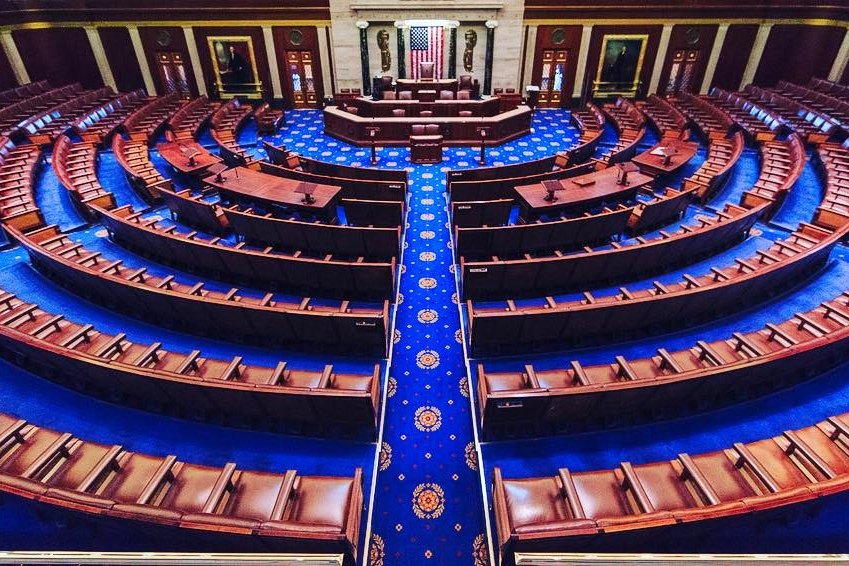
WASHINGTON, September 2 — The U.S. House of Representatives voted Tuesday to approve a stopgap funding measure, sending the legislation to President Donald Trump and temporarily averting a partial government shutdown when current appropriations expire on October 1. The continuing resolution passed with broad bipartisan support, with lawmakers from both parties backing the temporary fix. The Senate had already cleared identical legislation on August 8.
The measure now extends federal spending at current levels through December 11, buying Congress roughly ten additional weeks to complete its core budget work. That work remains substantial.
Congress has not finished any of the twelve annual appropriations bills that would fund government programs for the full fiscal year running from October 1, 2026, through September 30, 2027. Those programs span homeland security, federal law enforcement, energy, housing, and defense — portfolios that touch nearly every corner of federal operations. The stopgap’s necessity reflects deeper dysfunction on Capitol Hill.
Since Trump began his second term, the Republican majority and Democratic minority have fought to the point of three partial government shutdowns totaling an unprecedented 161 days. Those closures stemmed from disputes over health insurance subsidies and constraints on federal immigration officers’ enforcement powers.
Strategically, the calculus this time shifted. Both parties faced converging pressures: voter anger over elevated food and housing prices, the ongoing U.S. war against Iran, and tariffs on foreign goods that have damaged American farmers. With November elections approaching, lawmakers chose to avoid a fourth shutdown.
Floor Debate Reveals Competing Visions
House Appropriations Committee Chairman Tom Cole of Oklahoma framed the measure in practical terms during floor debate. The Oklahoma Republican said it would give Congress time to get past the November elections. Rep. Rosa DeLauro of Connecticut, the senior Democrat on the appropriations panel, advanced a sharper argument.
She cast the bill as a step toward Congress reclaiming its constitutional authority over spending. DeLauro pointed to unilateral actions by the Trump administration since early 2025, including severe cuts to federal agencies and the elimination of the U.S. Agency for International Development.
“The power of the purse resides within the Congress. It is our exclusive responsibility,” DeLauro stated. “The first step in exercising that authority is passing this bill today.”
What the Measure Does — and Does Not — Address
The stopgap leaves major fiscal questions untouched. It does not address the national debt, which crossed the $40 trillion threshold last month. It also does not tackle affordability, which is identified as voters’ top concern.
The broader stakes are deferred, not resolved. With decision-making pushed fifteen weeks down the line, Congress faces a potentially arduous December session.
The task of writing and passing twelve full-year spending bills awaits. The results of the November 3 congressional elections will determine which party holds the upper hand in those end-of-year negotiations — and whether the next funding fight produces actual appropriations or simply another temporary patch.




